How to Repair the Windows 11 Start Menu

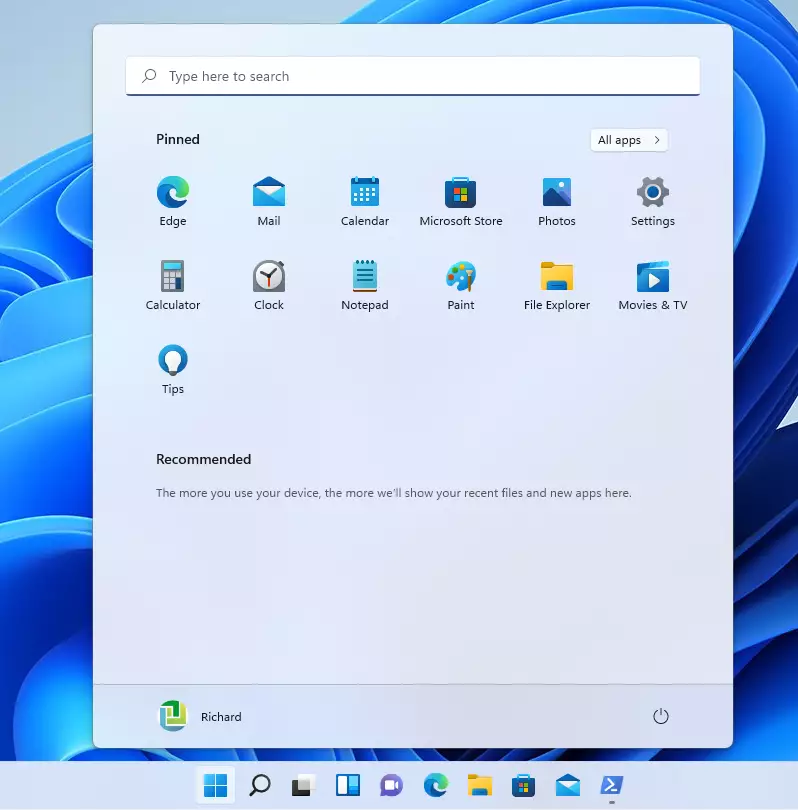
A broken Windows 11 Start menu stops you from opening apps, searching for files, and shutting down your PC. The Start menu is the main pop-up panel that appears when you click the Windows icon on your taskbar . It gives you shortcuts to all your programs and settings.
Most Start menu freezes, blank screens, and unresponsive clicks fix themselves with a few targeted steps. You do not need any technical skills or special tools to get your Start menu working again on Windows 11 version 21H2 or later. Work through the fixes in the order below, from the quickest and least invasive to the more thorough. Test the Start menu after each one, and stop as soon as it works.
Restart Windows Explorer via Task Manager , run SFC and DISM commands in an administrator Command Prompt, or re-register the Start Menu components using PowerShell. These steps refresh system files and shell experience hosts to fix most Start menu issues.
What happens when done?
These steps restart the Windows shell (the core software that manages your taskbar and desktop interface). This clears out temporary glitches and puts the Start menu back into its default, working state. Your personal files are not touched by any of the repairs in this guide.
If the Start button does not respond at all, try the keyboard first. Press the Win once and see whether the menu opens. If it does, the problem is probably in the mouse or taskbar handling, and the first fix below should clear it.
How to fix a frozen Start menu without restarting your PC
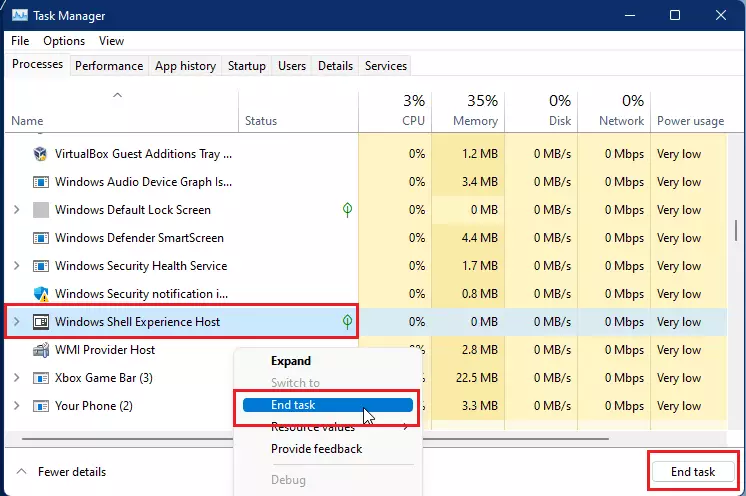
Restarting the Windows Explorer process fixes a frozen Windows 11 Start menu without a full reboot. This reloads the graphical interface, taskbar, and desktop background and clears temporary glitches. It takes a few seconds in Task Manager , and you do not lose open files or browser tabs. Unsaved work inside File Explorer windows is not at risk either, though those windows will close and reopen.
- Press Ctrl+Shift+Esc to open Task Manager .
- Click More details if the window is small. You should now see the full list of processes.
- Find Windows Explorer in the list of processes. It is usually under the Apps or Windows processes group.
- Right-click it and select Restart. The taskbar and desktop disappear for a moment and then come back. This is normal.
Now click the Start button . If the menu opens, you are done. If it is still frozen, move on to the next fix.
Repairing system files with SFC and DISM
Running the SFC (System File Checker) and DISM (Deployment Image Servicing and Management) tools repairs corrupted system files that break the Windows 11 Start menu. These built-in utilities scan your drive for damaged operating system components and replace them with working copies from a healthy online source. Because DISM downloads good files, your PC needs an internet connection for that part. You also need an administrator Command Prompt window to run these commands.
Administrator privileges are required for this step. If your account is a standard user, sign in with an administrator account first.
- Press the Windows key and type cmd. If the Start menu will not open, use Task Manager instead: press Ctrl + Shift + Esc, then use Run new task, type cmd, and tick the box to create the task with administrative privileges.
- Right-click Command Prompt and select Run as administrator. Click Yes if User Account Control asks for permission. A black window with an administrator title should open.
- Type the following command and press Enter. The scan can take several minutes, so let it reach 100% and show its result before you close the window:
sfc /scannow
- If the scan reports problems it could not fix, or the Start menu is still broken, run this command to repair the Windows image. It can sit at one percentage for a while. That is normal, so do not close the window:
Windows 11 Start Menu issues resolve by re-registering components with PowerShell. Running this PowerShell command refreshes Start Menu settings, resolving unresponsive behavior.
When DISM finishes, run the first command again so SFC can use the freshly repaired files. Then restart your PC and test the Start menu.
The next fix also needs administrator privileges. It uses PowerShell to re-register the built-in Start menu components for your account and for all users.
- Open Task Manager by pressing Ctrl + Shift + Esc. Click File, choose Run new task, and type powershell. On newer builds with the redesigned Task Manager, the Run new task button is on the toolbar at the top instead of under File.
- Select Create this task with administrative privileges and click OK. A blue PowerShell window should open.
- Copy and paste this command to fix the Start menu for your user account, then press Enter:
Get-AppxPackage Microsoft.Windows.ShellExperienceHost | Foreach {Add-AppxPackage -DisableDevelopmentMode -Register "$($_.InstallLocation)\AppXManifest.xml"}- Use this command to fix the menu for all users:
Get-AppxPackage -AllUsers Microsoft.Windows.ShellExperienceHost | Foreach {Add-AppxPackage -DisableDevelopmentMode -Register "$($_.InstallLocation)\AppXManifest.xml"}You may see red text or warnings while the commands run. Some of these are harmless, especially on systems where certain packages are in use. Wait until the prompt returns, then close the window and restart your PC before testing the Start menu .
Can a corrupted user profile prevent the Start menu from opening?
Corrupted user profiles frequently prevent the Windows 11 Start Menu from opening. Creating a new local user account confirms whether this is your problem. If the Start menu works in a new account, the fault is in your old profile, not in Windows itself.
The exact wording of the account screens can differ slightly between Windows 11 builds. The usual path is Settings Accounts Other users Add account If you are on Windows 11 Home, Windows pushes you toward a Microsoft account, so choose the option for someone without sign-in information and then add a user without a Microsoft account. Give the new account a name and password, then sign out and sign in to it. Check the Start menu there. You can delete the test account later from the same Other users page.
Summary
Repairing system files, restarting Windows Explorer , or re-registering components via PowerShell resolves Windows 11 Start Menu problems in the vast majority of cases. If the Start menu works in the new account but not in your old one, copy your files across to the new profile and use that account from now on. After any of these fixes, a restart is a good final step, since it makes sure every repaired component is loaded cleanly.
Have a question about this guide?
Answered by AI from this guide. Good questions may be added to this page — please don't include personal details.
Did this guide fix your problem?

About the Author
Richard
Tech Writer, IT Professional
Richard is a writer at Geek Rewind who turns complex IT tasks into clear, step-by-step guides. He draws on years of hands-on experience in system administration and enterprise IT operations, focusing on Windows, Linux and WordPress: the problems people actually run into, and the fixes that work. His server and WordPress guides come from systems he runs himself. Richard builds and maintains the platform behind Geek Rewind, from its Ubuntu servers and Nginx configuration to its custom WordPress plugins. Many new tutorials start with readers' questions, and he's always glad to answer them in the comments.
No comments yet — be the first to share your thoughts!