How to Enable Desktop Stickers in Windows 11

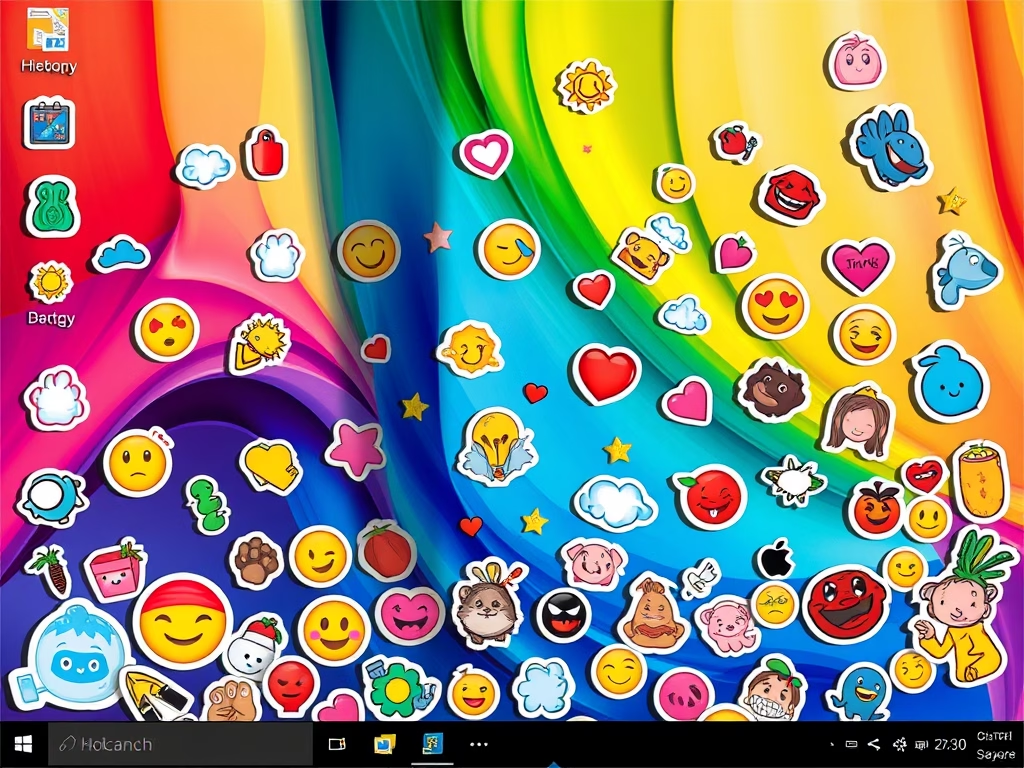
Desktop Stickers in Windows 11 let you place custom images, drawings, and emojis directly on your wallpaper to personalize your screen. This built-in feature works on single monitors running Windows 11 Build 22567 or later, turning your static background into an interactive space.
Turning on Desktop Stickers requires a quick change in the Registry Editor, a built-in Windows tool for advanced system settings. You need administrator rights to make this change, and the feature only supports one monitor at a time.
Before you start, note that Desktop Stickers is an experimental feature. It is hidden by default and Microsoft has not shipped it as a normal option, so it may not show up on every Windows 11 build even after the registry change. If you want a safety net, open the Registry Editor and use File Export to save a backup of the registry before you edit anything.
Open the Registry Editor as administrator, go to 🗝️HKEY_LOCAL_MACHINE\
What Are Desktop Stickers?
Desktop Stickers place graphics, images, and animations on top of your desktop background. You can move, resize, and personalize them, so the screen looks unique without changing your actual background picture.
The stickers stay in place when you change your wallpaper, as long as you set the background fit to Fill. With other fit options, the stickers may not line up with the new picture.
How to Turn On Desktop Stickers
The steps below turn the feature on through the registry. You don’t need to download any extra files, but you do need to be signed in with an administrator account.
Step 1Open the Registry Editor
The Registry Editor is a built-in database viewer for the low-level settings of Windows and your installed apps. Open it with administrator permissions, because the setting you need lives in a protected area.
- Click the Start button, the Windows icon on your taskbar .
- Type
regeditinto the search box. - When “Registry Editor” shows up in the results, right-click it and choose Run as administrator.
- If a User Account Control (UAC) window asks “Do you want to allow this app to make changes to your device?”, click Yes.
The Registry Editor window should now open, with a tree of folders on the left and values on the right. If you only see a UAC prompt for a standard user, you are not on an administrator account, and you will need to sign in with one.
Step 2Go to the Right Place in the Registry
The registry path for desktop stickers is 🗝️HKEY_LOCAL_MACHINE\
- In the left pane of the Registry Editor, expand the folders one at a time until you reach the path shown below. You can also paste the path into the address bar at the top of the window and press Enter.
HKEY_LOCAL_MACHINE\SOFTWARE\Microsoft\PolicyManager\current\device\Stickers
If the Stickers folder isn’t there under device, create it:
- Right-click the parent folder,
device. - Choose New Key
- Name the new folder
Stickersand press Enter. - Click the new folder to select it.
You should now see the new key under its parent folder, with an empty right pane except for a single (Default) entry.
Step 3Create the EnableStickers Setting
Next, create a DWORD (32-bit) Value named EnableStickers inside the Stickers folder. This value is the switch that turns the feature on.
- With the
Stickersfolder selected on the left, look at the right side of the window. - Right-click an empty space in the right pane.
- Choose New DWORD (32-bit) Value. A new item appears, probably named “New Value #1”.
- Rename it right away to
EnableStickers. Type it exactly like that, with a capital E and a capital S, and press Enter. - Double-click the
EnableStickersvalue you just created.
A small window called “Edit DWORD (32-bit) Value” opens. In the Value data box you will see a number, which is 0 for a new value. Change it to 1. Leave the Base option on its default.
Click OK to save the change. The right pane should now list EnableStickers with the type REG_DWORD and the data you entered.
Step 4Restart Your Computer
Save any open work first.
- Close the Registry Editor window.
- Click the Start button.
- Click the Power icon.
- Choose Restart.
After you sign back in, right-click an empty spot on the desktop and look for a sticker option in the menu. If it doesn’t appear, double-check that the value name is spelled exactly as above and that the key sits in the right place. If both are correct, your Windows build may not include the feature.
How to Turn Off Desktop Stickers
If you no longer want stickers, or if the change causes problems, you can turn the feature off again. The steps are the same as for turning it on, except that you change or delete one registry value.
Step 1Open Registry Editor as Administrator
Open the Registry Editor with administrator rights, as you did before. Follow the same instructions as in the first step of the “How to Turn On Desktop Stickers” section: search for it in the Start menu , right-click it, choose Run as administrator, and click Yes in the UAC window.
Step 2Go to the Stickers Key
Go to the same location in the registry as before:
HKEY_LOCAL_MACHINE\SOFTWARE\Microsoft\PolicyManager\current\device\Stickers
Make sure you are inside the Stickers folder. When it is selected, the right pane should list the EnableStickers value you created earlier.
Step 3Change the EnableStickers Setting
You can change or delete the EnableStickers value at any time. Setting the value data from 1 to 0, or deleting the entry, removes the stickers feature from your system. Setting it to 0 is the easier option to reverse later.
- In the right pane, find the
EnableStickersvalue you created. - Double-click
EnableStickers. - In the Value data box, change the number from
1to0. - Click OK to save the change.
Alternatively, you can remove the EnableStickers value completely:
- Right-click the
EnableStickersvalue in the right pane. - Select Delete.
- Click Yes to confirm.
If you delete it and want the feature back later, you will have to create the value again from the start.
Step 4Restart Your Computer
As when you turned the feature on, you need to restart your computer for the change to take effect.
- Close the Registry Editor.
- Restart your computer from the Start menu, using the Power icon and then Restart.
After your computer restarts, the Desktop Stickers option should no longer appear in your personalization settings or the desktop context menu.
Summary
Desktop Stickers are a hidden Windows 11 feature that you turn on by creating a registry key and a DWORD value, then restarting your computer. Open the Registry Editor as an administrator, add EnableStickers with the value data set to 1, and the sticker option should appear for use on your desktop background. To undo it, set the value to 0 or delete it and restart.
Have a question about this guide?
Answered by AI from this guide. Good questions may be added to this page — please don't include personal details.
Did this guide fix your problem?

About the Author
Richard
Tech Writer, IT Professional
Richard is a writer at Geek Rewind who turns complex IT tasks into clear, step-by-step guides. He draws on years of hands-on experience in system administration and enterprise IT operations, focusing on Windows, Linux and WordPress: the problems people actually run into, and the fixes that work. His server and WordPress guides come from systems he runs himself. Richard builds and maintains the platform behind Geek Rewind, from its Ubuntu servers and Nginx configuration to its custom WordPress plugins. Many new tutorials start with readers' questions, and he's always glad to answer them in the comments.
No comments yet — be the first to share your thoughts!