The article provides instructions for toggling the "Week Numbers" feature on or off in the Calendar on Ubuntu Linux. This feature, which corresponds to the week of the year, isn't displayed by default. The guideline includes accessing the "Date & Time" settings and toggling the switch button to desired position.
Ubuntu Linux
275 tutorials · page 9
The article provides a guide on how to display or hide 'Week Day' on the top bar in Ubuntu Linux version 23.10. Users can simply toggle a button in the settings panels to manipulate this feature based on their preference. Steps include accessing 'Settings', selecting the 'Date & Time' button, and toggling the switch button for 'Week Day'.
This article provides steps to display seconds on the clock and calendar in Ubuntu Linux, a feature useful for timing events or system performance monitoring. The method involves using a toggle button in the settings panels that was introduced in Ubuntu 23.10. Some users, however, may find the additional detail unnecessary or distracting.
The article provides a step-by-step guide on how to fully uninstall Docker from Ubuntu Linux. Docker, a platform that enables developers to run applications in portable containers, can be removed for reasons such as system conflicts, upgrades, or storage needs. The process involves stopping and removing Docker containers, images, networks, and caches before uninstalling Docker packages and deleting remaining files.
The article provides guidance on installing and using the ping command on Ubuntu Linux, primarily used to test network connectivity. In Ubuntu Minimal Edition or Docker, the ping command could be absent. The solution is to install a package named 'iputils-ping' which will restore the ping functionality.
The article explains how to install and manage Certbot, a free tool for automating SSL/TLS certificates from Let's Encrypt Certification Authority, on Ubuntu Linux. The software includes plugins for web servers like Apache and Nginx. Installation methods include using the apt command or Snap package manager. After installation, users can create and renew certificates with commands specific to their web server. Detailed instructions for installing test and valid certificates are provided.
The article provides a guide on installing Terraform, an open-source Infrastructure as Code tool, on Ubuntu Linux. Terraform is installable via two common methods: through the Snap package manager or its official repository. Despite not being in Ubuntu's default repositories, the guide walks through command line inputs, enabling easy installation and management of infrastructure resources.
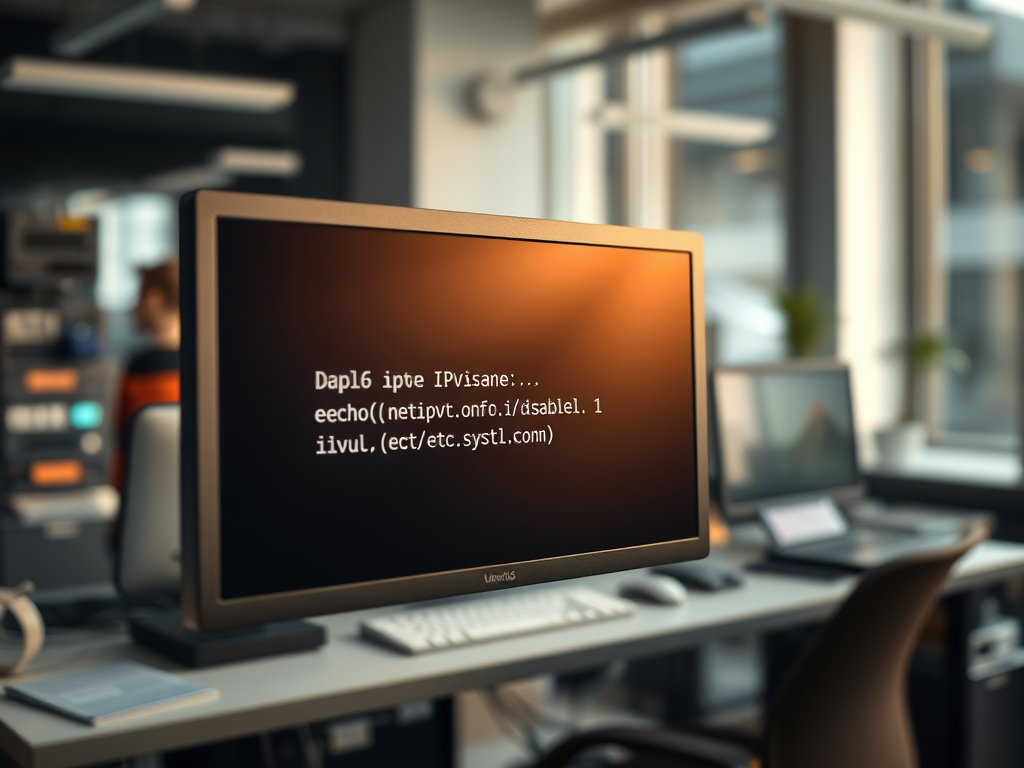
This article outlines how to disable IPv6 on Ubuntu Linux, which is enabled by default. It recommends disabling IPv6 when network infrastructure or applications do not support it. The simplest method involves modifying the /etc/sysctl.conf file and executing specific commands to apply the changes. The user can then verify that IPv6 is disabled.
This summary concerns managing RAR files using the unrar and rar commands on Ubuntu Linux. The unrar command lets you handle RAR files, including listing, extracting, and testing files for integrity, whilst the rar command archives files in RAR format. Syntax is key for the correct functioning of these commands. The article provides installation instructions and various command options, alongside a detailed exploration of file extraction, listing, creation, and password protection.
The article provides a guide on how to reset the Dock Panel to its default settings in Ubuntu Linux, useful when changes cause it to malfunction or appear incorrect. The process involves opening the Ubuntu Terminal app and entering specific commands. Note, if certain applications are uninstalled, they will not return upon resetting.
The article provides a guide on managing the Windows Subsystem for Linux (WSL) Kernel on Windows 11. It explains the automated updating process through Windows Update and details steps for manual checks and updates using the "wsl.exe" command-line tool. The guide also includes troubleshooting tips should update issues arise.
The article provides step-by-step instructions on installing Eclipse Mosquitto MQTT, an open-source message broker, on Ubuntu Linux. It also guides users on enabling and verifying its service, setting up authentication, and using terminal commands for exchanging messages via MQTT. Furthermore, it highlights additional security measures: creating SSL/TLS certificates and enabling WebSockets protocol for Mosquitto.
The article offers a guide on how to toggle the logout prompt feature on Ubuntu Linux, ensuring users don't accidentally log out and lose unsaved changes. Users can turn this feature on or off through the gnome-session settings. This can be completed either via commands on the Terminal app or through the Dconf Editor tool for low-level system configurations.
The article outlines steps to enable or disable the logout functionality on the Ubuntu desktop. Users can typically log out via the system menu on the top bar. However, to restrict this, users can disable the log out command through the Terminal app or the Dconf Editor tool. This manipulation is reversible and can be reset to its original state.
The article provides a guide on how to download and use Bing Wallpaper on Ubuntu Linux OS. Bing Wallpaper changes desktop background daily with new images from across the globe. Users can install this feature through the Extension Manager in the Ubuntu Software Center, allowing them to customize their desktops with Bing's ever-changing images.