How to Uninstall Windows Mixed Reality on Windows 11

Windows Mixed Reality (WMR) is a software package that lets you run virtual reality headsets and apps on your PC. Microsoft officially dropped support for this feature in Windows 11 version 24H2, so a full removal is the best way to clean up leftover files.
Uninstalling Windows Mixed Reality deletes the portal, the background service and all related components from your system, usually in under five minutes. It frees up several gigabytes of storage and clears out outdated files you no longer need. This guide covers three methods: the Settings app , PowerShell and a registry cleanup. Start with the first, and move on only if it doesn’t finish the job.
Open Settings , select Mixed reality in the left menu, then choose Uninstall and confirm with Next. Windows removes the Mixed Reality components, and you finish by clicking Restart now. The Mixed reality entry disappears after restart. If it stays, run the PowerShell removal from an administrator terminal.
Why remove Windows Mixed Reality?
People usually uninstall Windows Mixed Reality for one of three reasons:
- Performance: the WMR background service can use memory and CPU time even when no headset is connected.
- Hardware conflicts: WMR drivers can clash with other VR software or with a headset you now use through a different platform.
- Storage: the portal and its components take up several gigabytes, which matters on a small SSD.
Removing WMR resolves all three. If you are on Windows 11 24H2 or later, WMR is already unsupported, so removing it is also just housekeeping.
What happens when done?
Removing the platform wipes personal preferences, such as Cliff House (the virtual home environment), along with your calibration data. If you reinstall WMR later, you will need to set up the headset and your play area again. Your downloaded games remain intact, because they are stored separately from the WMR platform.
Close any VR apps and the Mixed Reality Portal before you begin, and save your work, because the last step restarts the PC.
Standard Uninstall via Settings
The standard uninstall removes Windows Mixed Reality through the main Windows Settings app. You don't need any command-line tools. It takes only a few minutes and removes the whole software package.
One thing to know first: the Mixed reality page only appears on builds that still include WMR. If you don't see it in the left menu, WMR is probably already gone, as it is on Windows 11 24H2. In that case, skip ahead to the leftover-file checks in the later sections.
- Open the Windows Settings app. You can click the Start button and select the Settings icon, or press the Windows key + I on your keyboard. The Settings window opens.
- Click Mixed reality in the menu on the left side of the window. The Mixed reality options appear on the right.
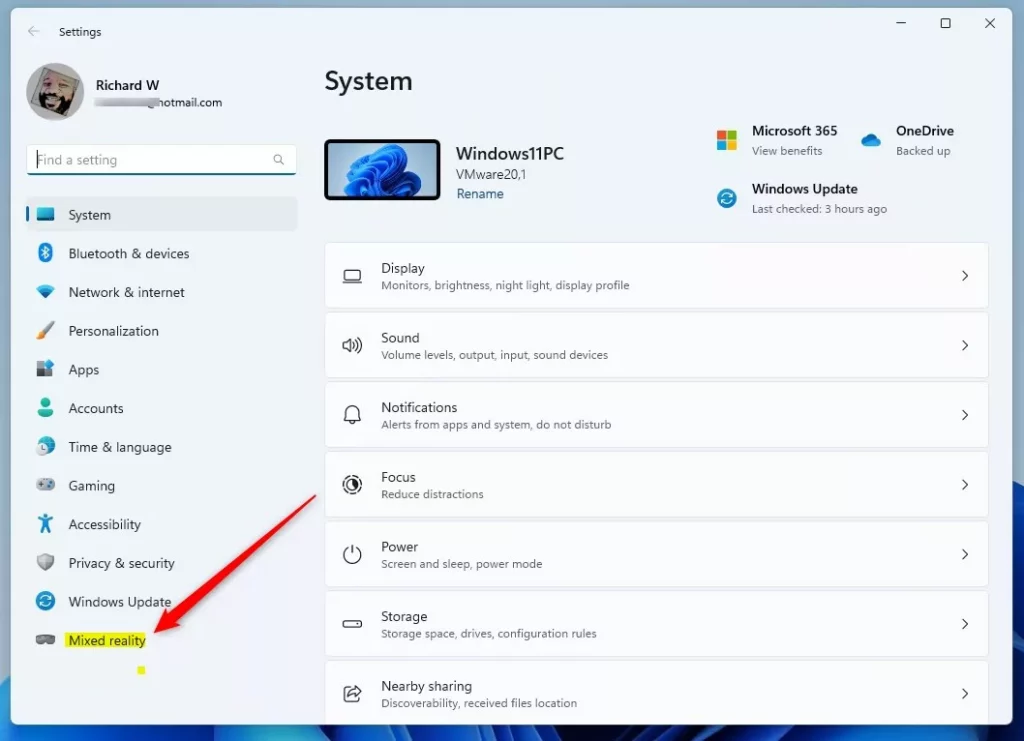
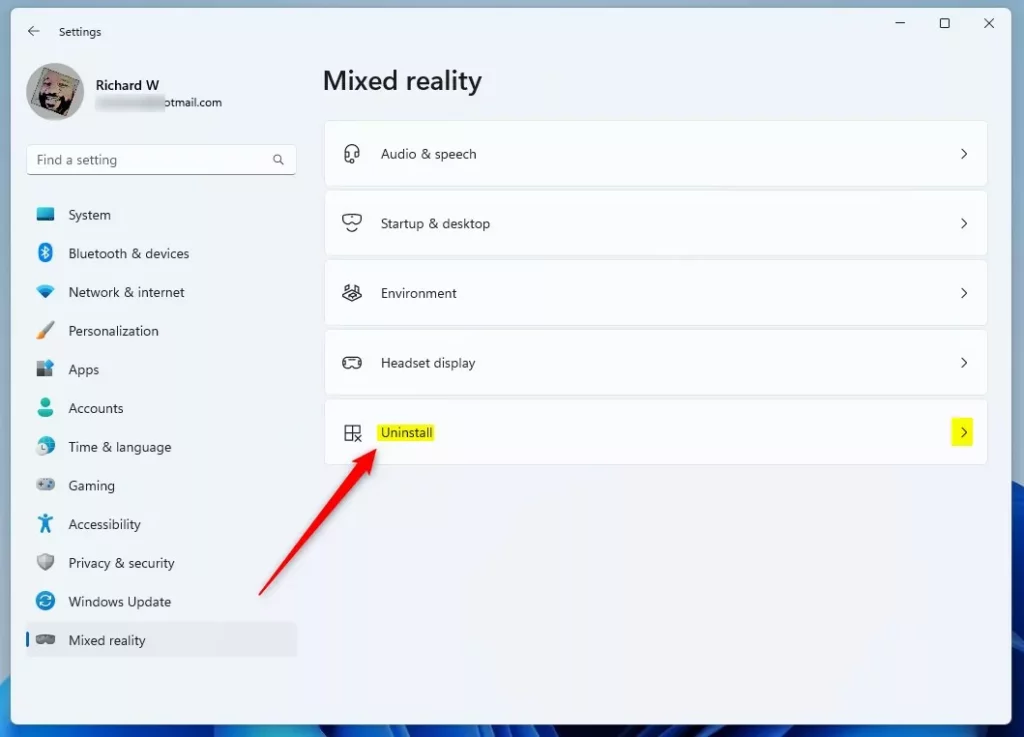
- On the right side of the screen, find the Uninstall tile and click it to expand the options. The Uninstall button appears inside the tile.
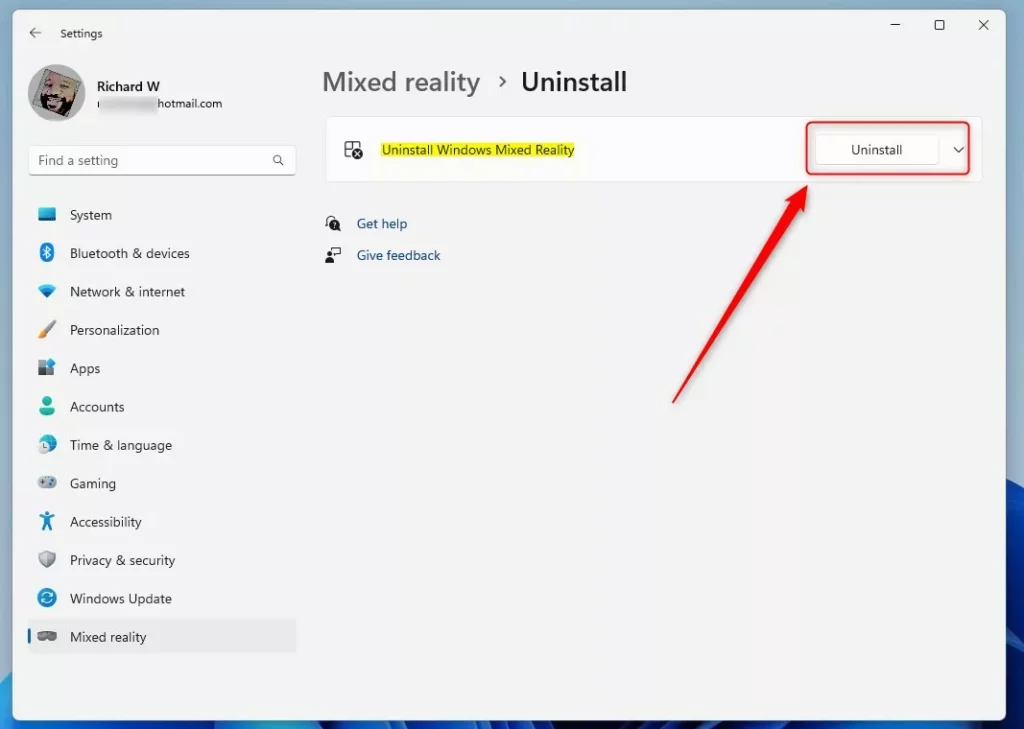
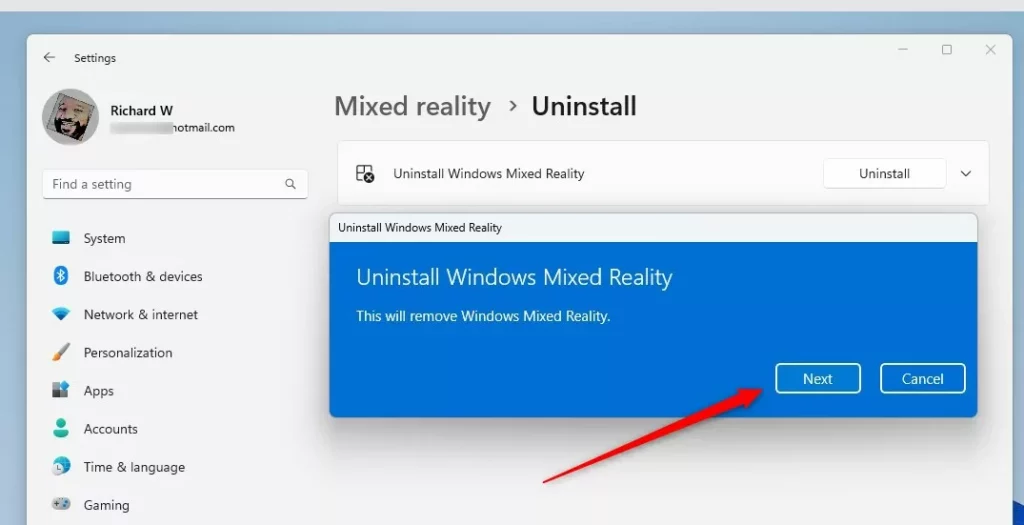
- Click the Uninstall button to begin the removal process. A prompt opens and asks you to confirm.
- When the prompt appears, click the Next button to confirm your choice. Windows then removes the Mixed Reality components, which can take a minute or two.
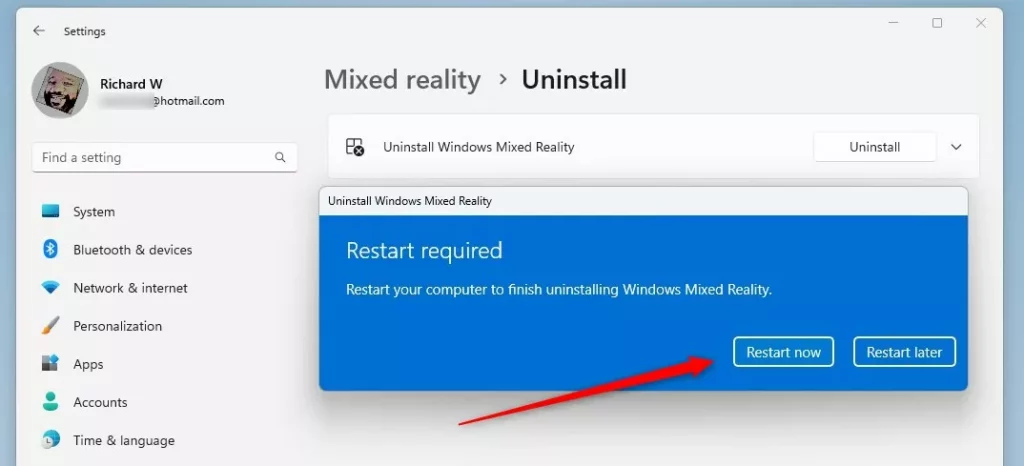
- Click the Restart now button. The restart finishes removing the feature from your computer.
After the PC starts again, open Settings. The Mixed reality entry should no longer be in the left menu. If it is still there, use the PowerShell method below.
Advanced Removal via PowerShell
The PowerShell method uses command-line instructions to force the removal of Windows Mixed Reality when the standard method fails. You run the commands in an administrator terminal, which clears stubborn remnants and residual files that the Settings menu won't delete. You need to be signed in with an administrator account.
- Right-click the Start button and select Terminal (Admin) or PowerShell (Admin). If User Account Control asks for permission, click Yes. A terminal window opens with administrator rights.
- Type the following command to list installed WMR packages:
Get-AppxPackage *MixedReality*Press Enter. The terminal prints any matching packages. If the list is empty, there are no WMR packages left to remove. - To remove the core portal, run:
Get-AppxPackage *Microsoft.MixedReality.Portal* | Remove-AppxPackageWait for the command to finish and the prompt to return before you close the window.
Restart the PC afterwards, so Windows can finish clearing anything that was in use while the command ran.
Registry Cleanup
This step is optional, and you only need it if WMR still shows up after the first two methods. Back up the registry beforehand, so you can undo a mistake and avoid corrupting the operating system.
To back up, open the Registry Editor, choose File Export, set the export range to All, and save the file somewhere safe. Creating a System Restore point first gives you a second way back. To restore, double-click the exported file and confirm the merge.
Delete only keys that you have clearly identified as Windows Mixed Reality leftovers. Deleting an unrelated key can break other apps or Windows itself. If you are unsure about a key, leave it alone.
Deleting the Windows Mixed Reality folder ensures a clean slate for future reinstalls. This action eliminates persistent configuration data, preventing configuration clashes down the line.
Troubleshooting Uninstallation Errors
If the uninstall fails or throws an error, unplug the VR headset from the PC and try again. A connected headset can keep its drivers and services in use, which blocks the removal. Windows 10 v1709 or newer builds occasionally keep background WMR services active, so a restart before a second attempt often helps. Consult the official Microsoft support documentation for targeted error code troubleshooting.
Summary
Once WMR is removed, you reclaim disk space and cut out a common source of system instability. Cleaning up unused virtual reality components is worth doing whenever you stop using a headset. If you ever want WMR back on a build that still supports it, you can set it up again from scratch.
Was this guide helpful?

About the Author
Richard
Tech Writer, IT Professional
Richard is a writer at Geek Rewind who turns complex IT tasks into clear, step-by-step guides. He draws on years of hands-on experience in system administration and enterprise IT operations, focusing on Windows, Linux and WordPress: the problems people actually run into, and the fixes that work. His server and WordPress guides come from systems he runs himself. Richard builds and maintains the platform behind Geek Rewind, from its Ubuntu servers and Nginx configuration to its custom WordPress plugins. Many new tutorials start with readers' questions, and he's always glad to answer them in the comments.

No comments yet — be the first to share your thoughts!