How to Enable or Disable OneDrive Sync Notifications in Windows 11

OneDrive sync notifications in Windows 11 tell you when your files are syncing, pausing, or have finished syncing to the cloud.
OneDrive is a service built into Windows that stores your files online, making them available on different devices. Controlling these notifications means you can either see every alert or have fewer pop-ups on your screen.
By default, Windows 11 will show you notifications when OneDrive sync stops. This often happens if your computer’s battery saver is on or if you’re using an internet connection that limits data usage.
You can change these settings to get fewer interruptions or to make sure you don’t miss important updates about your files.
Open OneDrive settings by clicking the gear icon, then select Settings. Toggle the “Notify me when syncing is paused” switch to On or Off to control these alerts.
Enable or Disable Notifications in OneDrive Settings
You can manage OneDrive sync notifications directly within the OneDrive app’s settings. To adjust these alerts, open the OneDrive app, click the gear icon for Help & Settings, and then choose Settings. Head to the Notifications section and toggle the switch for ‘Notify me when syncing is paused’ to your preferred setting.

Once the app opens, click the gear icon labeled Help & Settings, then choose Settings.
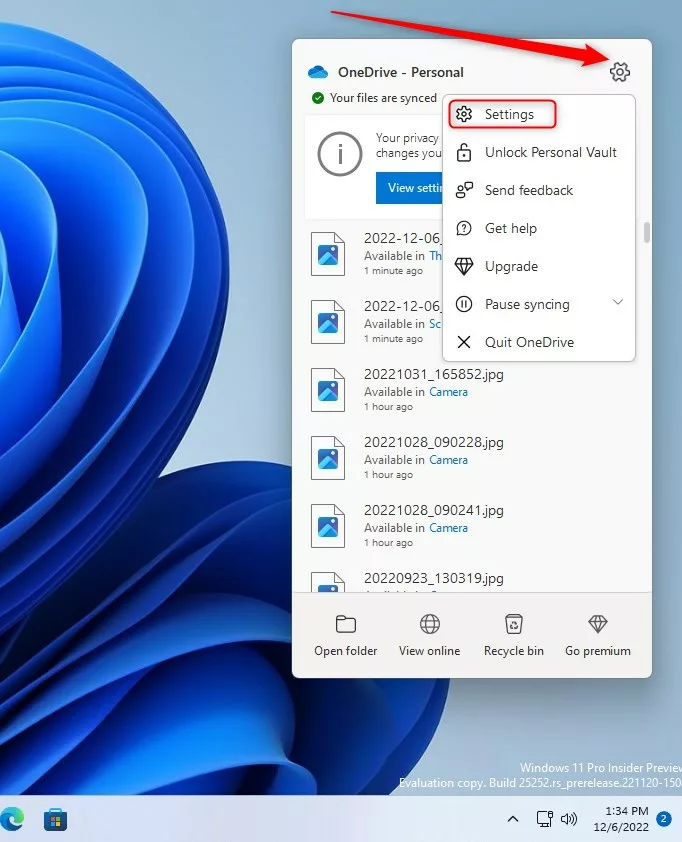
Find the Notifications section. Then, flip the switch for Notify me when syncing is paused to On or Off, depending on your preference.

Understanding Notification Types
| Notification Type | Description |
|---|---|
| File Activity | Alerts when others edit shared files. |
| On This Day | Memories from your photo collection. |
| System Alerts | Sync pauses or connection issues. |
Enterprise Management via Group Policy
IT administrators control OneDrive sync notifications for all company employees using the Group Policy Editor, a tool found in Windows Pro or Enterprise editions (these are versions of Windows with advanced management features). This action helps manage user experience by preventing unwanted pop-ups.
Change Notifications via the Registry
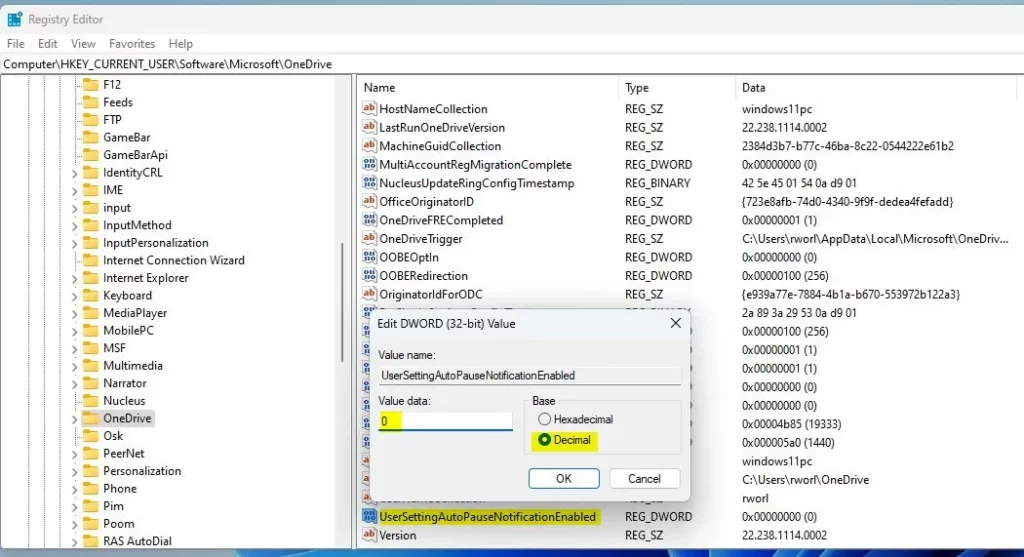
You can gain more control by changing OneDrive sync notifications through the Windows Registry, but this requires administrator access and careful attention to detail. You’ll need to navigate to a specific location in the Registry Editor: 🗝️HKEY_CURRENT_USER\Software\Microsoft\OneDrive. If the OneDrive folder isn’t there, you’ll need to create it within the Microsoft folder.
HKEY_CURRENT_USER\Software\Microsoft\OneDrive
Right-click in the empty space on the right side of the OneDrive folder. Select New > DWORD (32-bit) Value. Name it UserSettingAutoPauseNotificationEnabled. Double-click this new value. Set the Value data to 1 to turn notifications on, or to 0 to turn them off.
Troubleshooting Common Issues
If your OneDrive sync notifications aren’t showing up, check your Windows Notification Center settings to ensure OneDrive alerts are allowed.
Summary
You can manage OneDrive sync alerts through the app settings, Group Policy, or the Windows Registry. Adjusting these settings helps you stay informed about your file status without unnecessary interruptions. Always verify your battery and connection settings to ensure these notifications work as expected.
Does disabling notifications stop OneDrive from syncing files?
No. Disabling notifications only stops the visual pop-ups and alerts from appearing on your screen. Your files will continue to sync in the background as long as the OneDrive app is running and you have an active internet connection.
Will disabling ‘On This Day’ notifications delete my photos?
No. Disabling ‘On This Day’ notifications simply stops OneDrive from showing you memory reminders. Your photos remain safely stored in your OneDrive cloud storage and on your local device. You can view them anytime by opening your OneDrive photo folder.
Was this guide helpful?

About the Author
Richard
Tech Writer, IT Professional
Richard, a writer for Geek Rewind, is a tech enthusiast who loves breaking down complex IT topics into simple, easy-to-understand ideas. With years of hands-on experience in system administration and enterprise IT operations, he’s developed a knack for offering practical tips and solutions. Richard aims to make technology more accessible and actionable. He's deeply committed to the Geek Rewind community, always ready to answer questions and engage in discussions.




No comments yet — be the first to share your thoughts!