How to Enable Microsoft Defender Periodic Scanning in Windows 11

This guide shows how to turn Microsoft Defender periodic scanning on or off in Windows 11. It covers the Windows Security app first, then the Registry Editor as a fallback, and ends with what to check if the option is missing.
Open Windows Security, click Virus & threat protection, then Microsoft Defender Antivirus options, and toggle Periodic scanning to On. If the option is missing, navigate to 🗝️HKEY_LOCAL_MACHINE\
What is Microsoft Defender Periodic Scanning?
Microsoft Defender periodic scanning is an extra security check that runs automatically in the background on your Windows 11 PC. It acts as a backup safety net. If another antivirus is your main protection, Defender can still run occasional scans and find threats that program might miss. The scans are light, so they should not slow the computer down.
This feature only matters when you run a third-party antivirus. If Microsoft Defender is your only antivirus, it already scans in real time and the option does not apply.
What happens when done? Defender runs light, automated scans in the background. Your main antivirus stays in charge of real-time protection, and Defender adds a second opinion without getting in your way.
Prerequisites
Check the following before you begin:
- Administrator access to your computer. Windows may ask for an administrator password or approval when you change security settings.
- Windows 11 installed and updated. Updates can change how Windows Security is laid out, so a fully patched PC matches the steps below best.
- A third-party antivirus program installed, if you want to use Defender as a secondary scanner. Windows Security only shows the periodic scanning option when another antivirus is registered.
The steps work the same on Windows 11 Home and Pro.
How to Enable or Disable Periodic Scanning
This is the normal way to turn periodic scanning on or off. You use the Windows Security app, and no restart is needed.
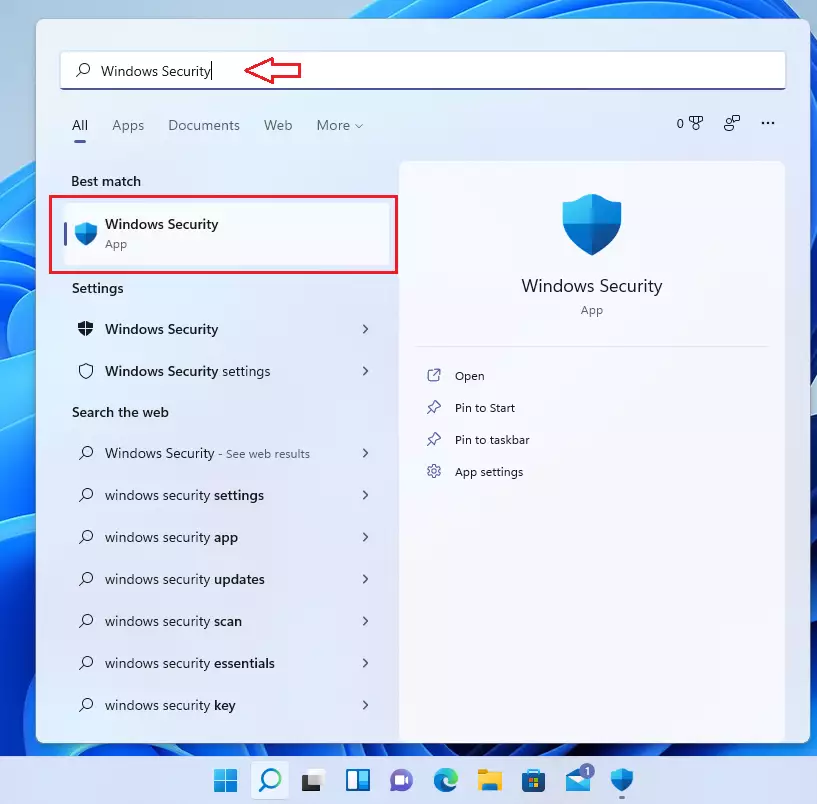
- In the search box on your taskbar , type Windows Security and select Windows Security from the list. The Windows Security window opens with a row of protection tiles.
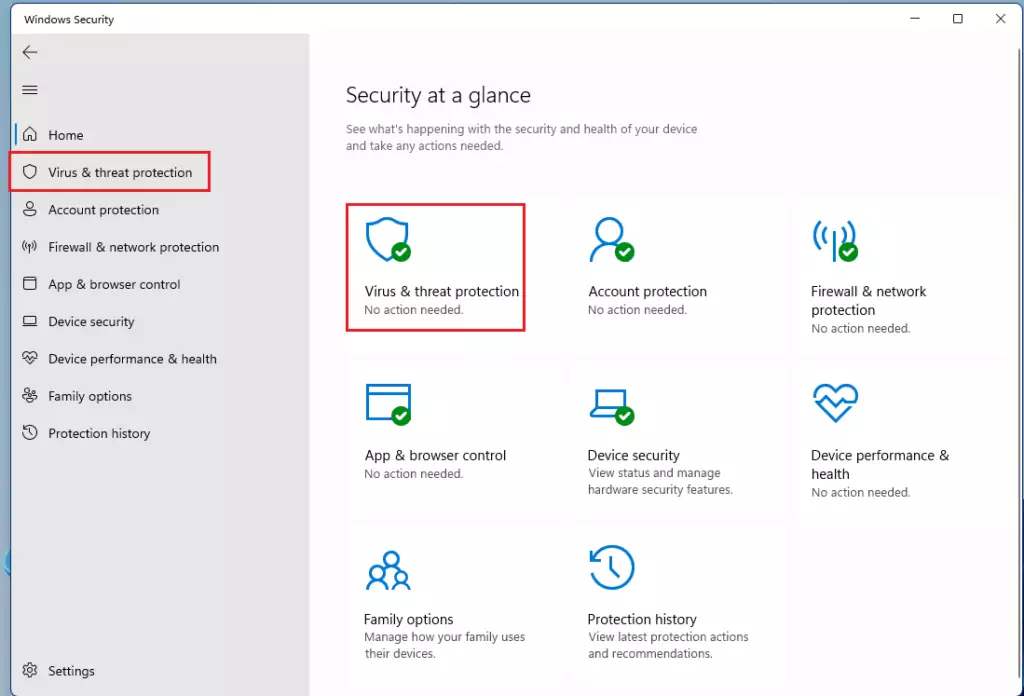
open windows security app - Click the Virus & threat protection tile. The page shows your current threats, scan options and protection settings.
open windows virus and protection - Look for Microsoft Defender Antivirus options and click it. This section expands and shows more settings. If it is missing, see the troubleshooting section near the end of this guide.
- Set the Periodic scanning switch to On to enable it, or to Off to disable it. If a User Account Control prompt appears, click Yes. The switch should now show your chosen state.
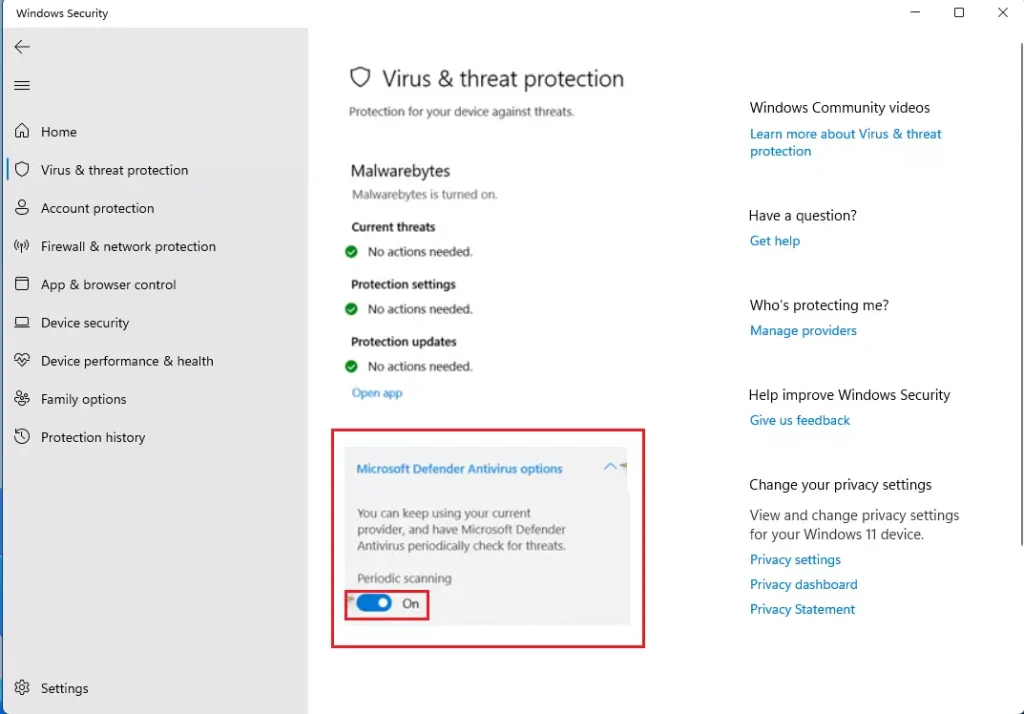
turn on or off periodic scanning microsoft defender windows 11
To undo the change, repeat the steps and flip the switch back.
Advanced Configuration Methods
Using the Windows Registry Editor
Use it only if you cannot get the setting to work in the Windows Security app. The Registry Editor works on both Home and Pro. Be careful here, because a wrong change in the registry can cause problems. Microsoft does not document this value as a periodic scanning switch, so the Windows Security toggle is the supported route. Back up the registry first: in Registry Editor, choose File Export, pick All as the export range, and save the file somewhere safe.
- Press Win+R, type regedit, and press Enter. Approve the User Account Control prompt if it appears. The Registry Editor opens.
- Navigate to: 🗝️HKEY_LOCAL_MACHINE\
SOFTWARE\ . You can paste the path into the address bar at the top of the window, or expand the folders in the left pane one at a time.Microsoft\ Windows Defender - Right-click in the empty space in the right pane and select New DWORD (32-bit) Value. A new entry appears with its name highlighted for editing.
- Name it PassiveMode and press Enter. Then double-click the new entry, set Value data to 1 to enable it, and click OK. The entry should now show 1 in the Data column.
If nothing changes, restart the PC and check the Windows Security app again. To undo it, set the value back to 0 or right-click PassiveMode and choose Delete.
Using PowerShell
If you sign in with a standard account, Windows will ask for an administrator password, and the registry change will fail without one.
Set-MpPreference -DisableRealtimeMonitoring $false
Troubleshooting: Why is the option missing?
If you do not see the option, it is usually because Windows Defender is already your primary antivirus. Periodic scanning is only visible when another security app is registered. Here is what to check:
- Make sure your third-party antivirus is installed correctly and shows up as the active protection in Windows Security. If it was removed badly, Windows may still treat Defender as the primary antivirus.
- Restart the PC after installing or removing an antivirus, then open Windows Security again.
- If you are in a business environment, your IT department may have disabled this feature through Group Policy. In that case the setting may be greyed out or hidden, and you will need to ask them to change it.
Summary
Microsoft Defender periodic scanning adds an extra layer of security to your Windows 11 computer, helping to catch threats your main antivirus might miss. Use the Windows Security toggle first. Keep the registry method as a last resort, and remember that the option only appears when another antivirus is in charge.
Have a question about this guide?
Answered by AI from this guide. Good questions may be added to this page — please don't include personal details.
Did this guide fix your problem?

About the Author
Richard
Tech Writer, IT Professional
Richard is a writer at Geek Rewind who turns complex IT tasks into clear, step-by-step guides. He draws on years of hands-on experience in system administration and enterprise IT operations, focusing on Windows, Linux and WordPress: the problems people actually run into, and the fixes that work. His server and WordPress guides come from systems he runs himself. Richard builds and maintains the platform behind Geek Rewind, from its Ubuntu servers and Nginx configuration to its custom WordPress plugins. Many new tutorials start with readers' questions, and he's always glad to answer them in the comments.
I am currently user of Windows 11. Recently, when a Virus scanner linked to Windows 11 Microsoft Defender Antivirus asked me to renew it’s license, I preferred not to do so. So, I decided to uninstalled the virus scanner linked to Windows 11.
Now, my problem is, I could not open the Virus & threat protection settings whenever I want to use the Real-time protection for Quick scan, Full scan, and Customize scan.
What should I do? Please help me.
Thank you.
not there