How to Reset File Associations in Windows 11

File associations control which program opens when you double-click a specific file type, such as a .jpg photo or a .txt document. Resetting them fixes files that open in the wrong app. It also helps when a program has taken over your file types without you asking.
You can restore the defaults in Windows 11 from Settings Apps Default apps The built-in reset clears out broken links and puts your file types back on Microsoft’s recommended apps. This works the same on Windows 11 Home and Pro, and you don’t need administrator rights, because associations are stored per user account.
Open Settings , click Apps, then Default apps. Scroll down and click Reset to restore all default apps. This will revert custom choices, so you’ll need to re-select your preferred applications.
Reset All Default Apps
If many file types open in the wrong programs, reset all default app settings at once. It’s the fastest fix when the problem is widespread. Your installed apps and your files are not touched. Only the “which app opens what” choices are cleared.
Step 1Open Windows Settings
You can open Settings in either of two ways:
- Press Win+I on your keyboard.
- Click the Start menu (the Windows icon on your taskbar ), then click the Settings gear icon. If you don’t see it, click All apps and pick Settings from the list.
Either way, the main Windows Settings window should now be on your screen.
Step 2Go to Default Apps
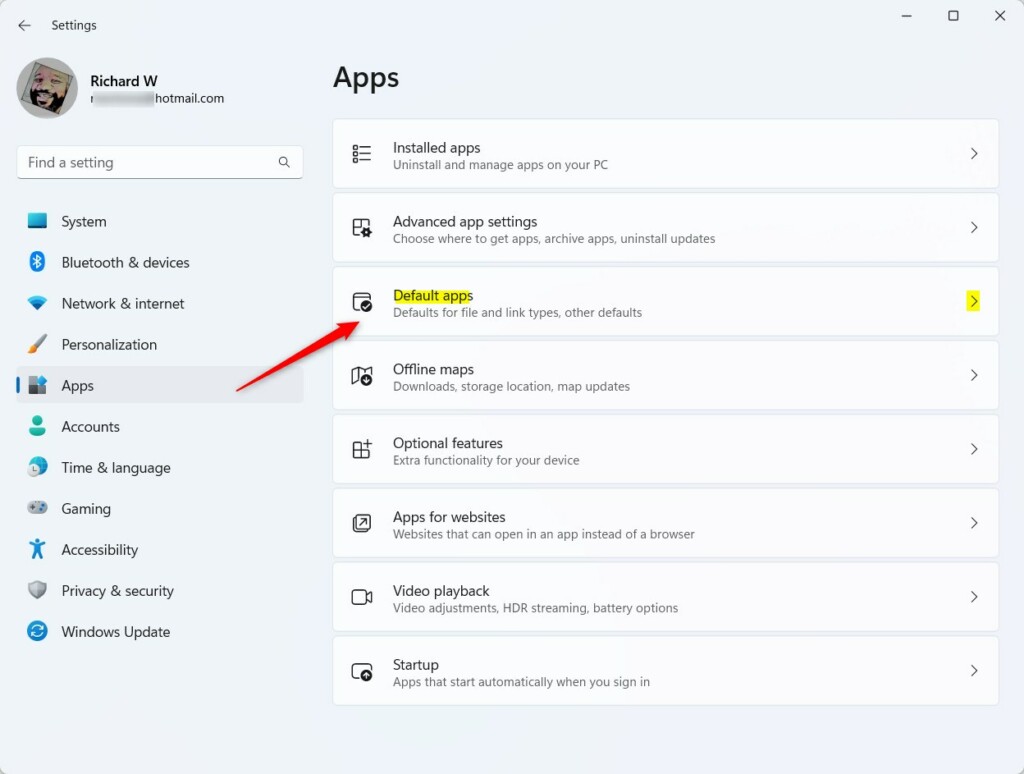
- In the Settings window, click Apps in the left-hand menu.
- On the right side, click Default apps.
You should now see a list of installed apps, plus options for setting defaults by file type or link type.
Step 3Find the Reset Option
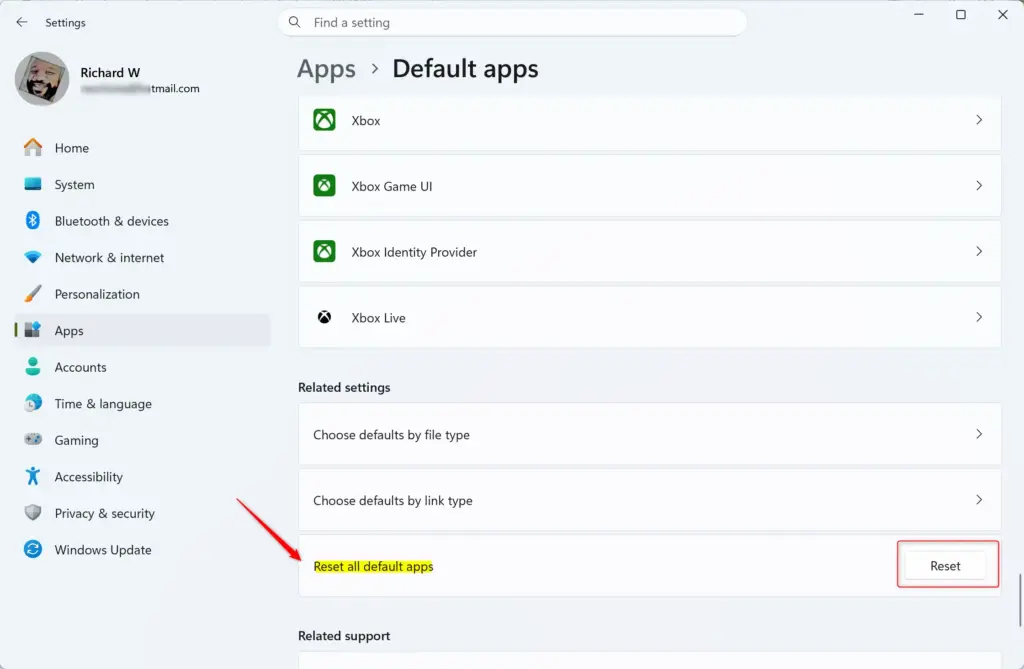
Scroll to the bottom of the Default apps page. You'll find a Reset all default apps section, or a similar heading under "Related settings" on some builds. Next to it is a Reset button. Clicking it restores all default app settings to their original Windows configuration.
Step 4Confirm the Reset
- Click Reset.
- If a confirmation box appears, read it. It says the action resets all your default app settings to Microsoft's recommended choices, so every change you made to default apps is undone. Click OK to confirm.
On many Windows 11 builds there is no confirmation box and the reset runs as soon as you click the button. Either way, there is no Undo button. If you later want a custom default back, you have to set it again by hand.
Step 5Check for Confirmation
A small checkmark appears next to the reset button when Windows 11 has finished clearing your settings. It confirms that your file associations are back to their defaults. Wait for the checkmark before you close Settings, so you know the process completed.
Resetting everything is a good way to fix many problems at once, but it wipes all your custom choices. Your browser, PDF reader and media player may all go back to the Microsoft defaults. If you only want to fix one file type, use the next method.
Change the Default App for a Specific File Type
If only one type of file causes problems, like your .JPG photos opening in a video player, resetting everything is too much. Windows lets you change the default app for a single file type, and nothing else is affected.
Step 1Open Settings and Go to Default Apps
- Press Windows key + I to open Settings.
- Go to Settings Apps Default apps
The Default apps page should open, showing your installed apps.
Step 2Find the File Type
On the Default apps page, find the file type you want to change. Depending on your build, this is under "Choose defaults by file type" or in a search box labeled "Set a default for a file type or link type". Look for the extension you need, such as ".jpg" for pictures or ".docx" for documents, and click it. If you use the search box, type the extension with the dot and pick it from the results.
Step 3Change the Default App
Selecting a file type shows which app currently opens it. Click that app name and Windows shows a list of installed software that can open the file type. Choose a different program from the list and that app opens the file type from now on.
If the app you want isn't in the list, you may see options like "Look for an app in the Microsoft Store" or "Choose an app on your PC." Use the second one if the program is already installed but isn't offered.
Step 4Confirm Your Choice
Click OK (on newer builds the button is labeled Set default) to save your choice. Windows applies the change immediately. Double-click a file of that type to check that it now opens in the right program.
Only use apps you trust to avoid security problems.
Step 5What If It Still Doesn't Work?
If a file type refuses to update, restart your computer. Windows sometimes holds on to old settings in memory until a fresh start clears them. A full shutdown and power-on makes it pick up your new default app choices.
Restarting Your PC
A restart is often the most effective fix. After you change a default app, restart your PC so Windows refreshes its settings and recognizes the new default program. You don't need to do this every time. Try it when the old app keeps opening after you've changed the default.
Signing Out and Back In
If you don't want to restart the whole PC, sign out of your account and sign back in. This reloads your user settings without a full reboot.
- Save your work and close your open programs.
- Click Start, then click your account name or picture.
- Click Sign out.
- Sign back in from the lock screen.
Using the "Open With" Menu
You can also use the "Open with" option on the file itself:
- Find a file of the type you're having trouble with in File Explorer.
- Right-click the file. On Windows 11, if you don't see Open with in the short menu, click Show more options or press Shift + F10 to open the full menu.
- Hover over Open with.
- Click Choose another app.
- In the window that appears, select the app you want to use.
- Check the box that says Always use this app to open . files (for example, "Always use this app to open .jpg files"). On some newer builds this appears as an Always button instead of a checkbox.
- Click OK.
This tells Windows 11 to always use the app you selected for that file type, so all future files of that type open with your preferred program. To undo it, repeat the steps and pick the old app, or use the Default apps page.
You can also click "Look for another app on this PC" to find the app's file (usually a .exe file) in its installation folder.
Why Reset File Associations?
Resetting file associations in Windows 11 fixes files that open in the wrong program after you install new software or make a mistake. It clears out broken or unwanted links and forces Windows back to the correct programs. It's a quick way to wipe the slate clean when your file types get scrambled.
The usual causes are:
- Accidental Changes: You might have clicked the wrong option by mistake, or a new program might have changed settings without you knowing.
- New Software: Sometimes, when you install new software, it automatically sets itself as the default for certain file types.
- Settings Issues: In rare cases, the file association settings can become broken, causing files not to open correctly.
- Troubleshooting: If a specific file type isn't opening right, changing its association is a good first step to fix the problem.
Once you know how to manage your file associations, your files will open with the programs you prefer.
Summary
Knowing how to reset file associations in Windows 11 gives you control over which programs open your files. You can reset all defaults at once or update a single file type, both from Settings Apps Default apps If your files still open in the wrong app, restart the computer or sign out and back in to lock the changes in.
Was this guide helpful?

About the Author
Richard
Tech Writer, IT Professional
Richard is a writer at Geek Rewind who turns complex IT tasks into clear, step-by-step guides. He draws on years of hands-on experience in system administration and enterprise IT operations, focusing on Windows, Linux and WordPress: the problems people actually run into, and the fixes that work. His server and WordPress guides come from systems he runs himself. Richard builds and maintains the platform behind Geek Rewind, from its Ubuntu servers and Nginx configuration to its custom WordPress plugins. Many new tutorials start with readers' questions, and he's always glad to answer them in the comments.

[…] UserChoice Protection Driver is a Windows feature that helps prevent unauthorized changes to file type associations. When a user sets a default program for opening a specific file type, Windows adds an entry for […]
Resetting file type associations? Why on earth some wants all those unwanted Microsoft apps back on its PC? The opposite is true, I guess.
I prefer other apps (Firefox, Thunderbird and so on), so I deleted Edge from W10 a long time
ago, and I am glad with that decision. The EU was not able to stop those Seattle alligators, better do that on our own (with a litte help from henrypp’ s simplewall).