How to Clean Boot Windows 11


A clean boot in Windows 11 starts your PC with only essential Microsoft system files and basic drivers. It helps you find software conflicts. This diagnostic mode temporarily turns off third-party startup apps and background services, so you can track down the program behind crashes, freezes, or slow performance.
Use a clean boot when your computer acts strangely and you suspect an installed app is interfering in the background. Typical cases are an app that crashes only on certain days, an installer that fails for no clear reason, or a PC that is slow right after sign-in. You turn off the extra startup items, test, and then bring them back in groups until the problem returns. That isolates the culprit.
Open Task Manager with Ctrl+Shift+Esc, click the Startup apps tab, right-click each item and select Disable, then open System Configuration (msconfig), click the Services tab, check Hide all Microsoft services, and disable all remaining non-Microsoft services. Restart your PC to boot with only essential Windows files and drivers running.
Why perform a clean boot?
A clean boot starts Windows 11 without the extra programs and services that load alongside it. It acts like a fresh start for troubleshooting. Your files, apps, and settings are not deleted or changed. Only the list of things that start with Windows is trimmed for a while.
Isolating startup programs and non-Microsoft services lets you see whether the problem still happens without them. If it goes away, one of the disabled items is the cause. If it does not, the cause is more likely Windows itself, a driver, or hardware. A clean boot is not the same as Safe Mode. Safe Mode loads a minimal set of drivers, while a clean boot keeps the normal Windows environment and only removes third-party startup items and services.
What happens when done?
After a clean boot, your computer restarts with only essential programs running. This helps you find out whether a background app is causing the problem. If the problem is gone, you know the cause is one of the items you turned off. If it is still there, you can stop suspecting your startup apps and look elsewhere.
If you are on a standard account, the System Configuration tool will not let you save changes. Sign in with an administrator account first. This applies to both Windows 11 Home and Pro. The tools used here are built into both editions.
Step 1Disable Startup Apps
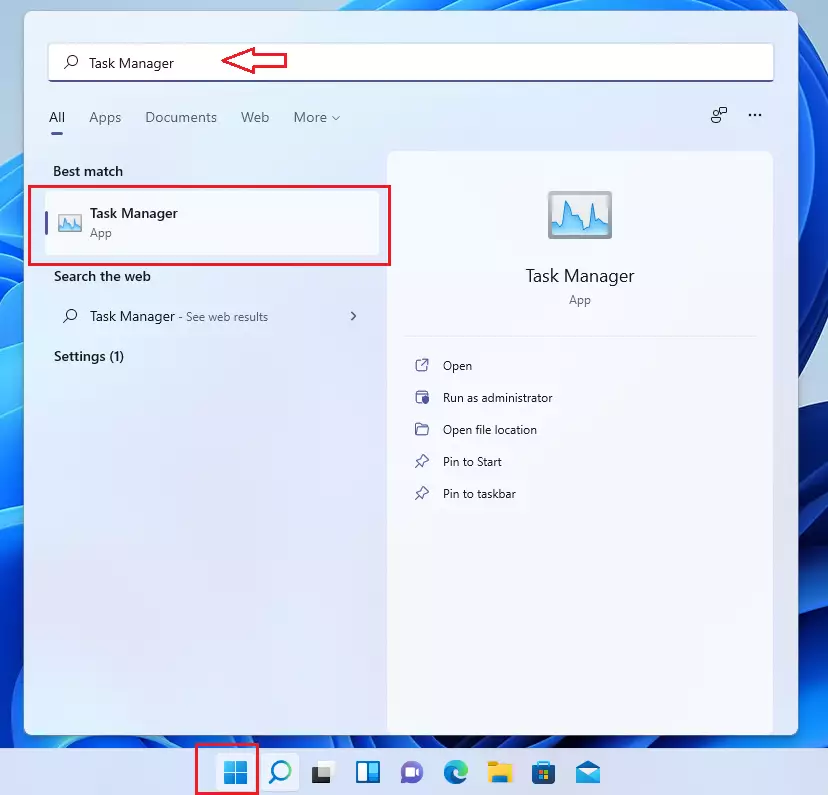
- Press Ctrl + Shift + Esc on your keyboard to open the Task Manager. A window titled Task Manager should open.
- If you see a small window with only a list of apps, click More details at the bottom. The full Task Manager opens with a menu on the left side.
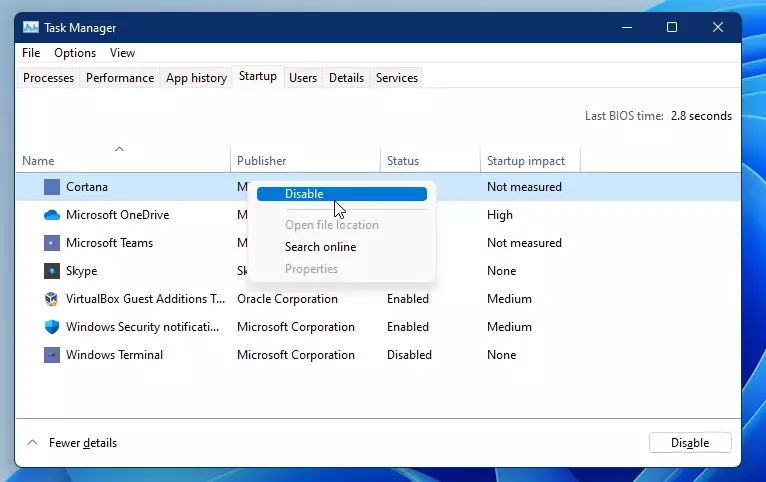
- Click on the Startup tab. In current Windows 11 builds (22H2 and later), this appears as Startup apps in the left-hand menu. You should see a list of programs with a Status column and a Startup impact column.
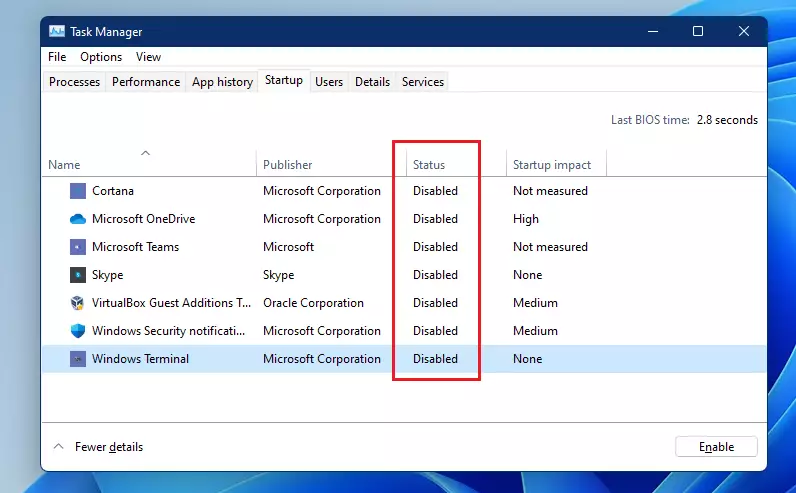
- For every item in the list, right-click it and select Disable. The Status column for that item changes to Disabled. Repeat this until every entry shows Disabled.
Close the Task Manager when you are finished. Nothing has to be saved. The changes take effect the next time you sign in.
Items you disable here stay disabled until you turn them back on in this same list. Make a note of anything you rely on, such as a cloud sync or backup app, so you can re-enable it later.
Step 2Disable Background Services
Next, disable the non-Microsoft background services. This stops third-party software from running behind the scenes, so you can test your system with only the core Windows features running. It is the second half of a clean boot, and it is where many conflicts hide, because plenty of apps install services that never show up in the startup list.
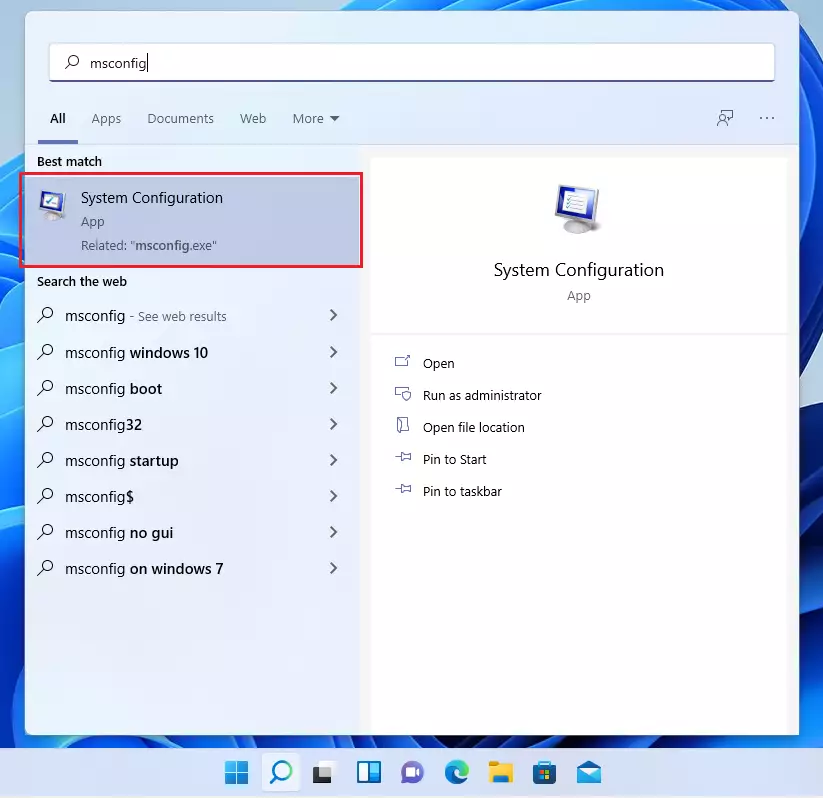
- Click the Start button and type
msconfig. The search results should show System Configuration as the best match. - Select System Configuration from the list. A window with the tabs General, Boot, Services, Startup, and Tools opens. If a User Account Control prompt appears, click Yes.
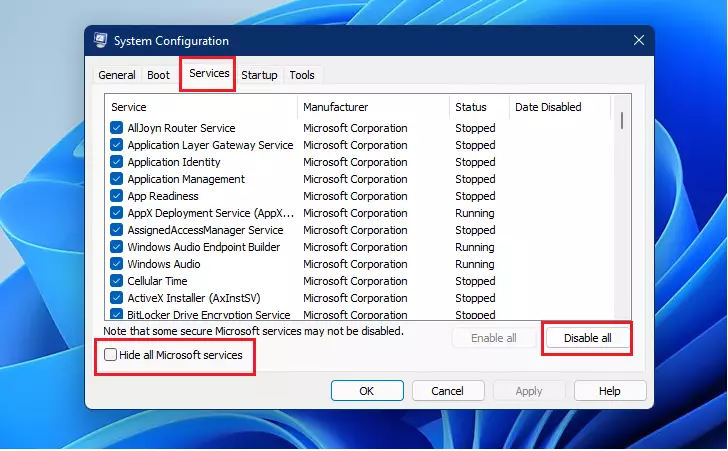
- Click on the Services tab. You will see a list of services with a check box beside each one.
- Check the box that says Hide all Microsoft services. This is very important so you do not turn off vital Windows features. The list should now be much shorter and show only third-party services.
- Click the Disable all button. All the check boxes in the list should clear. If the button is greyed out, there are no third-party services to disable. Note that this also turns off third-party antivirus and backup services until you undo it, so avoid risky browsing or downloads while you test.
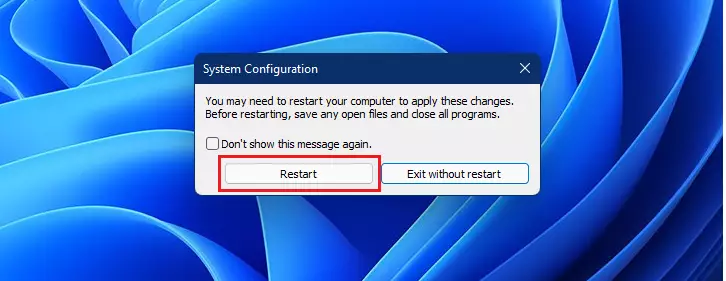
- Click OK and restart your computer. Windows may ask whether to restart now or exit without restarting. Choose Restart. When the PC comes back up, it is running in a clean boot state, so try to reproduce your problem.
How to Revert to Normal Boot
This puts your computer back to its everyday settings. Do not skip it. Leaving the PC in a clean boot state can mean security software and sync tools stay switched off.
- Open System Configuration (msconfig) again, using the same Start search as before.
- On the General tab, select Normal startup. The radio button should now be filled in beside that option.
- Go to the Services tab and uncheck Hide all Microsoft services. The full list of services appears again.
- Click Enable all. The check boxes in the list should be ticked again.
- Click OK, then restart your computer to apply the changes. A restart is required before everything loads normally again.
One more thing to check: startup apps you disabled in Task Manager stay disabled even after you choose Normal startup. Open Task Manager again, go to the Startup apps list, and right-click each app you want back, then select Enable.
Clean Boot vs. Safe Mode
| Feature | Clean Boot | Safe Mode |
|---|---|---|
| Purpose | Isolate software conflicts | Repair system corruption |
| Drivers | Loads all drivers | Loads minimal drivers |
| Customization | You choose what to disable | Automated limited environment |
Troubleshooting Methodology
If the problem is gone in the clean boot, the next job is to find which item caused it. Test the services in halves. Turn on about half of the services you disabled, restart, and check whether the problem returns. If it does, the cause is in that half. If it does not, it is in the other half. Keep splitting the group and restarting each time until only one service is left.
Do the same with the startup apps in Task Manager if the services turn out to be clean. Change only one group at a time. That way you always know which change caused the result. Once you find the culprit, update it, reinstall it, or leave it disabled, then go back to a normal boot.
Summary
A clean boot in Windows 11 is an effective method for finding out exactly which third-party apps or services are causing slowdowns or errors. It takes a few restarts, but it is safe and fully reversible. If the problem still happens in a clean boot, look at drivers, Windows updates, or hardware next.
Was this guide helpful?

About the Author
Richard
Tech Writer, IT Professional
Richard is a writer at Geek Rewind who turns complex IT tasks into clear, step-by-step guides. He draws on years of hands-on experience in system administration and enterprise IT operations, focusing on Windows, Linux and WordPress: the problems people actually run into, and the fixes that work. His server and WordPress guides come from systems he runs himself. Richard builds and maintains the platform behind Geek Rewind, from its Ubuntu servers and Nginx configuration to its custom WordPress plugins. Many new tutorials start with readers' questions, and he's always glad to answer them in the comments.

No comments yet — be the first to share your thoughts!