
How to Install WSL on Windows 11

This tutorial shows students and new computer users how to install Windows Subsystem for Linux (WSL) on Windows 11.

Why Install WSL on Windows 11?

There are many reasons why you might want to install Windows Subsystem for Linux (WSL) on Windows 11.

The biggest advantage of WSL is that it lets you run a Linux environment directly in Windows. You can use Linux command-line tools, utilities, and applications without setting up a virtual machine or dual-boot. This is helpful if you need to work with Linux-based tools but prefer to use Windows as your main operating system.

WSL2 has a newer design. It gives you faster performance and better compatibility with Linux. This makes it great for running Linux-based applications on Windows.

What happens when you install WSL? You get access to Linux tools and software without switching to a Linux operating system. You can work with both Windows and Linux environments on the same computer.

How to Install Windows Subsystem for Linux

Step 1: Open Command Prompt as Administrator

First, you need to open the Command Prompt terminal as an administrator. [REQUIRES ADMIN PRIVILEGES]

Click on Start. Then type Command Prompt.

Right-click the Command Prompt app. Choose Run as administrator.
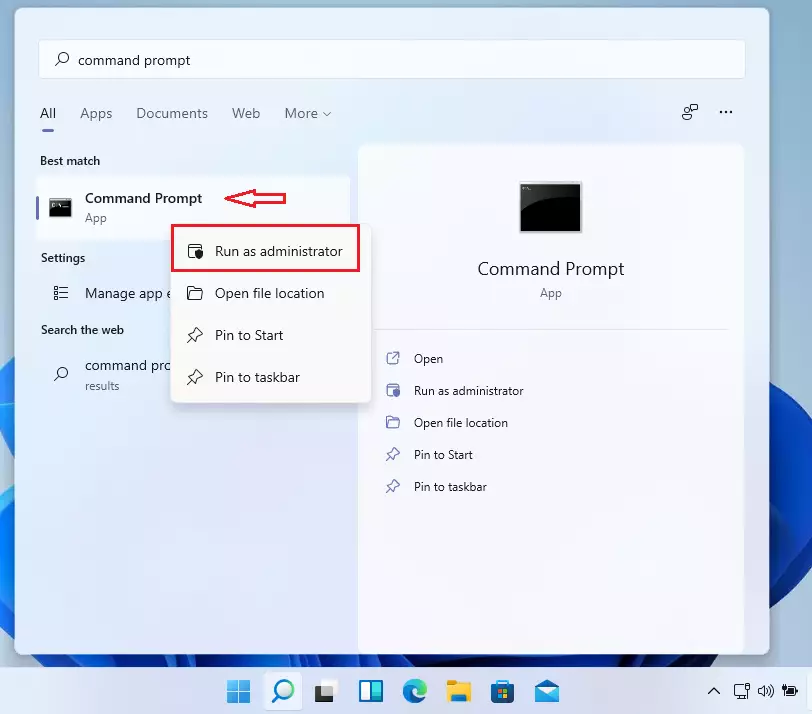
Windows 11 Command Prompt opened with administrator privileges

Step 2: Install WSL

When the console opens, run this command:

wsl --install

Wait for WSL 2 to install. This may take a few minutes.

When it finishes, you should see a success message like this:

Installing: Virtual Machine Platform
Virtual Machine Platform has been installed.
Installing: Windows Subsystem for Linux
Windows Subsystem for Linux has been installed.
Downloading: WSL Kernel
Installing: WSL Kernel
WSL Kernel has been installed.
Downloading: GUI App Support
Installing: GUI App Support
GUI App Support has been installed.
Downloading: Ubuntu
The requested operation is successful. Changes will not be effective until the system is rebooted.

Step 3: Restart Your Computer

Restart your computer. WSL should now be installed and ready to use.

To update WSL later, run this command:

wsl --update

Install a Specific Linux Distribution

Now that WSL is installed, you can install your own Linux distribution. To see all available distributions, run this command:

wsl --list --online

You will see all available distributions:

NAME FRIENDLY NAME
Ubuntu Ubuntu
Debian Debian GNU/Linux
kali-linux Kali Linux Rolling
openSUSE-42 openSUSE Leap 42
SLES-12 SUSE Linux Enterprise Server v12
Ubuntu-16.04 Ubuntu 16.04 LTS
Ubuntu-18.04 Ubuntu 18.04 LTS
Ubuntu-20.04 Ubuntu 20.04 LTS

To install a Linux distribution, use this command. For example, to install Ubuntu 20.04, run:

wsl --install -d ubuntu-20.04

You will see a message that the distribution is installing:

Downloading: Ubuntu 20.04 LTS
Installing: Ubuntu 20.04 LTS
Ubuntu 20.04 LTS has been installed.
Launching Ubuntu 20.04 LTS.

After installing, you will see a Ubuntu command console. You need to set up a username and password:

Installing, this may take a few minutes.
Please create a default UNIX user account. The username does not need to match your Windows username.
For more information visit: https://aka.ms/wslusers
Enter new UNIX username: user
New password:
Retype new password:
passwd: password updated successfully
Installation successful!
To run a command as administrator (user "root"), use "sudo <command>".
See "man sudo_root" for details.
Welcome to Ubuntu 20.04 LTS (GNU/Linux 4.4.0-22000-Microsoft x86_64)

Troubleshooting Commands

If you run into issues, try these commands:

wsl --set-default-version 1

bcdedit /set hypervisorlaunchtype auto start

What is WSL and why should I install it on Windows 11?

WSL, or Windows Subsystem for Linux, allows you to run a Linux environment directly on Windows 11 without the need for a virtual machine. It's beneficial for developers who need access to Linux-based tools and applications while using Windows as their primary OS.

How do I enable WSL on Windows 11?

To enable WSL on Windows 11, open the Command Prompt as an administrator and run the command 'wsl –install'. This will initiate the installation process for WSL 2, after which you will need to restart your computer.

Can I install different Linux distributions using WSL?

Yes, after installing WSL, you can install various Linux distributions. Use the command 'wsl –list –online' to see available distributions and then run 'wsl –install ' to install your preferred one.

What should I do if WSL installation fails?

If WSL installation fails, ensure your Windows 11 is updated and that virtualization is enabled in your BIOS settings. You can also try running the installation command again or check for any error messages that can guide troubleshooting.

How do I update WSL once it is installed?

To update WSL after installation, simply open the Command Prompt and run the command 'wsl –update'. This will ensure you have the latest features and improvements for your WSL environment.

Summary

Installing Windows Subsystem for Linux (WSL) on Windows 11 gives you easy access to Linux-based tools and applications directly from Windows.

WSL2 offers better performance and compatibility. It is a great solution for developers and power users.

You can install different Linux distributions based on what you need.

WSL helps you work faster by removing the need for virtual machines or dual-boot setups.

You can keep WSL updated with simple commands. This ensures you always have the newest features and security updates.
Categories:

,

Tags:

43 responses to “How to Install WSL on Windows 11”

  1. charles wildman Avatar
    charles wildman

    Hi all, just installed (how to install windows subsystem for linux (WSL) on windows 11) per your instructions. Now what do i do to find it and use it, thanks from a dummy.

  2. […] Windows Terminal is a modern host application for the command-line shells, including Command Prompt, Windows PowerShell, and bash (via Windows Subsystem for Linux (WSL)). […]

  3. […] Windows Terminal is a modern host application for the command-line shells that include Command Prompt, PowerShell, and bash (via Windows Subsystem for Linux (WSL)). […]

  4. […] Windows Terminal is a modern host application for the command-line shells, including Command Prompt, Windows PowerShell, and bash (via Windows Subsystem for Linux (WSL)). […]

  5. […] Windows Terminal is a modern host application for the command-line shells, including Command Prompt, Windows PowerShell, and bash (via Windows Subsystem for Linux (WSL)). […]

  6. […] Windows Terminal is a modern host application for the command-line shells, including Command Prompt, Windows PowerShell, and bash (via Windows Subsystem for Linux (WSL)). […]

  7. […] Windows Terminal is a modern host application for the command-line shells, including Command Prompt, Windows PowerShell, and bash (via Windows Subsystem for Linux (WSL)). […]

  8. […] Windows Terminal is a modern host application for the command-line shells, including Command Prompt, Windows PowerShell, and bash (via Windows Subsystem for Linux (WSL)). […]

  9. […] Windows Terminal is a modern host application for the command-line shells, including Command Prompt, Windows PowerShell, and bash (via Windows Subsystem for Linux (WSL)). […]

  10. […] Windows Terminal is a modern host application for the command-line shells, including Command Prompt, Windows PowerShell, and bash (via Windows Subsystem for Linux (WSL)). […]

  11. […] Windows Terminal is a modern host application for the command-line shells, including Command Prompt, Windows PowerShell, and bash (via Windows Subsystem for Linux (WSL)). […]

  12. […] Windows Subsystem for Linux lets developers run a GNU/Linux environment directly in Windows without setting up a virtual machine or dual-boot, including most command-line tools, utilities, and applications. […]

  13. […] This article describes the steps to shut down or terminate a Ubuntu Linux OS on Windows 11 using Windows Subsystem for Linux (WSL). […]

  14. […] This article describes the steps to mount the Ubuntu Linux file system on Windows 11 using Windows Subsystem for Linux (WSL). […]

  15. […] Windows Subsystem for Linux (WSL) lets developers run a GNU/Linux environment directly in Windows without setting up a virtual machine or dual-boot, including most command-line tools, utilities, and applications. […]

  16. […] Nvm is a version manager for node.js, designed to be installed per user and invoked per shell. It can install and manage node.js packages on Linux, macOS, and Windows with WSL. […]

  17. […] Windows Terminal is a modern host application for the command-line shells, including Command Prompt, Windows PowerShell, and bash (via Windows Subsystem for Linux (WSL)). […]

  18. […] Windows Terminal is a modern host application for the command-line shells, including Command Prompt, Windows PowerShell, and bash (via Windows Subsystem for Linux (WSL)). […]

  19. […] Windows Terminal is a modern host application for the command-line shells, including Command Prompt, Windows PowerShell, and bash (via Windows Subsystem for Linux (WSL)). […]

  20. […] Windows Terminal is a modern host application for the command-line shells, including Command Prompt, Windows PowerShell, and bash (via Windows Subsystem for Linux (WSL)). […]

  21. […] Windows Terminal is a modern host application for the command-line shells, including Command Prompt, Windows PowerShell, and bash (via Windows Subsystem for Linux (WSL)). […]

  22. […] Windows Subsystem for Linux lets developers run a GNU/Linux environment directly in Windows without setting up a virtual machine or dual-boot, including most command-line tools, utilities, and applications. […]

  23. […] Windows Terminal is a modern host application for the command-line shells, including Command Prompt, Windows PowerShell, and bash (via Windows Subsystem for Linux (WSL)). […]

  24. […] article explains how to mount and unmount a removable USB or thumb drive in the Windows Subsystem for Linux (WSL) environment. Windows 11 allows users to mount removable drives with […]

  25. […] Bash (Linux commands) through Windows Subsystem for Linux (WSL) […]

  26. […] Windows Terminal is a modern tool that lets you use command-line shells like Command Prompt, PowerShell, and Linux commands through Windows Subsystem for Linux (WSL). […]

  27. […] Windows Terminal is a modern app where you can run tools like Command Prompt, PowerShell, and even Linux commands through Windows Subsystem for Linux (WSL). […]

  28. […] What is Windows Terminal? Windows Terminal is a handy app that lets you run command-line tools like Command Prompt, PowerShell, and even Linux commands through WSL (Windows Subsystem for Linux). […]

  29. […] you can use command line tools like Command Prompt, PowerShell, or even Linux commands if you have Windows Subsystem for Linux (WSL) […]

  30. […] that lets you use command-line tools like Command Prompt, PowerShell, and Linux commands (through WSL) all in one […]

  31. […] What is Windows Terminal? Windows Terminal is a modern program where you can use command-line tools like Command Prompt, PowerShell, or Linux commands through Windows Subsystem for Linux (WSL). […]

  32. […] that lets you use command tools like Command Prompt, PowerShell, and even Linux commands through Windows Subsystem for Linux (WSL). It’s a modern and easy-to-use tool for running commands on your […]

  33. […] you can use command-line tools like Command Prompt, PowerShell, and even Linux commands if you have Windows Subsystem for Linux (WSL) […]

  34. […] WSL lets you run Linux right inside Windows without extra software. You can use many Linux commands and tools easily. […]

  35. […] Windows Terminal is a new app in Windows 11 where you can open command-line tools like Command Prompt, PowerShell, and even Linux commands (using WSL). […]

  36. […] Windows Terminal is a smart app on Windows 11 that lets you use command-line tools like Command Prompt, PowerShell, and Linux commands through Windows Subsystem for Linux (WSL). […]

  37. […] Terminal is a modern app that lets you use command-line tools like Command Prompt, PowerShell, and Linux Bash on Windows 11. It supports multiple tabs, split views, custom colors, and […]

  38. […] post shows students and new users steps to take to check the version of the Windows Subsystem of Linux (WSL) running on your system. WSL has two versions that one can install and run […]

  39. […] post shows students and new users steps to back up and restore a Linux distribution on Windows Subsystem for Linux (WSL). When using WSL, you can back up (export) or restore (import) Linux onto another WSL system using […]

  40. […] new users how to remove the Linux Subsystem for Linux (WSL) from Windows 11. In Windows, one can install or uninstall WSL easily with a few clicks. When you have WSL running on Windows 11 and decide to […]

Leave a Reply

Your email address will not be published. Required fields are marked *

Exit mobile version