How to Hide Windows Terminal in Notification Area

You can hide the Windows Terminal icon in the notification area to keep your taskbar clutter-free.
The notification area, often called the system tray, is the section of the taskbar next to the clock. Hiding Windows Terminal there means its icon disappears from the taskbar when minimized, instead appearing only in the system tray.
This method is particularly useful for Windows 11 users who want to manage their open applications more discreetly. By default, Windows Terminal minimizes to the taskbar, but you can configure it to tuck away into the notification area.
Open Windows Terminal, go to Settings, then Appearance. Toggle “Hide Terminal in the notification area when it is minimized” to On. Click Save to apply the change.
What is Windows Terminal?
Windows Terminal is a handy app that lets you use command line tools like Command Prompt and PowerShell all in one place, and it’s great for managing your Linux commands if you use WSL.
You can customize many things in Windows Terminal. You can change the language, size, startup behavior, and more. One useful feature is hiding the Terminal icon in the notification area when you minimize it. This feature is off by default. But you can turn it on easily.
Why Hide Windows Terminal in the Notification Area?
- Keep your taskbar clean: When you minimize Terminal, its icon moves to the notification area instead of staying on the taskbar.
- Keep Terminal running quietly: You can keep Terminal open in the background. It won’t take up space on the taskbar.
- Access Terminal when needed: You can still open Terminal from the notification area whenever you want to use it again.
Hiding Windows Terminal in the notification area keeps your taskbar tidy by moving its icon out of sight when minimized, allowing it to run quietly in the background without taking up space.
How to Hide Terminal in the Notification Area When Minimized
To hide Windows Terminal in the notification area when you minimize it, you’ll need to adjust a setting within the app itself.
- Open Windows Terminal. Click the Start menu button (Windows icon) on the bottom-left of your screen. Type Terminal in the search box. Then click Windows Terminal from the results.
Open the Windows Terminal app - Once Terminal is open, click the down arrow ▼ button near the top. Select Settings. Or press
Ctrl + ,on your keyboard.
Open the Windows Terminal Settings - In the Settings window, click on Appearance from the left menu.
- Look for the option labeled “Hide Terminal in the notification area when it is minimized”.
- Turn the switch On to enable hiding. Or turn it Off to disable it .
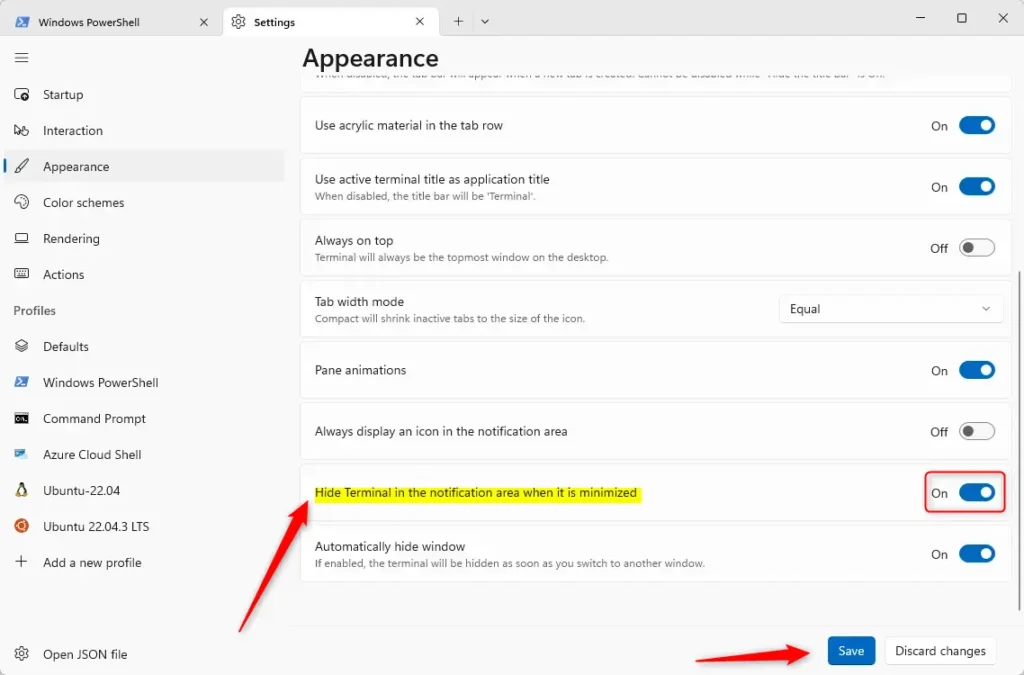
Hide Terminal in notification area when minimized - Click the Save button at the bottom to keep your changes. Then close the Settings window.
That’s it! Now when you minimize Windows Terminal, it will hide in the notification area instead of staying on the taskbar.
Summary
Turning on the ‘Hide Terminal in the notification area when minimized’ setting keeps your taskbar clean and lets Windows Terminal run quietly in the background, ready for when you need it.
What happens when you turn it off? Terminal stays visible on the taskbar. This makes it easier to access.
Why do this? You get a cleaner workspace. Terminal still runs in the background when you need it.
You can change this setting anytime. Just go back to Settings whenever you want to switch it on or off.
For more tips about Windows Terminal and how to customize it, check out these helpful guides:
How to Change Windows Terminal Language
How to Change Windows Terminal Launch Size
How to Set Default Profile in Windows Terminal
Why does my desktop have a notification area?
The icons in the notification area are used to provide quick access to system and application functions, as well as to display notifications and alerts. Each icon represents a different program or system function and may have different actions associated with it.
Was this guide helpful?

About the Author
Richard
Tech Writer, IT Professional
Richard, a writer for Geek Rewind, is a tech enthusiast who loves breaking down complex IT topics into simple, easy-to-understand ideas. With years of hands-on experience in system administration and enterprise IT operations, he’s developed a knack for offering practical tips and solutions. Richard aims to make technology more accessible and actionable. He's deeply committed to the Geek Rewind community, always ready to answer questions and engage in discussions.


No comments yet — be the first to share your thoughts!