How to Install Additional Software on Ubuntu

- 16 steps
- Needs administrator rights
- Includes a restart or sign-out
Installing additional software on Ubuntu adds programs beyond the tools that come pre-installed. Ubuntu handles this in several ways:
Open the App Center from the applications menu, search for the program, click its Install button and enter your administrator password. For software outside the store, run sudo apt install with the package name in the terminal (Ctrl+Alt+T). Flatpak apps need Flatpak and the Flathub repository set up first, which takes a few terminal commands on a fresh Ubuntu 24.04 LTS install.
- APT is the package manager for traditional .deb files.
- Snaps are bundled apps that Canonical maintains alongside the main store.
- Flatpaks are a third format that comes from outside the default Ubuntu sources.
Most everyday software is available in at least one of these. Some vendors, such as Google (Chrome) and Microsoft (VS Code), also hand out a downloadable .deb file. The sections below cover that case too.
Flatpak support is not set up on a fresh Ubuntu 24.04 LTS install. Installing the package is only the first half. You also need to add the Flathub repository, or there are no Flatpak apps to install. Setting it up takes a few steps:
- Press Ctrl+Alt+T to open the terminal.
- Run the command
sudo apt install flatpak. Enter your password when asked. This installs Flatpak support so you can run software from outside the main Ubuntu store. - Add the Flathub remote by running flatpak remote-add –if-not-exists flathub https://flathub.org/repo/flathub.flatpakrepo. The –if-not-exists option means it is safe to run again if you are not sure you already did it.
- Log out and back in, or restart the computer. Until you do, Flatpak apps may not show up in your applications menu.
- To install a Flatpak app, open the terminal and run flatpak install flathub app-name. Replace app-name with the application ID shown on the app’s page at flathub.org. Confirm when asked.
When the install finishes, the app appears in your applications menu. If it does not, log out and back in once more.
How to install software in Ubuntu Linux
You have two main ways to install programs: the graphical App Center or the terminal. The App Center is easier if you want to browse and see screenshots and descriptions. The terminal is faster when you already know the package name, and it is easier to repeat on several machines. Neither method is better, and you can mix them on the same system.
Using the App Center
The App Center is the built-in store on Ubuntu 24.04 LTS. It lets you install software without typing commands. It lists both Snap packages and Debian (.deb) packages, so one search covers both formats. Flatpak apps do not appear in it by default.
To start, open the App Center from your applications menu. You can browse by category or type a program name into the search bar. Then click the install button on the app you want.
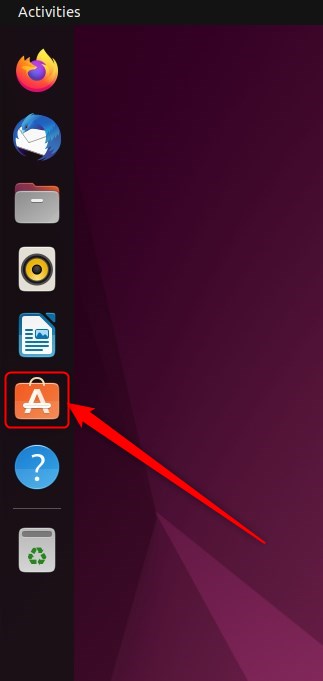
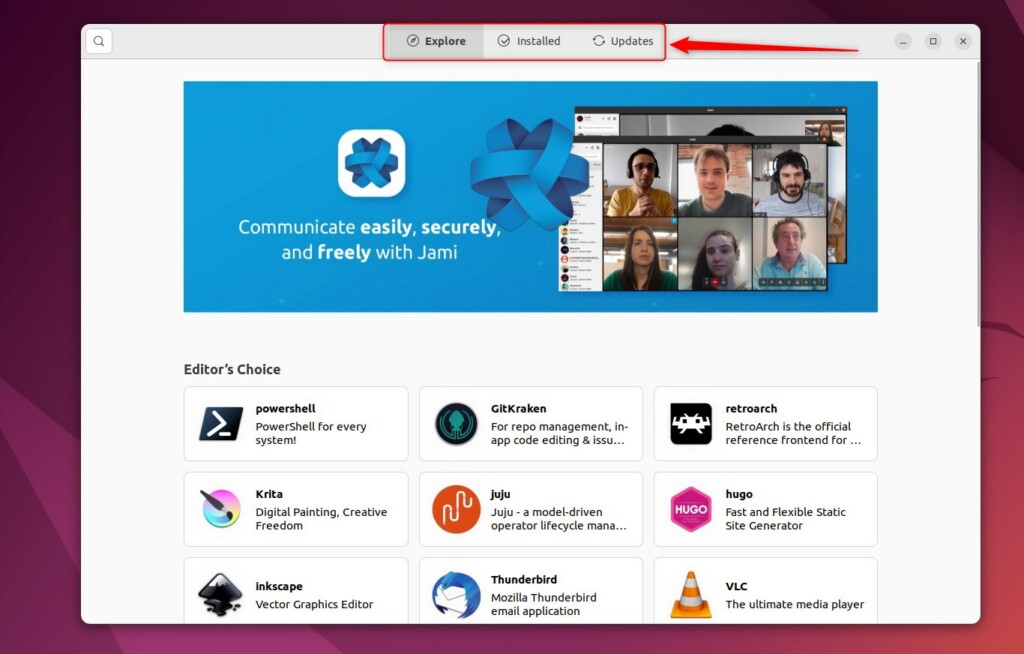
- Open the applications menu and start the App Center. The store window opens with featured apps and a list of categories.
- Browse the categories, or click the search bar and type the name of the program. Matching apps appear as you type.
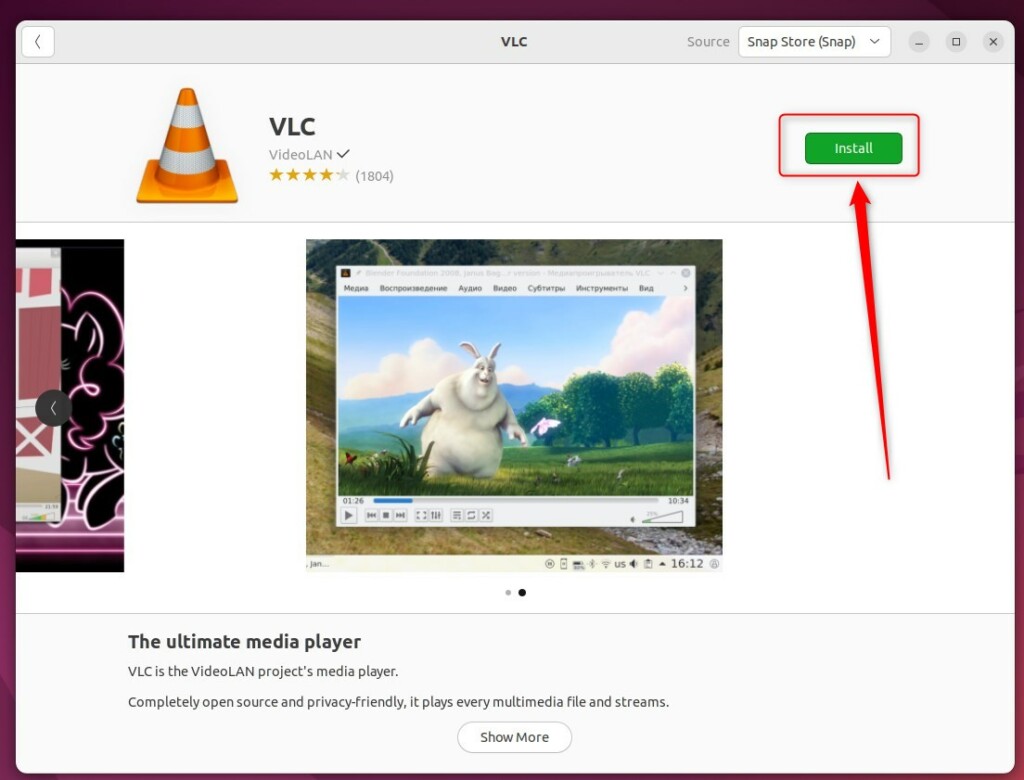
- Click the app you want. Its page opens with a description, screenshots and details about where the package comes from.
If the same app is offered in more than one format, check the source or channel on the app page before you install. Use the one you prefer. If you are unsure, the version from the Ubuntu archive is a safe default.
- On the app’s page, click the Install button.
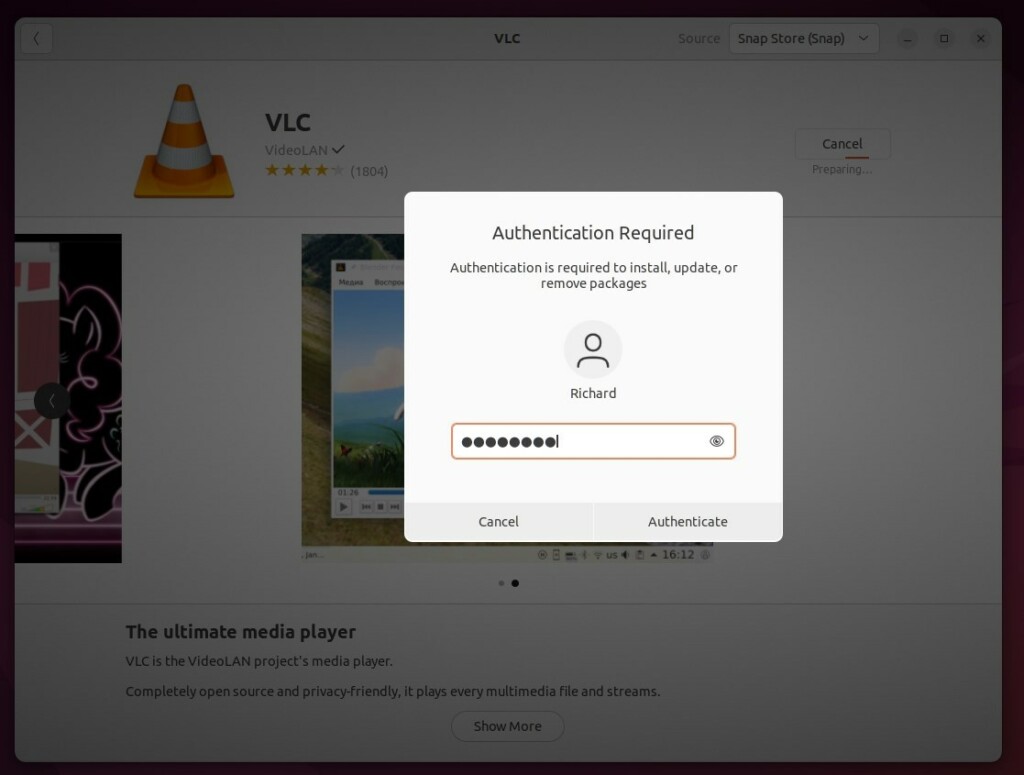
- Enter your system password when the authentication window appears, then confirm. Ubuntu asks for this to approve the change. Your account must have administrator rights, so a standard user may be refused.
Once you enter the password, the download and installation begin. A progress indicator replaces the install button while the app downloads. When it finishes, the button changes to an Open option, and the app also appears in your applications menu.
The App Center can also install a .deb file you downloaded yourself, such as Chrome or VS Code. Only download these from the vendor’s official website. To install one:
- Open the Files app and go to the folder where the file was saved, usually Downloads.
- Double-click the .deb file. The App Center opens and shows the package with an Install button.
- Click Install and enter your password when asked. The app appears in your applications menu when it finishes.
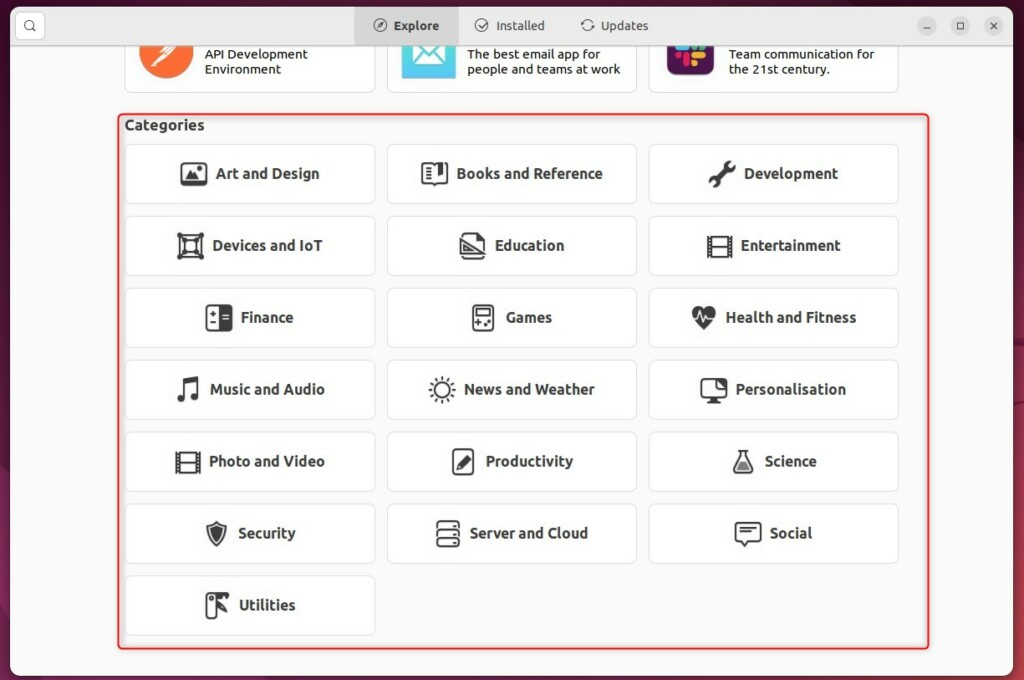
To remove an app you no longer need, open its page in the App Center and click the uninstall option. This undoes the installation. You may be asked for your password again.
If you need to update your apps, use the Software Updater utility or click the Updates section inside the App Center. Software Updater covers .deb packages and system updates, and it may ask you to restart after some updates, such as a new kernel. Snap apps also refresh themselves in the background, so you may find they are already up to date.
Using the Terminal
The Terminal lets you install software quickly by typing text commands instead of clicking through a store. You can use the standard package manager commands or the snap commands to download and set up applications, and it usually takes only a few seconds. You need to know the exact package name, so check the app’s website or documentation if a command reports that it cannot find the package.
Before you start, note two requirements. First, sudo only works for an account with administrator rights. Second, before any APT install, run sudo apt update. This refreshes the package lists so APT finds the latest versions. Without it, you may get an old version or a “package not found” error.
- Press Ctrl+Alt+T to open the Terminal. A window opens with a command prompt.
- For a Debian package, run sudo apt update first and wait for the prompt to return. Snap installs do not need this step.
- Choose the command below that matches the type of package you want, and replace the example package name with the one you need.
- For Snap packages
sudo snap install - For standard Debian packages
sudo apt install
Installing system-wide software needs administrator rights, so the terminal will ask for your password. Nothing appears on screen as you type it. That is normal, so type it and press Enter. If you are asked to confirm, answer as prompted and wait for the prompt to return.
To install a downloaded .deb file from the terminal, open the folder that holds it, or give the full path. Then run sudo apt install ./file.deb, replacing file.deb with the real file name. The ./ at the start matters, because it tells APT to use the local file rather than search the repositories. APT also pulls in any dependencies the package needs. As with the App Center method, only use .deb files from the vendor’s official site.
After the process finishes, your new software is ready to use. You can find it in your applications menu, or start it from the terminal by typing its name. Repeat these steps for any other programs you need. If a command ends with an error, read the last few lines of output. They usually say whether the package name is wrong, the network is down, or another update process is still running.
Installing software in Ubuntu is fast and simple. Whether you prefer the visual App Center or the speed of the terminal, your system will be ready for any task in minutes.
Frequently asked questions
How to install aider chat inside Ubuntu 18.04 container?
Ubuntu 18.04's default Python (version 3.6) is too old for aider-chat, which needs Python 3.9 or newer. Install a newer Python, such as one from the deadsnakes PPA, or use the uv tool to get one. Then create a virtual environment, run pip install aider-chat inside it, and start the program by typing aider.
How to install software on Windows?
Download the program from its official website. The file usually ends in .exe or .msi. Double-click the file and follow the prompts, accepting the license and choosing a folder if asked. For apps in the Microsoft Store, open the Microsoft Store app, search for the name, and click Get.
How to install docker on Ubuntu?
Run sudo apt install docker.io in Terminal to install Docker from the Ubuntu repositories. This version is quick to set up but may be older than the current release. For the newest version, follow the steps on Docker's official website to add its apt repository first.
How to install software from file?
Open the folder where the file was saved, usually Downloads, and double-click it. On Windows, run files ending in .exe or .msi and follow the prompts. On Ubuntu, double-click a .deb file to open it in Software Install, or run sudo apt install ./yourfile.deb in Terminal. Only run files from sources you trust.
How to install a software file?
A software file is usually an installer ending in .exe, .msi, or .deb, or a zip archive. Double-click an installer and follow the prompts. For a zip file, right-click it, choose Extract All, open the new folder, and run the setup file or the app's program file. Check that the file came from the official site first.
Still have a question?
Answered by AI from this guide. Good questions may be added to this page — please don't include personal details.
Did this guide fix your problem?

About the Author
Richard
Tech Writer, IT Professional
Richard is a writer at Geek Rewind who turns complex IT tasks into clear, step-by-step guides. He draws on years of hands-on experience in system administration and enterprise IT operations, focusing on Windows, Linux and WordPress: the problems people actually run into, and the fixes that work. His server and WordPress guides come from systems he runs himself. Richard builds and maintains the platform behind Geek Rewind, from its Ubuntu servers and Nginx configuration to its custom WordPress plugins. Many new tutorials start with readers' questions, and he's always glad to answer them in the comments.
[…] Our previous post showed you how to install additional applications and software packages in Ubuntu Linux. […]
[…] interface. Depending on how you installed your system, you might not have Orca installed. If not, install Orca […]
[…] multiple clocks and times for other locations in Ubuntu Linux, you’ll need to install the Gnome Clocks application. Unfortunately, it is not installed by default in Ubuntu […]