How to Uninstall Software in Ubuntu Linux

- 16 steps
- Needs administrator rights
Uninstalling software in Ubuntu frees up disk space and keeps your system lean by getting rid of applications you no longer use. You can do it in two ways: with the graphical App Center, or with a few terminal commands. Both work well, and this guide covers each one.
Ubuntu tracks installed software through package managers. The main one is apt, which handles the standard Ubuntu packages. Ubuntu also supports Snap and Flatpak apps, and each has its own removal command. With apt you can remove a program and then clear out its leftover configuration files, so you don’t collect junk you no longer need. The sections below show each method and explain when to use it.
Open the App Center from the Super key search, click the Manage tab, find the app, and click the trash can icon or Uninstall button next to its name. Enter your user password to confirm, and the app is removed once the progress indicator finishes. For apps not listed there, use a terminal command such as sudo apt remove followed by the package name.
How to uninstall Software in Ubuntu Linux
The simplest way to uninstall software in Ubuntu is the built-in App Center. It lists the programs you have installed and lets you remove them with a couple of clicks. You don’t type any commands, and you don’t need to know the package name.
- Press the Super key on your keyboard to open the search menu.
- Type App Center.
- Open the app from the results. You should see the App Center window.
Ubuntu 26.04 uses the App Center to manage programs. The Super key is often the same as the Win on a PC keyboard. Pressing it opens the GNOME shell search. This is the quickest way to start any app.
- Press the Super key. The search field opens at the top of the screen.
- Type App Center.
- Click the shopping bag icon. The App Center window opens.
If you use the dock on the left side of the screen, the App Center may already be pinned there as the same shopping bag icon. You can click it from the dock instead.
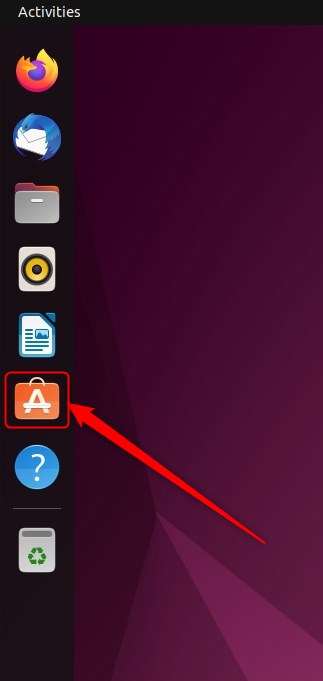
The App Center shows the programs already on your computer in its installed-apps list. You use that list to pick what to remove.
- Open the App Center.
- Click the Manage tab. You should now see a list of your installed programs.
- Find the app you want to remove. Use the search bar, or scroll through the list.
- Click the trash can icon or the Uninstall button next to the name.
- Confirm your choice when Ubuntu asks.
The next steps look at each part of this process more closely.
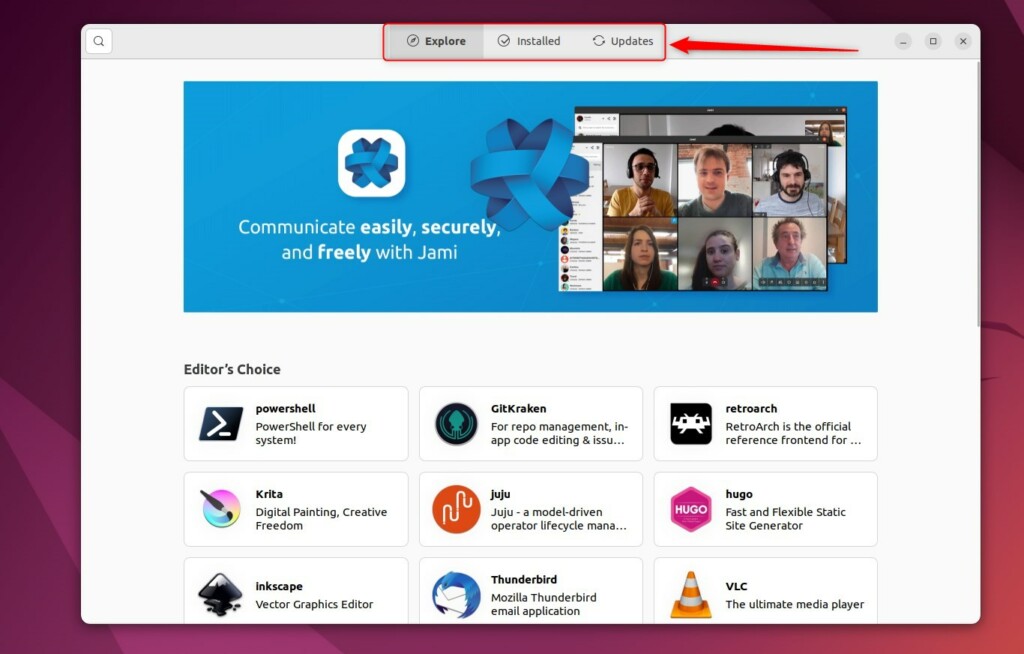
If you only have a few apps, scrolling through the list on the Manage tab is fine. If you have many, click the search bar and type part of the app’s name. The list narrows as you type, so you can pick the right entry quickly.
Check the name and icon before you go on, especially when several entries look alike. If the program you want doesn’t appear here, it may have been installed another way, for example from a downloaded file or with a terminal command. In that case, use the terminal methods later in this guide.
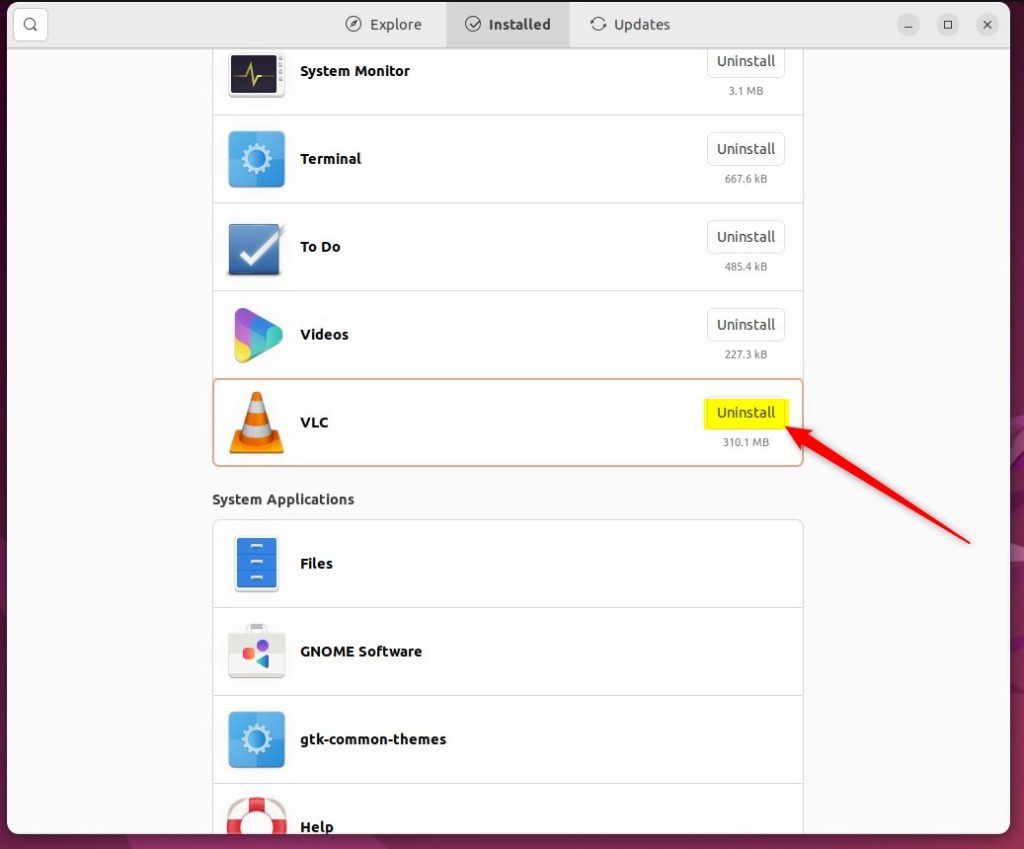
Once you have found the app, remove it from its entry.
- Locate the app in the list.
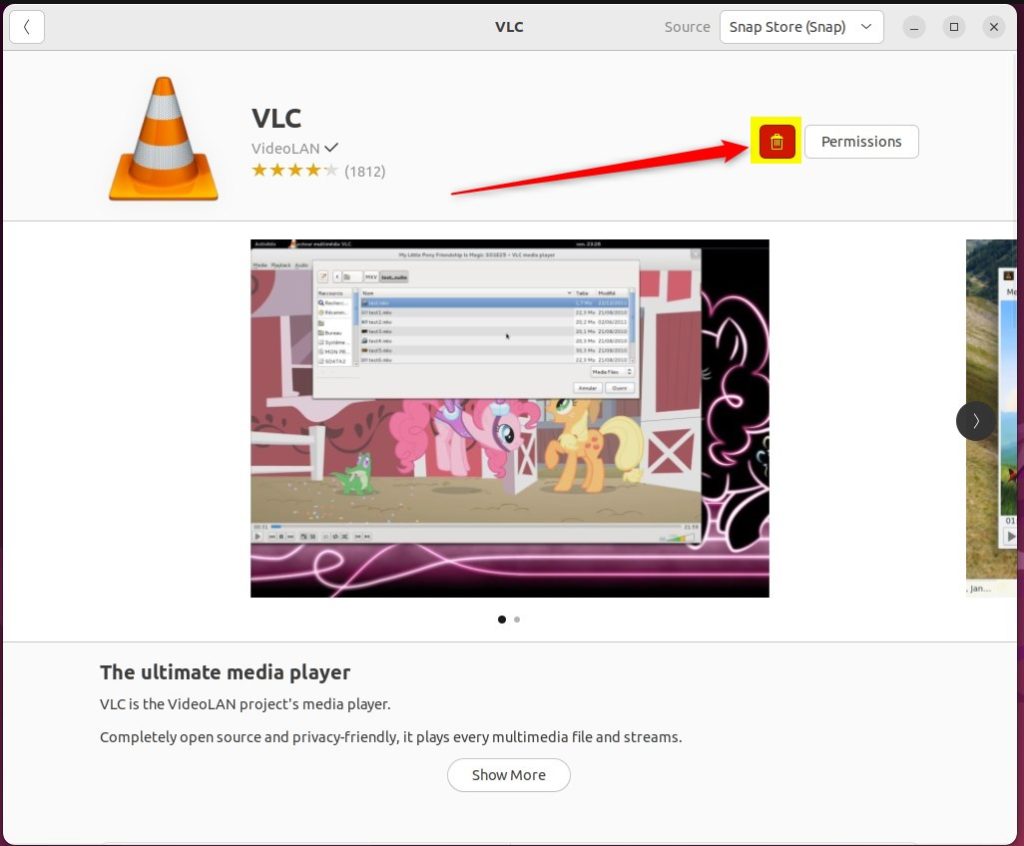
- Click the trash can icon or the Uninstall button next to the app name.
A confirmation prompt should appear next. Nothing is removed until you confirm it.
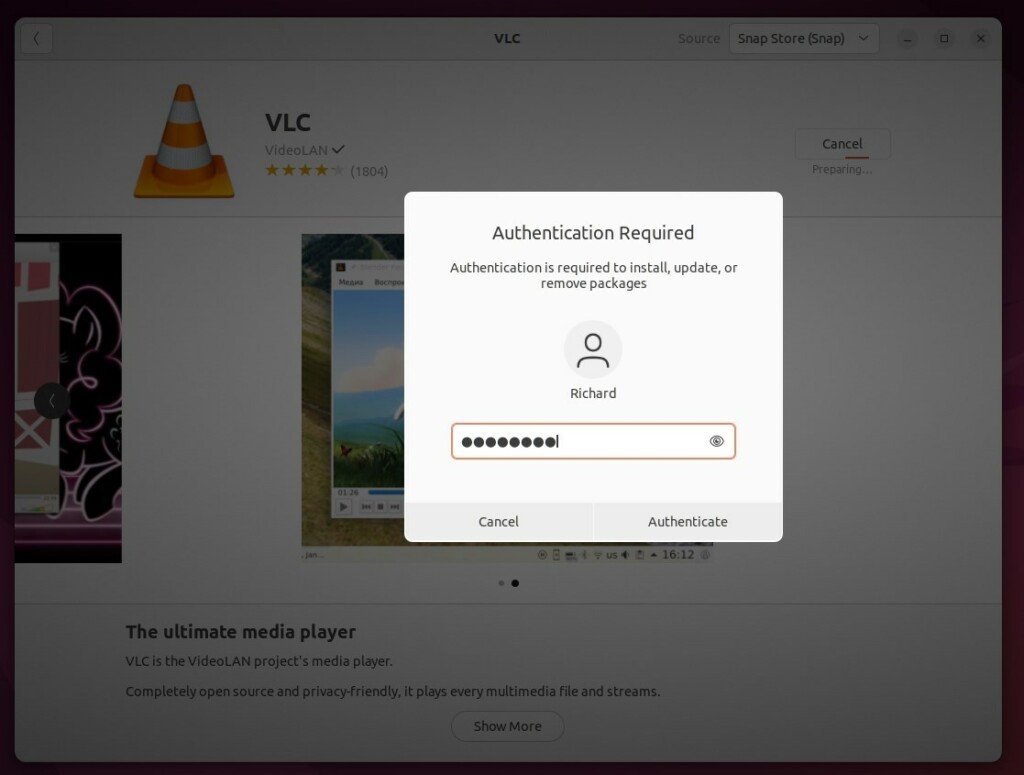
Removing software changes the whole system, so Ubuntu asks you to prove you have permission.
- Confirm that you want to remove the app.
- Type your user password when Ubuntu asks for it. Your account needs administrator rights. Nothing shows on screen as you type, which is normal.
- Press Enter or click the confirm button. A progress indicator appears, and the app disappears from the list when it is done.
Once that finishes, the app is gone. If you change your mind, you can search for the app in the App Center and install it again.
This matters most for shared components, such as libraries and other tools that several programs use. Taking a few seconds to read the list can save you from breaking something you rely on.
How to remove package on the command line console
Why use the terminal? For advanced users, it’s faster and gives you full control over every file removed from your system. It also works over SSH on a server with no desktop, and it can remove programs the App Center doesn’t list. You only need to know the package name.
Open the terminal by pressing Ctrl+Alt+T, or search for Terminal with the Super key. Commands that change software need sudo, so you will be asked for your password.
Removing standard packages
To remove a program with apt, run this command in the terminal. Replace the package name with the program you want to remove:
sudo apt remove package_name
This removes the program but keeps its system-wide configuration files. That is useful if you may reinstall it later, because your settings will still be there. Read the list apt shows you before you confirm. It tells you which packages will be removed.
To strip out the program and its configuration files completely, run apt purge instead:
sudo apt purge package_name
Purge cleans up more thoroughly than remove, so use it when you want a fresh start. Settings that an app stores in your own home folder may stay behind, and you can delete those by hand if you want them gone.
Cleaning up your system
After removing programs, your system might have leftover packages that are no longer needed. These are usually dependencies that were installed only for the program you just removed. To reclaim this space, run this command:
sudo apt autoremove
The sudo apt autoremove command safely removes unneeded packages left behind by uninstalled programs, which helps keep your Ubuntu Linux system tidy. It shows you what it plans to remove and asks for confirmation first, so read the list before you agree. It is a good habit to run it after you remove software.
Managing Flatpak packages
Ubuntu 26.04 also supports Flatpak apps. These are managed separately from apt, so apt remove will not find them. Flatpak must be installed on your system for these commands to work. If the terminal says the command is not found, you have no Flatpak apps to remove.
To see a list of your installed Flatpaks, type:
flatpak list
The output lists each app with its name and application ID. You need the exact name or ID for the next step.
To remove a Flatpak app, use this command:
flatpak uninstall package_name
Flatpak shows what it will remove and asks you to confirm. When it finishes, the app no longer appears in the Flatpak list.
Managing Snap packages
Snap is another package format that Ubuntu uses. Many Ubuntu apps are installed as Snaps, and the App Center handles them too. From the terminal, you manage them with the snap command.
To see your installed Snap packages, type:
snap list
To remove a Snap, type:
sudo snap remove package_name
Run the list command again afterwards to confirm the Snap is gone.
Conclusion
Cleaning up Ubuntu applications takes only a few moments. Use the App Center if you prefer clicking, or the terminal if you prefer typing commands. For apt packages, remove the program first, use purge when you also want its configuration files gone, and finish with autoremove. Flatpak and Snap apps each have their own removal command.
Whichever way you work, keeping your system clean is a good way to maintain performance. Always double-check what you are removing, and read the confirmation list before you agree, so your system stays stable.
Have a question about this guide?
Answered by AI from this guide. Good questions may be added to this page — please don't include personal details.
Did this guide fix your problem?

About the Author
Richard
Tech Writer, IT Professional
Richard is a writer at Geek Rewind who turns complex IT tasks into clear, step-by-step guides. He draws on years of hands-on experience in system administration and enterprise IT operations, focusing on Windows, Linux and WordPress: the problems people actually run into, and the fixes that work. His server and WordPress guides come from systems he runs himself. Richard builds and maintains the platform behind Geek Rewind, from its Ubuntu servers and Nginx configuration to its custom WordPress plugins. Many new tutorials start with readers' questions, and he's always glad to answer them in the comments.
[…] How to add or remove software on Ubuntu Linux […]
[…] How to add or remove software on Ubuntu Linux […]
[…] How to add or remove software on Ubuntu Linux […]
[…] How to add or remove software on Ubuntu Linux […]
[…] How to add or remove software on Ubuntu Linux […]