How to Show or Hide Drive Letters in Windows 11 File Explorer

Showing or hiding drive letters in Windows 11 File Explorer controls how your storage devices are labeled. Drive letters, such as C: or D:, are the short labels Windows uses to identify hard drive partitions and other storage, including USB drives.
Hiding them can make File Explorer look tidier, especially in the “This PC” view. Windows 11 shows these letters for all your drives by default, so you only need to act if you want a different look. This guide covers four ways to do it, from the simplest to the most technical.
The first two methods only change what File Explorer displays. The Disk Management and Diskpart methods change the drive’s actual letter assignment, which is a bigger change.
To show or hide drive letters in Windows 11 File Explorer , open Folder Options, click the View tab, and check or uncheck “Show drive letters.” Click OK to apply.
Change settings using Folder Options
The easiest way to show or hide drive letters is the Folder Options setting. It controls whether Windows displays drive letters next to your hard drives and removable storage. It works on Windows 11 Home and Pro, needs no restart, and is easy to undo.
This setting only changes how File Explorer labels drives. The drives keep their letters, and other programs and the command line still see them.
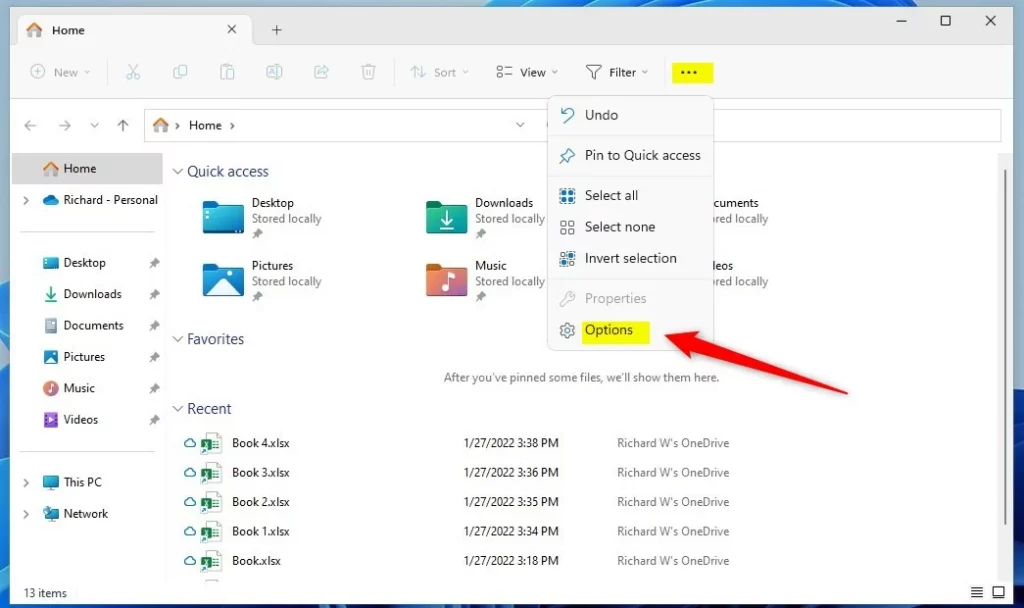
- Open the File Explorer folder options. You can also reach it from inside File Explorer by selecting the three-dot See more button in the toolbar and then Options. The Folder Options window should now be open.
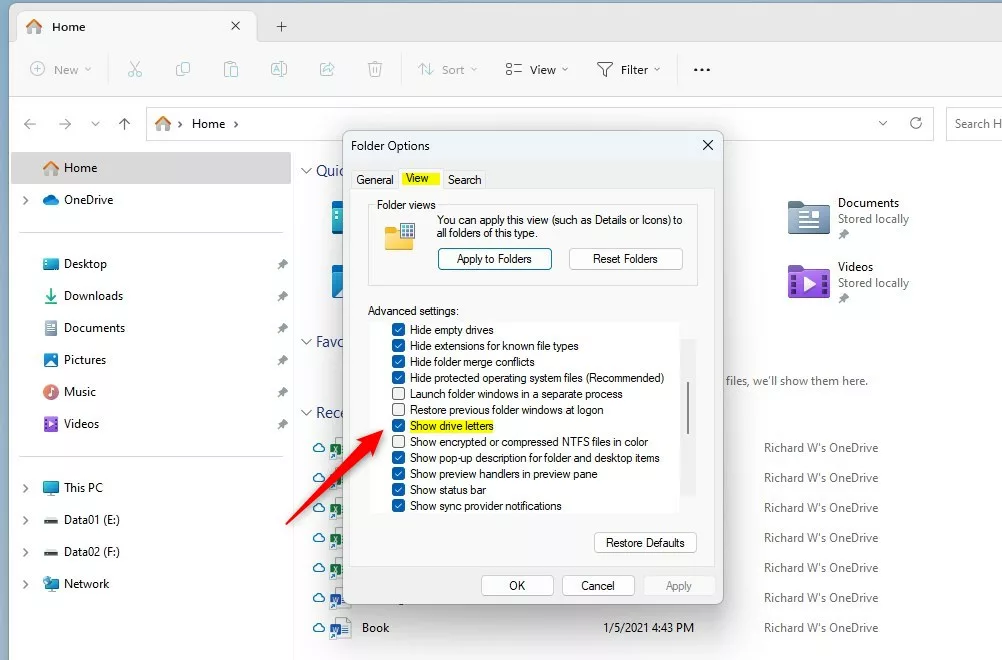
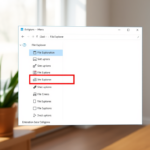
- When the window appears, click on the View tab. You should see a list of options under Advanced settings.
- Look for the box labeled Show drive letters. You may need to scroll down the list to find it.
- Check the box to show the letters, or uncheck it to hide them. It is checked by default, so unchecking it is the change most people want.
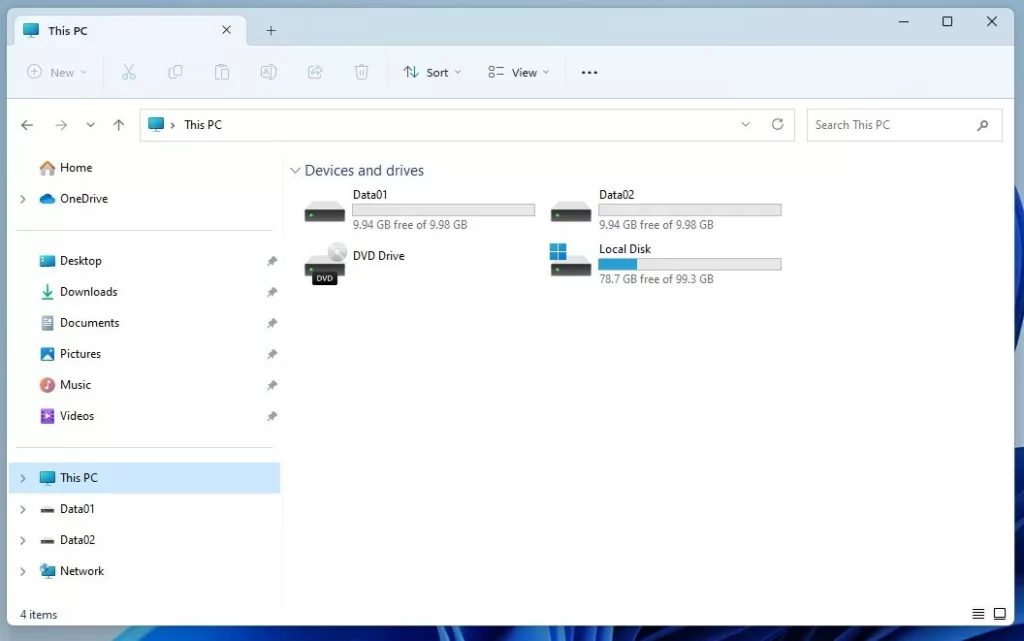
- Click OK to save your changes. The window closes. Open the “This PC” view in File Explorer , and press F5 if it has not updated. Your drives should now appear with names only, such as “Local Disk”, or with the letters back in brackets.
Change settings using the Registry Editor
You can also show or hide drive letters by editing the Registry Editor, which is useful if you want a fixed setting that applies across your system. This advanced method adds a specific Windows value that controls how drive names appear.
The registry method works on both Home and Pro editions. Be careful with it: a wrong change in the registry can cause problems that are hard to trace.
If you prefer advanced settings, edit the Windows Registry. Before you start, make a backup. In Registry Editor, choose File Export, pick All as the export range, and save the file somewhere safe. You can double-click that file later to restore your settings. You also need an administrator account, and Windows may show a User Account Control prompt that you must accept.
- Open the Windows Registry. If Windows asks whether to allow the app to make changes, click Yes. The Registry Editor window should open with a folder tree on the left.
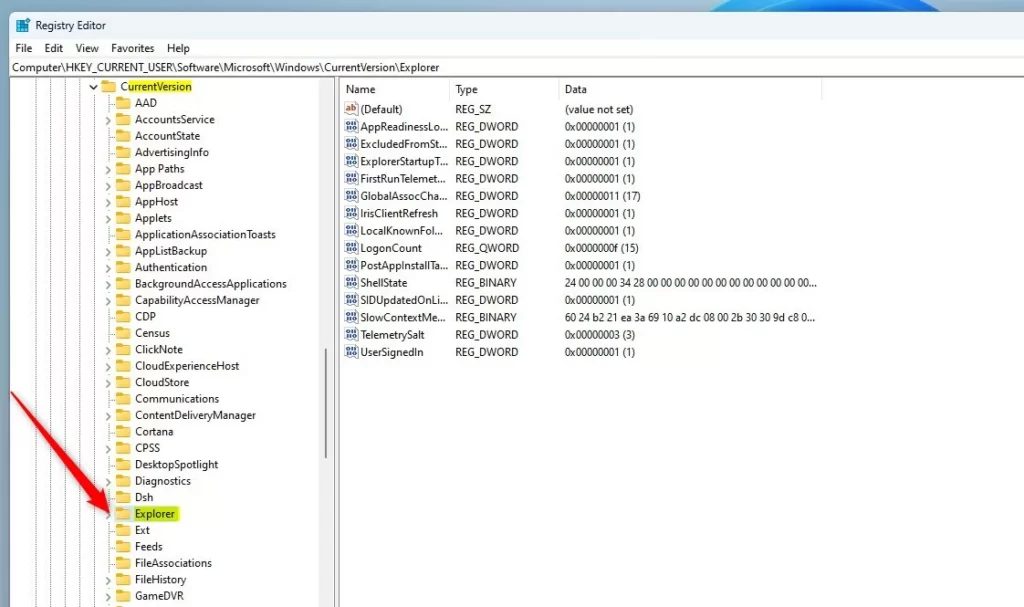
- Navigate to:
HKEY_CURRENT_USER\Software\Microsoft\Windows\CurrentVersion\ExplorerYou can expand the folders in the left pane one by one, or paste the path into the address bar at the top of the window and press Enter. The right pane then shows any values stored in that key.
- Right-click in the empty space on the right. A small context menu should appear. If the value from the next steps is already listed, skip to step 6 and edit it instead of creating a second one.
- Select New, then DWORD (32-bit) Value. A new entry appears in the list with its name highlighted, ready for typing.
- Name it
ShowDriveLettersFirst. Type the name exactly as shown, then press Enter. - Double-click it and set the Value data to 2 to hide or 0 to show. Then click OK. The new value should appear in the list with your number next to it.
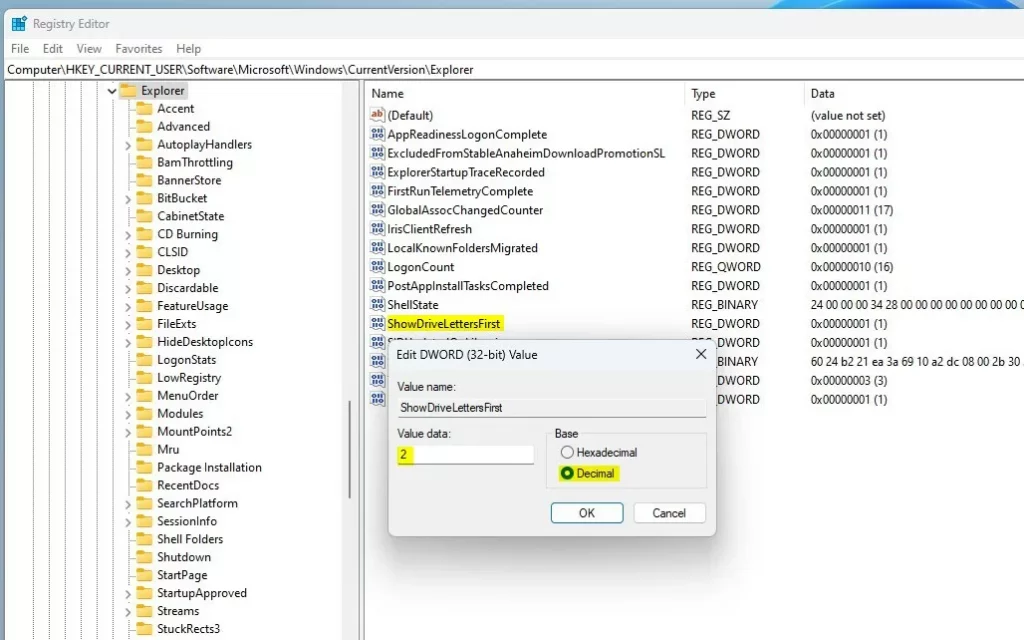
Restart your computer for these changes to take effect. Closing Registry Editor is not enough. To undo the change, go back to the same value, set it to 0 or delete it, and restart again.
Managing Drives with Disk Management
You can also use the built-in Disk Management tool. It does something different from the first two methods. It removes a drive letter completely, so the partition no longer shows up with a letter in File Explorer. It can also assign a new letter if one is missing. It works on Home and Pro, and you need administrator rights.
To remove or add a letter:
- Right-click the Start button and select Disk Management. A window listing your disks and volumes should open.
- Right-click the volume you want to change and select Change Drive Letter and Paths.
- To hide the letter, select the current letter, click Remove, and confirm the warning. To bring a letter back, click Add, choose a letter from the list, and click OK.
Be careful with this one. Programs, shortcuts, and backup jobs that point to the old letter will stop finding the files. Windows will not let you remove the letter of the system or boot drive, and the option may be greyed out or fail for it. Also, a drive with no letter is not hidden from Disk Management, so it is still easy to restore.
Using Command Line and Diskpart
Advanced users can show or hide drive letters in Windows 11 using the Command Line with Diskpart, a powerful tool for managing disks and volumes directly. It needs an elevated Command Prompt or Terminal, meaning one opened with Run as administrator.
Diskpart makes the same change as Disk Management, only from the keyboard. Unless you are scripting the change, Disk Management is the safer choice, because you can see which volume you are selecting. Diskpart acts on whatever volume you have selected, so check it before you change anything.
Troubleshooting Missing Drive Letters
If your drive letters disappear after a Windows update, check Disk Management first. Sometimes the system loses the assignment. You can manually reassign a letter to restore access: right-click the volume, select Change Drive Letter and Paths, and click Add. If a drive is hidden via the Registry NoDrives value, you must delete that entry to make it reappear, then restart your computer.
If the letters are missing from the "This PC" view but the drives still work, go back to Folder Options and check that Show drive letters is ticked. If a USB drive does not appear at all, look for it in Disk Management. A drive with no letter is listed there without one and can be given one in the same way.
Summary
Drive letters in Windows 11 can be managed using Folder Options, the Registry, or Disk Management. Folder Options is the quickest and safest choice if you only want a cleaner look. Use the Registry or Disk Management when you need a different result. Whether you want a clean look or need to hide specific drives, these methods give you full control. Always use caution when editing registry keys or using command-line tools like Diskpart, and make a backup before you start.
Was this guide helpful?

About the Author
Richard
Tech Writer, IT Professional
Richard is a writer at Geek Rewind who turns complex IT tasks into clear, step-by-step guides. He draws on years of hands-on experience in system administration and enterprise IT operations, focusing on Windows, Linux and WordPress: the problems people actually run into, and the fixes that work. His server and WordPress guides come from systems he runs himself. Richard builds and maintains the platform behind Geek Rewind, from its Ubuntu servers and Nginx configuration to its custom WordPress plugins. Many new tutorials start with readers' questions, and he's always glad to answer them in the comments.

No comments yet — be the first to share your thoughts!