How to Enable or Disable Closing Warnings in Windows Terminal


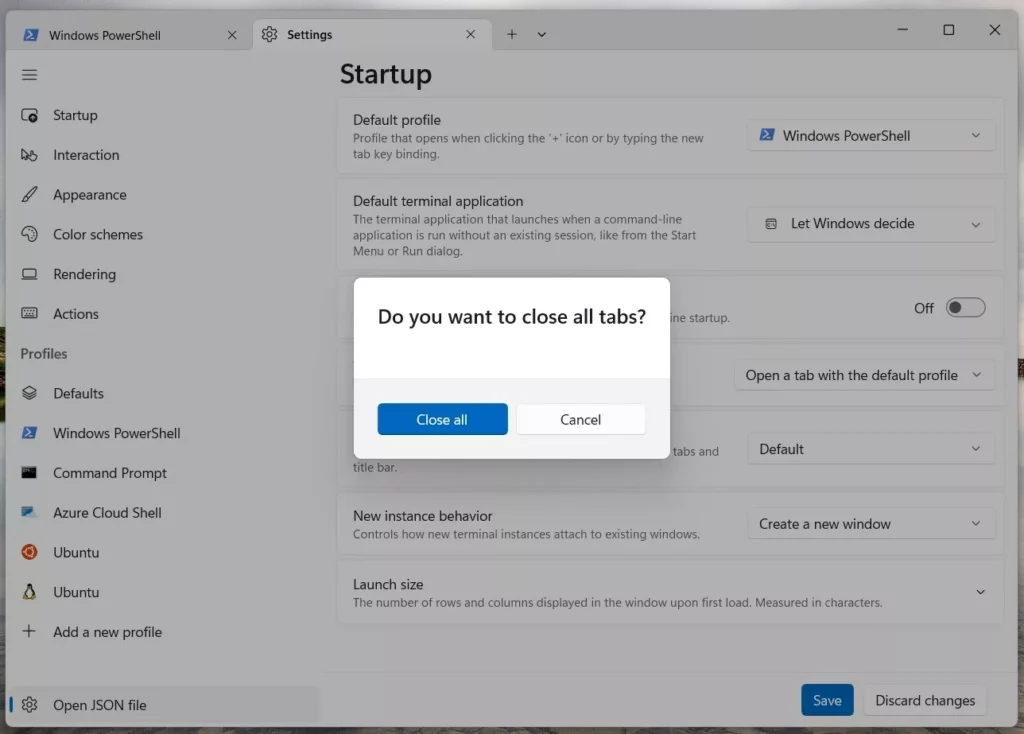
Windows Terminal closing warnings are safety prompts that stop you from accidentally shutting down a window while multiple tabs are open. Starting with version 1.19, Windows Terminal shows this confirmation message whenever you close a window with more than one active tab. If you have a long-running build, an SSH session or an unsaved shell history in one of those tabs, the prompt gives you a chance to change your mind.
Turning off this warning lets you close windows instantly, while keeping it on protects your work from sudden data loss. The setting is saved per user, so it applies to every Terminal window you open. You can change it in two ways: through the Settings page, or by editing the settings .json file. Both are covered below.
To control closing warnings in Windows Terminal, go to Settings , then Interaction, and toggle “Warn when closing more than one tab.” You can also edit the settings.json file and change “confirmCloseAllTabs” to true or false.
Single-Tab vs. Multi-Tab Warning Distinction
Windows Terminal suppresses warnings when closing a single tab. The confirmCloseAllTabs setting only triggers when a window contains multiple active tabs. If you close the last remaining tab, the window closes right away whatever this setting says. Closing one tab out of several also gives no prompt, because only closing the whole window counts.
Method 1Using the Settings Menu
The easiest way to turn the closing warning on or off for multiple tabs is the Windows Terminal Settings page. No file editing is needed, and the change takes effect as soon as you save it.
- Open Windows Terminal. You will see the tab bar at the top of the window.
- Click the down arrow next to the new tab (+) button. A menu of profiles and options opens.
- Click Settings. The Settings page opens in a new tab with a list of categories on the left. You can also press Ctrl+, to get there directly.
- Select the Interaction tab in the left-hand list. The interaction options appear on the right.
- Find the closing warning toggle for multiple tabs and switch it On to get the prompt, or Off to close windows without one.
- Click Save at the bottom of the page. The new behavior applies right away and you do not need to restart Terminal.
If you want to go back, repeat the same steps and flip the toggle. If the toggle is missing, you are probably on an older build, so check the version as described in the troubleshooting section.
Method 2Using the JSON Configuration File
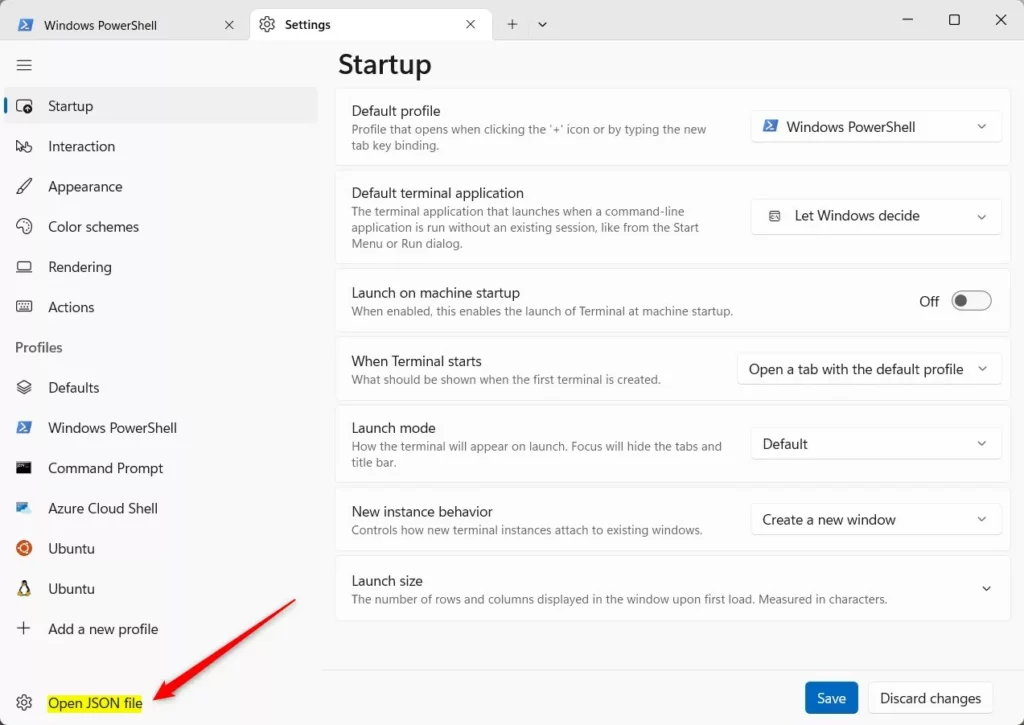
Windows Terminal closing warnings can be turned off or on by editing the settings .json file directly. You can find this file in the bottom left corner of the settings menu and change the setting using a simple text editor. This approach lets you bypass the standard settings menu if you prefer working with code. It is also handy when you keep your settings under version control or copy them between machines.
- Open the Windows Terminal settings. Click the down arrow next to the new tab button and choose Settings, or press Ctrl+,. The Settings page opens in a new tab.
- Click the Open JSON file button in the bottom left corner. The settings.json file opens in your default text editor. If Windows asks which app to use, pick Notepad or any editor you like.
- Locate the
"confirmCloseAllTabs"property within the file. It sits near the top, among the other global settings, not inside a profile. If you cannot find it, Terminal is using its default, which is to show the warning. You can add the property yourself, using the exact name"confirmCloseAllTabs", and keep the commas between entries correct.
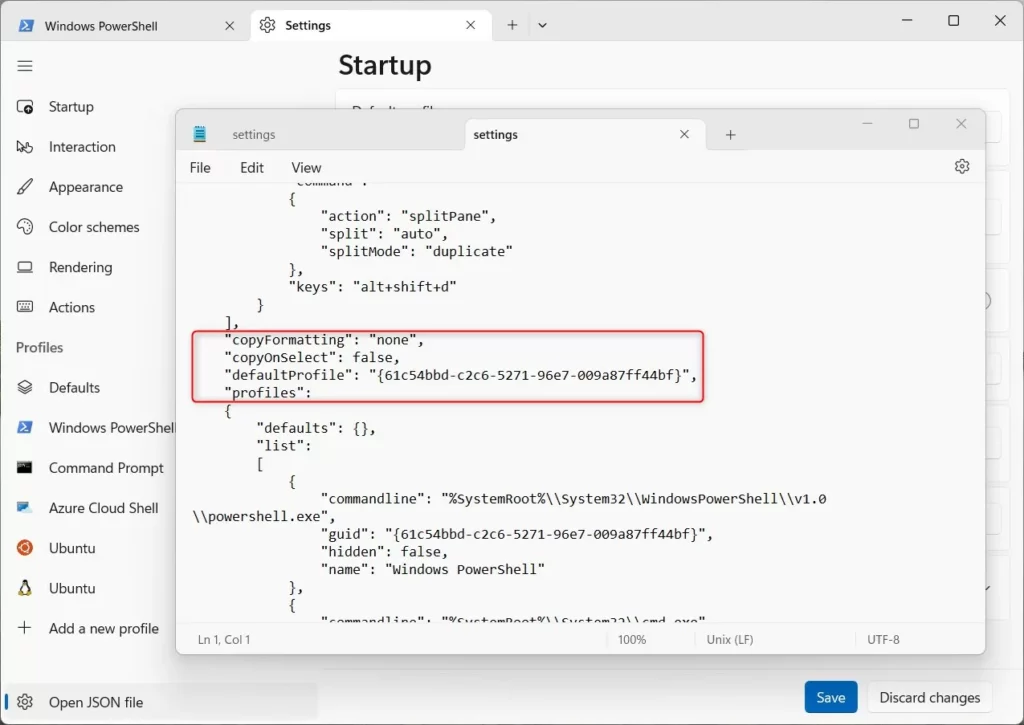
"confirmCloseAllTabs": true
- To disable the warning, set the value to
false. To enable it, set it totrue. Change only the value and leave the quotes, colon and trailing comma as they are. - Save the file to apply your changes. Press Ctrl+S in your editor. Terminal reloads the file on its own, so you do not need to restart it. To undo the change, set the value back and save again.
Troubleshooting and Configuration Context
Persistent closing warning settings require checking for the latest application updates. Verifying version numbers resolves most configuration issues. Open Settings and look at the About page to see which version you are running. The closing warning for multiple tabs needs version 1.19 or later, so an older build may not show the option at all. Update Terminal from the Microsoft Store or from the project's releases page, then reopen the Settings page.
If you edited settings.json and nothing changed, check the file for typos. A missing comma or quote breaks the whole file, and Terminal will usually show a warning about it. Make sure the property is at the top level and not inside a profile.
Consult the official Microsoft Windows Terminal documentation or the GitHub repository for comprehensive troubleshooting details and known issues.
Summary
Managing multiple tab closing warnings in Windows Terminal is possible through either the graphical settings menu or the configuration file. While single-tab closures bypass this check, these configuration methods safeguard critical working sessions. Use the Settings page for a quick change, and use settings.json when you want to see or script the exact value. Either way, you can switch the warning back on at any time.
Have a question about this guide?
Answered by AI from this guide. Good questions may be added to this page — please don't include personal details.
Did this guide fix your problem?

About the Author
Richard
Tech Writer, IT Professional
Richard is a writer at Geek Rewind who turns complex IT tasks into clear, step-by-step guides. He draws on years of hands-on experience in system administration and enterprise IT operations, focusing on Windows, Linux and WordPress: the problems people actually run into, and the fixes that work. His server and WordPress guides come from systems he runs himself. Richard builds and maintains the platform behind Geek Rewind, from its Ubuntu servers and Nginx configuration to its custom WordPress plugins. Many new tutorials start with readers' questions, and he's always glad to answer them in the comments.
No comments yet — be the first to share your thoughts!