How to Enable or Disable Changing Taskbar Size in Windows 11

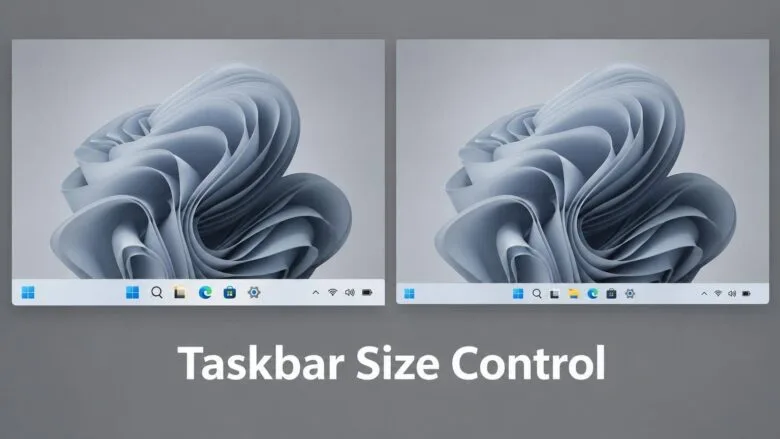
Windows 11 version 26H2 and later let you make the taskbar smaller to save screen space. The Small taskbar size shrinks both the icon size and the taskbar height, while keeping Start, Search, and the system tray visible. You can switch between the default (medium) size and the Small size.
A policy called “Disable changing the taskbar size” controls whether people can change this setting. Administrators can turn this policy on to lock the taskbar size for all users or specific users, preventing them from making the change themselves.
Administrator required: You need to sign in as an administrator to enable or disable this policy.
Open Local Group Policy Editor, navigate to Computer Configuration Administrative Templates Start Menu and Taskbar, double-click Disable changing the taskbar size, select Enabled to lock the taskbar size or Not Configured to allow changes, then click OK.
Option One
Enable or Disable Changing Taskbar Size Using Group Policy (Pro, Enterprise, Education Only)
Only Windows 11 Pro, Enterprise, and Education include the Local Group Policy Editor (a console for managing system and user policies). All editions can use Option Two to configure the same policy.
- Open the Local Group Policy Editor. The policy scope you choose determines who the setting applies to: all users, specific users or groups, or all users except administrators.
- In the left pane, go to the policy location that matches your scope.
For all users:Computer Configuration Administrative Templates Start Menu and TaskbarFor a specific user or group:User Configuration Administrative Templates Start Menu and Taskbar
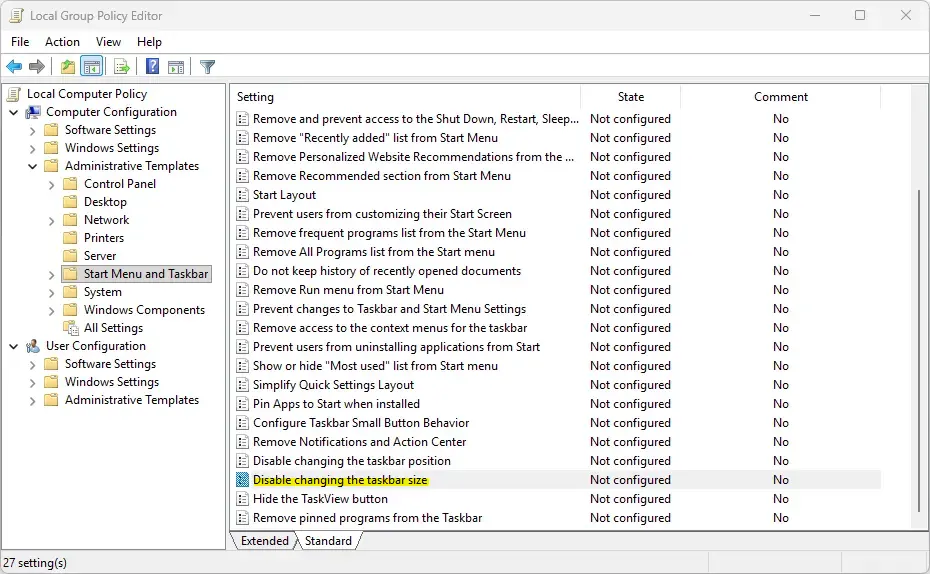
- In the right pane, double-click or double-tap the Disable changing the taskbar size policy to open it.
Enable Changing Taskbar Size
This is the default setting. Use these steps to allow users to change the taskbar size again.
- Select Not Configured.
- Click or tap OK.
- Close the Local Group Policy Editor.
Disable Changing Taskbar Size
Use these steps to stop users from changing the taskbar size.
- Select Enabled.
- Click or tap OK.
- Close the Local Group Policy Editor.
Option Two
Enable or Disable Changing Taskbar Size for All Users using Registry
This method applies the policy to all users and works in every Windows 11 edition. The exact registry location is not available in the source material. [Verification Required: Registry path should be confirmed] Confirm the key path before you edit anything, because a value in the wrong place has no effect.
Go to the registry path below:
HKEY_LOCAL_MACHINE\SOFTWARE\Policies\Microsoft\Windows\Explorer
Enable Changing Taskbar Size for All Users
This is the default setting.
To do this manually in Registry Editor, delete the DisableTaskbarSize value from the confirmed key.
Disable Changing Taskbar Size for All Users
The line below sets DisableTaskbarSize to 1, which blocks users from changing the taskbar size.
"DisableTaskbarSize"=dword:1
To do this manually in Registry Editor, go to the confirmed key and create or edit this value:
- Value name: DisableTaskbarSize
- Value type: DWORD (32-bit) Value
- Value data: 1
What to do next
To undo the change, repeat the same option with the opposite setting: Not Configured in the Local Group Policy Editor, or delete the DisableTaskbarSize value in the registry. The policy requires Windows 11 version 26H2 or later, so earlier versions do not apply it.
Was this guide helpful?

About the Author
Richard
Tech Writer, IT Professional
Richard is a writer at Geek Rewind who turns complex IT tasks into clear, step-by-step guides. He draws on years of hands-on experience in system administration and enterprise IT operations, focusing on Windows, Linux and WordPress: the problems people actually run into, and the fixes that work. His server and WordPress guides come from systems he runs himself. Richard builds and maintains the platform behind Geek Rewind, from its Ubuntu servers and Nginx configuration to its custom WordPress plugins. Many new tutorials start with readers' questions, and he's always glad to answer them in the comments.

No comments yet — be the first to share your thoughts!