How to Enable or Disable Bluetooth Absolute Volume in Windows 11

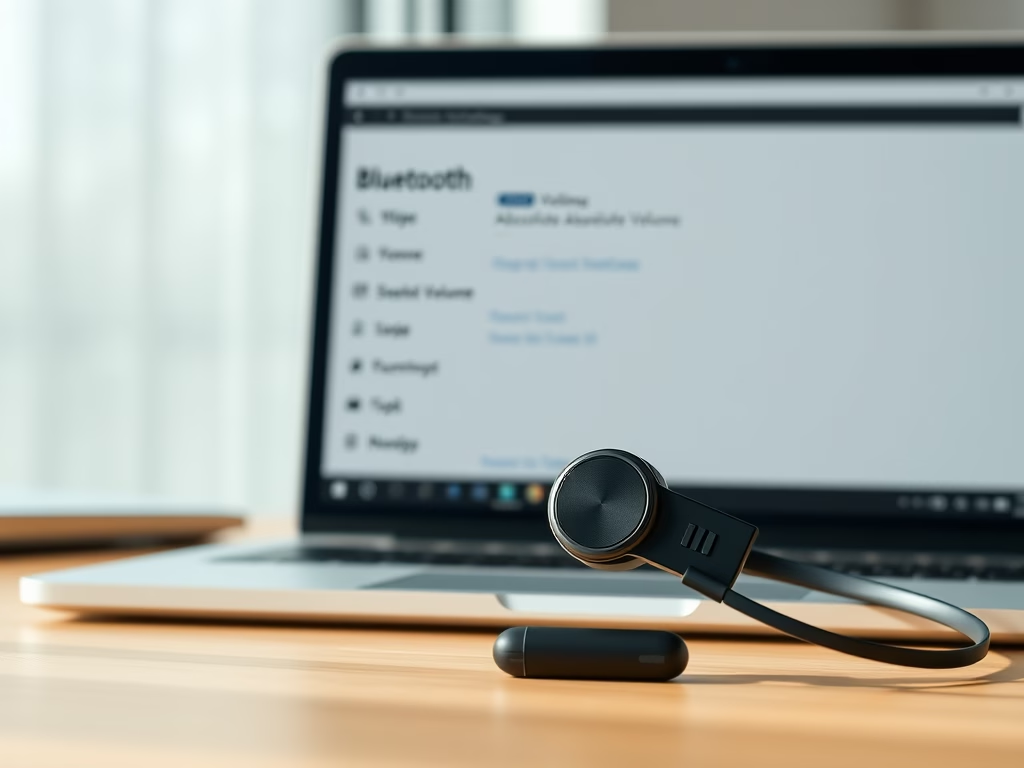
Erratic Bluetooth audio, such as volume jumping on its own or the slider having no effect, can come from how Windows and the wireless device share volume control. This guide shows how to enable or disable Absolute Volume for all users in Windows 11. It is a system-wide setting, so the change applies to every account on the PC.
Open Windows Terminal as administrator, copy and paste the command for your choice—reg add “🗝️HKEY_LOCAL_MACHINE\
What is Bluetooth Absolute Volume?
Absolute Volume links the Windows volume slider directly to the volume of a connected Bluetooth speaker or pair of headphones. When it is on, moving the master volume in Windows changes the output level on the wireless device at the same time. Without it, Windows and the device each keep their own volume level, and the two are combined.
The feature is on by default in Windows 11. You only need to change it if you have a problem with a specific device.
Why Might You Need to Change This Setting?
Some Bluetooth devices handle volume badly. The control signals from the PC can clash with the amplification built into the headphones or speaker. Typical symptoms are:
- Volume that suddenly jumps from quiet to very loud.
- Sound that stays too quiet even with the Windows slider at maximum.
- The Windows slider and the device’s own buttons falling out of sync.
If you see any of these, turning Absolute Volume off is a well-known fix. If a device works fine, leave the setting alone. If turning it off does not help, turn it back on so you return to the default behavior.
Reference: Bluetooth volume controls no longer work – Microsoft Support
What You Need to Know
On a standard account, Windows will ask for an administrator password. If you don't have one, ask whoever manages the PC to make the change.
How to Enable or Disable Bluetooth Absolute Volume
- Right-click the Start button and choose Terminal (Admin). On some builds the entry is named Windows Terminal (Admin). You can also search for Terminal, right-click it and choose Run as administrator.
- Click Yes if User Account Control asks for permission. A terminal window opens, and its tab or title bar should show that it is running as administrator.
- Choose the command for what you want to do (enable or disable, see below). Copy it, paste it into the terminal window and press Enter. The command should finish without an error message. If you see an "access denied" error, the window is not elevated, so close it and reopen it as administrator.
- Restart the PC so the change takes effect. If the device still behaves oddly afterward, remove it in Settings Bluetooth & devices Devices and pair it again.
Enable Bluetooth Absolute Volume
Turning on this feature lets your PC control the volume of connected speakers or headphones directly. This is the default setup, and it keeps the Windows slider and the device volume moving together. Use the enable command if you turned the feature off earlier and want to go back, or if you are undoing a change that did not fix your problem. Restart the PC afterward.
Bluetooth Absolute Volume lets Windows control wireless speaker or headphone volume directly. Turning off Bluetooth Absolute Volume can fix performance problems if a Bluetooth device struggles with this direct control. Administrators need special permissions for this change. Running a specific command in Windows Terminal turns Bluetooth Absolute Volume on or off for the computer.
Have a question about this guide?
Answered by AI from this guide. Good questions may be added to this page — please don't include personal details.
Did this guide fix your problem?

About the Author
Richard
Tech Writer, IT Professional
Richard is a writer at Geek Rewind who turns complex IT tasks into clear, step-by-step guides. He draws on years of hands-on experience in system administration and enterprise IT operations, focusing on Windows, Linux and WordPress: the problems people actually run into, and the fixes that work. His server and WordPress guides come from systems he runs himself. Richard builds and maintains the platform behind Geek Rewind, from its Ubuntu servers and Nginx configuration to its custom WordPress plugins. Many new tutorials start with readers' questions, and he's always glad to answer them in the comments.
No comments yet — be the first to share your thoughts!