How to Enable Audio and Video in Windows 11 Sandbox

Audio and video in Windows 11 Sandbox stay blocked by default to protect your privacy. Windows Sandbox (a temporary, isolated desktop that lets you test apps safely) deletes all data the moment you close the window.
You can turn on webcam and microphone access by adding a short code snippet to a .wsb configuration file before you launch the sandbox.
Enable audio and video input for Windows 11 Sandbox by editing its configuration file. Add specific lines to a .wsb file to allow your host’s microphone and camera access within the Sandbox environment.
How to turn on or off audio and video input between host and Sandbox in 🪟 Windows 11
You can use Windows 11 Sandbox audio video settings to let apps inside the sandbox use your computer’s microphone and camera. Windows 11 Sandbox blocks these devices by default for privacy, but you can turn them on using the Local Group Policy Editor. Search for gpedit.msc in the Start menu to open the editor and change the hardware sharing rules for your sandbox sessions.
Here is how to enable or disable these features in Windows 11.
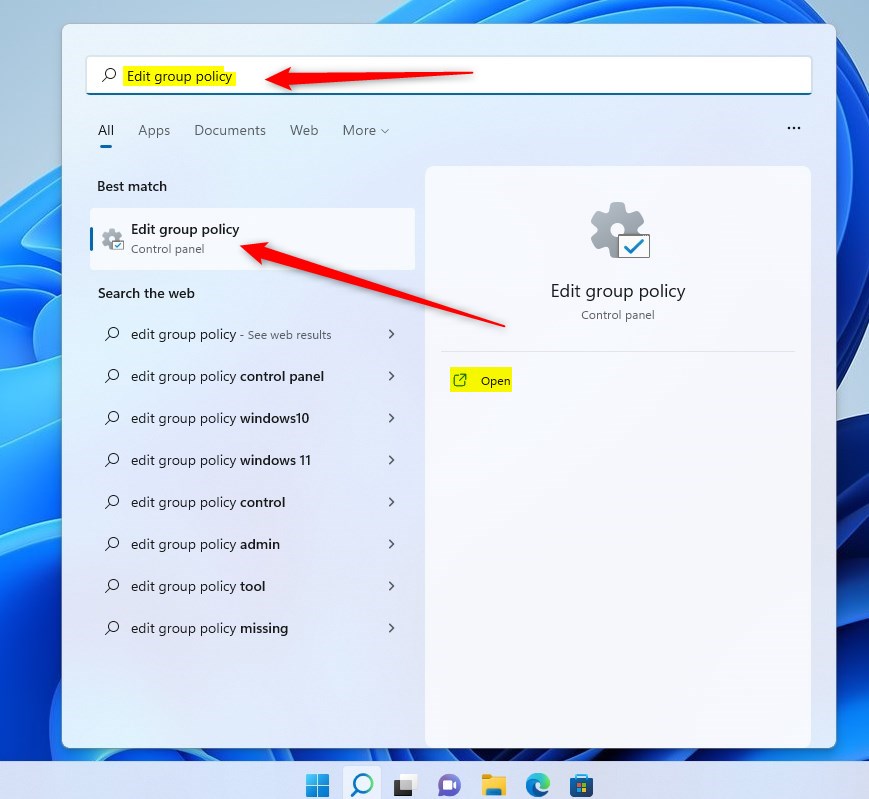
First, open the Local Group Policy Editor. Click the Start Menu and search for Edit group policy, as shown below.
Under Best match, select Edit group policy to launch the Local Group Policy Editor.
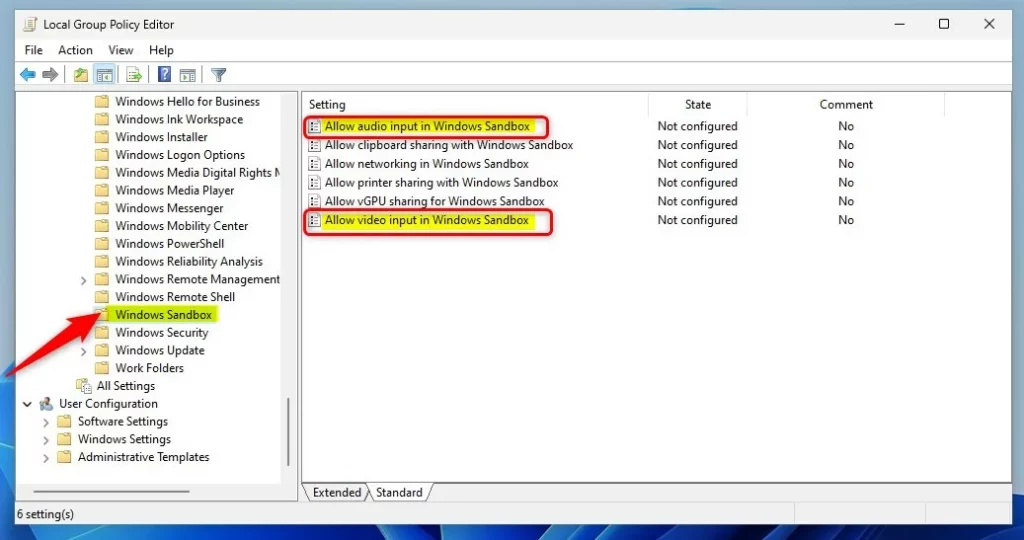
In the left pane of the Local Group Policy Editor, expand the tree:
Computer Configuration > Administrative Templates > Windows Components > Windows Sandbox
Then, in the Windows Sandbox details pane on the right, double-click the settings named "Allow audio input Windows Sandbox" and "Allow video input in Windows Sandbox."
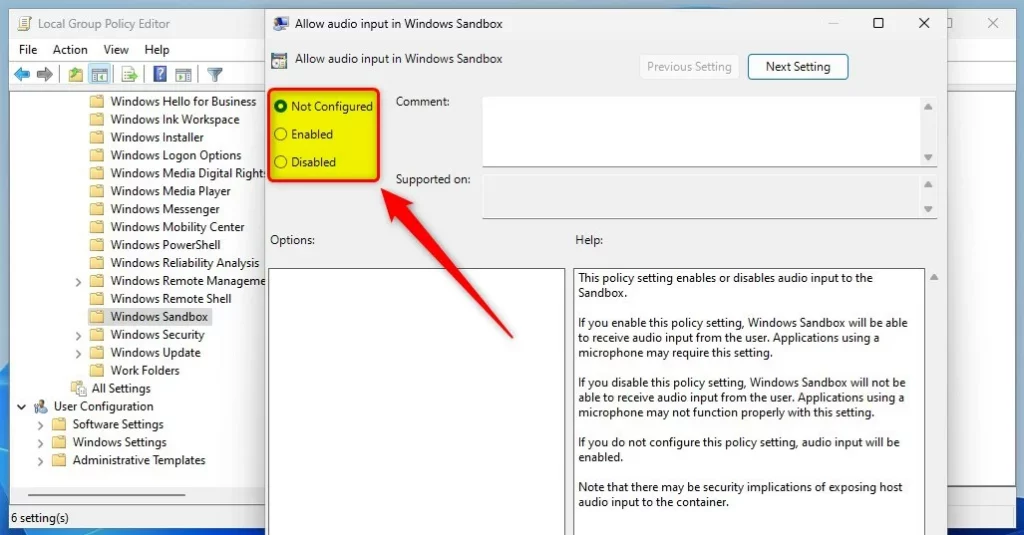
In the 'Allow audio input in Windows Sandbox' and 'Allow video input in Windows Sandbox' windows, choose 'Not Configured,' 'Enabled,' or 'Disabled.'
- Not Configured (default)
- Enabled - Windows Sandbox will receive audio and video input from the user on the host.
- Disabled - Windows Sandbox will not be able to receive audio and video input from the host.
Enable or disable audio and video input with Sandbox via Windows Registry
You can configure Windows 11 Sandbox audio video permissions through the Windows Registry if you do not have access to the Group Policy Editor. Making a quick change to the registry keys lets you control hardware sharing between your main computer and the sandbox. Open the Registry Editor by typing regedit in the Start menu and go to HKEY_LOCAL_MACHINE\SOFTWARE\Policies\Microsoft\Windows\Sandbox to update the settings.
Open the Windows Registry and navigate to the folder key path listed below.
HKEY_LOCAL_MACHINE\SOFTWARE\Policies\Microsoft\Windows\Sandbox
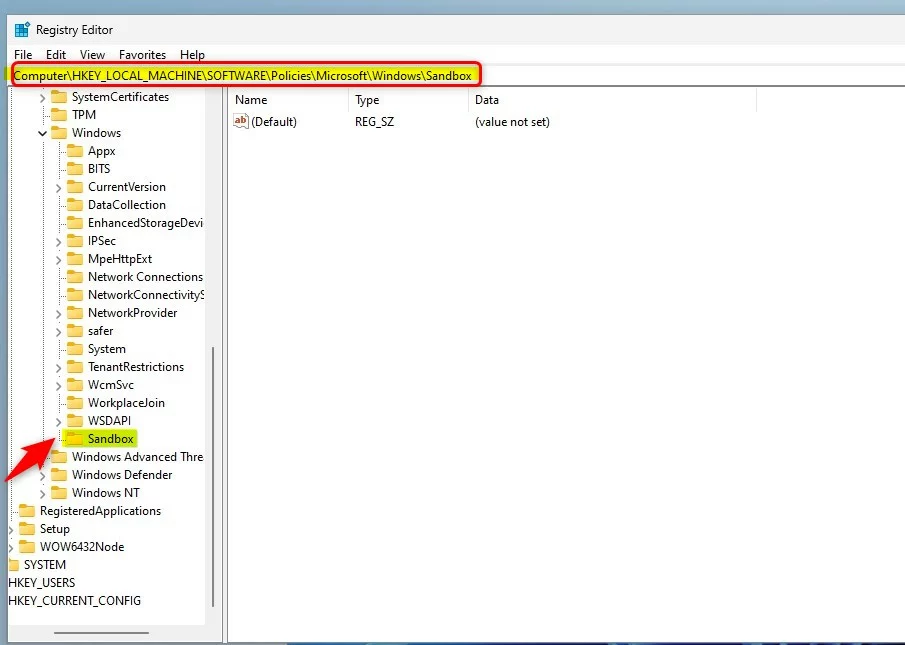
If the Sandbox folder key remains hidden, right-click the Windows key, then create a new subfolder key named Sandbox.
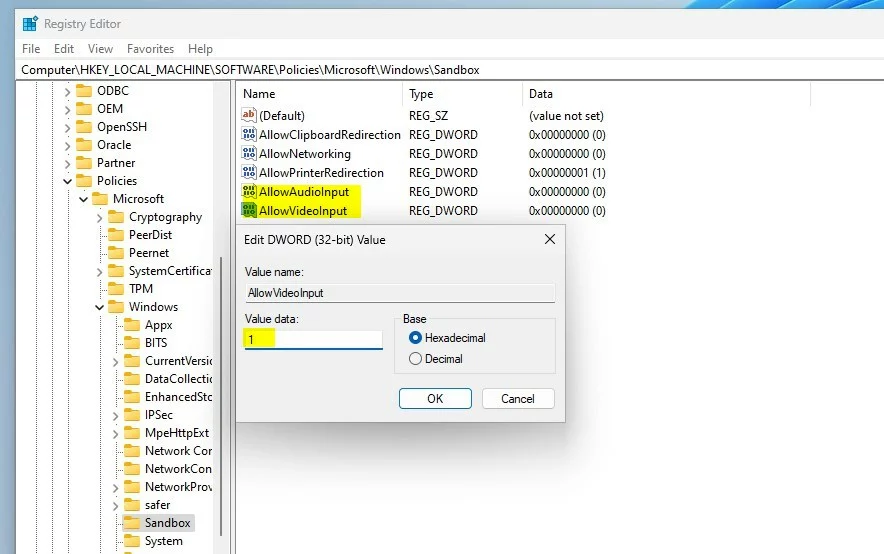
Right-click in the Sandbox folder's right pane and select 'New' then 'DWORD (32-bit) Value.' Type a new key name: AllowAudioInput and AllowVideoInput.
Double-click the new keys and enter the Value data as 1 to enable audio and video between your host system and the sandbox environment.
Setting the value to 0, or deleting the key entirely, disables audio and video input between your host system and the sandbox.
That completes the setup process.
Reference:
Conclusion:
- Enabling audio and video input from the host to the sandbox environment in Windows 11 allows for a more versatile and comprehensive user experience within the isolated environment.
- The process involves utilizing the Local Group Policy Editor or the Windows Registry to configure the settings based on specific requirements.
- Following the outlined steps, users can seamlessly activate or deactivate audio and video input between the host and the Windows Sandbox in Windows 11, thus enhancing their sandbox experience.
Was this guide helpful?

About the Author
Richard
Tech Writer, IT Professional
Richard is a writer at Geek Rewind who turns complex IT tasks into clear, step-by-step guides. He draws on years of hands-on experience in system administration and enterprise IT operations, focusing on Windows, Linux and WordPress: the problems people actually run into, and the fixes that work. His server and WordPress guides come from systems he runs himself. Richard builds and maintains the platform behind Geek Rewind, from its Ubuntu servers and Nginx configuration to its custom WordPress plugins. Many new tutorials start with readers' questions, and he's always glad to answer them in the comments.


No comments yet — be the first to share your thoughts!