How to Enable Networking in Windows 11 Sandbox


Windows Sandbox is a built-in testing tool in Windows 11 that runs apps in a safe, temporary desktop. Whatever you do inside it is thrown away when you close the window, so your main computer stays clean. It is available on Windows 11 Pro, Enterprise and Education. Home does not include it.
Sandbox network access is controlled in three places: Group Policy, a .wsb configuration file (a simple text file with the .wsb extension), and the registry. Any of them can turn networking on or off. This lets you download setup files, test web pages, or check network apps inside your isolated workspace. Each method is covered below.
Enable networking in Windows 11 Sandbox by editing Group Policy, using a .wsb file, or modifying the Registry. Navigate to Computer Configuration Administrative Templates Windows Components Windows Sandbox and enable “Allow networking in Windows Sandbox” via Group Policy, or set 🗝️HKEY_LOCAL_MACHINE\
How to turn on or off networking with Sandbox in 🪟 Windows 11
Controlling internet access for Windows Sandbox comes down to turning networking on or off. For security, some setups keep Sandbox cut off from the network. Administrators can change this when the Sandbox needs external connectivity. This guide covers each way to manage Sandbox networking.
If you only want to know why your Sandbox has no internet, check these three places in the order given. A policy or configuration file that switches networking off is the usual cause.
Networking can be switched off to keep your computer safe. A Sandbox with no network cannot reach the internet or your local network, which cuts down what a risky file or app can touch. Getting online means changing the setting that blocks it.
The Group Policy method below needs Windows 11 Pro, Enterprise or Education, because those editions have the Local Group Policy Editor. You need to be signed in with an administrator account.
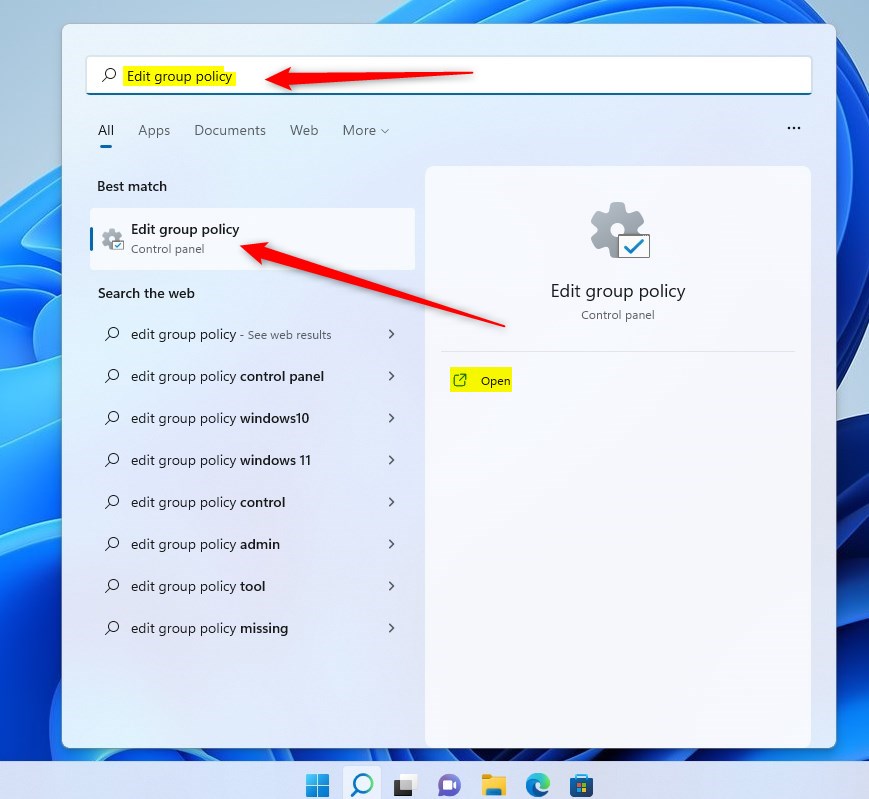
First, open the Local Group Policy Editor.
- Click the Start button.
- Type Edit group policy in the search box.
- Click the Edit group policy result.
The Local Group Policy Editor window should now open.
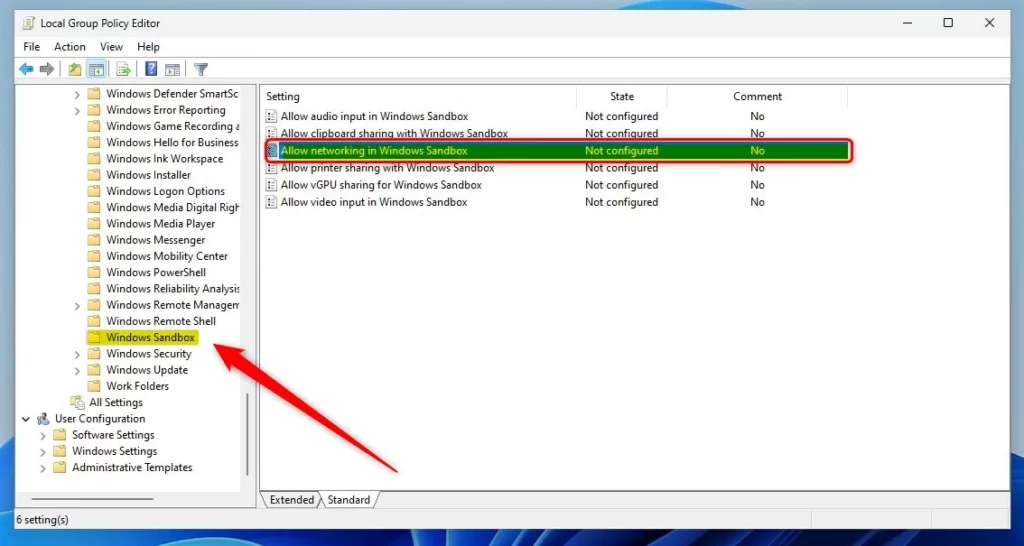
Once the editor is open, use the folder tree on the left to find the Windows Sandbox policies. Click the small arrow beside each folder to expand it.
Computer Configuration Administrative Templates Windows Components Windows Sandbox
When you select the Windows Sandbox folder, its policies appear in the right pane. If the folder is missing, Windows Sandbox is not available on your edition or version of Windows.
- Find the setting named Allow networking in Windows Sandbox in the right pane.
- Double-click it.
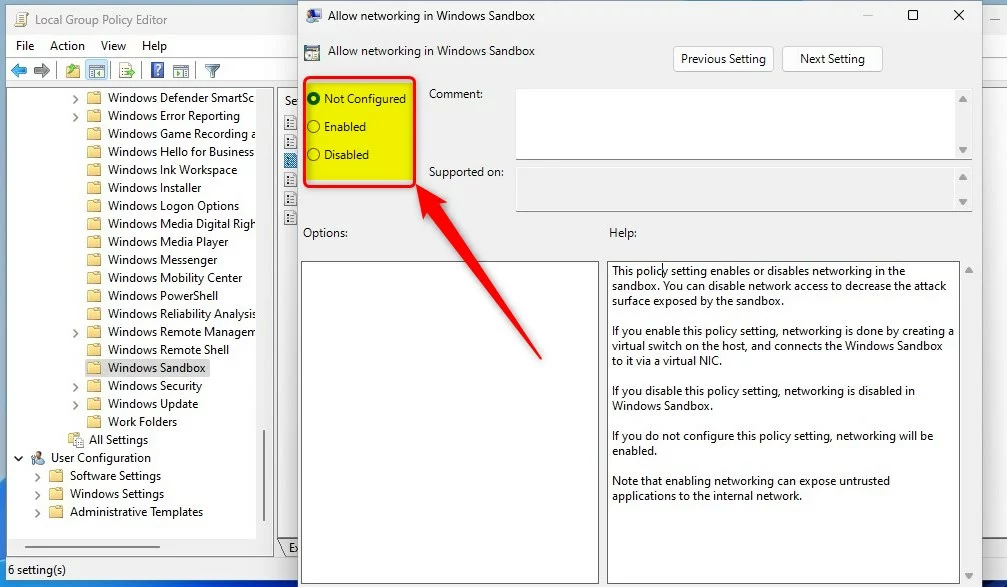
A window with the settings for that policy should now open.
Select a preference from the available options:
- Not Configured: The policy does nothing, so Windows uses its own default. Networking is only off here if something else, such as a .wsb file, turns it off.
- Enabled: Allows the Sandbox to connect to the network.
- Disabled: Explicitly turns off all networking.
To get online, choose Enabled, then click Apply and OK. The change only takes effect the next time Windows Sandbox starts. If a Sandbox window is already open, close it and start a new one. A full restart of Windows is not needed. To undo the change, set the policy back to Not Configured.
Using a .wsb file to enable networking
A .wsb file lets you set networking for each launch, so you can leave the global policy alone. Creating a basic configuration file tells the Sandbox to allow internet access when it starts. This gives you the same online access every time you open Sandbox from that file.
Create the file like this:
- Open Notepad.
- Type or paste the configuration shown below.
<Configuration>
  <Networking>Enable</Networking>
</Configuration>
- In Notepad, click File, then Save As.
- Set Save as type to All files. Otherwise Notepad adds .txt to the end of the name.
- Save the file with a .wsb extension (such as MySandbox.wsb).
- Double-click the file.
Windows Sandbox should open with networking enabled. If the file is not recognized, check that the name does not end in .wsb.txt. If a Group Policy is set to Disabled, it can still block networking, so check that policy as well.
Enable or disable networking with Sandbox via Windows Registry
Enabling or disabling networking for Windows Sandbox through the Windows Registry is an alternative when the other methods fail. The registry holds the value that the Group Policy setting writes. Incorrect registry edits can cause system instability, so follow these steps carefully. Back up the registry or create a restore point first if you want an easy way back.
Open the Windows Registry and navigate to HKEY_LOCAL_MACHINE\SOFTWARE\Policies\Microsoft\Windows\Sandbox. You need to create the path manually if a folder named "Sandbox" does not appear under the Windows folder. You must be signed in as an administrator to make changes here.
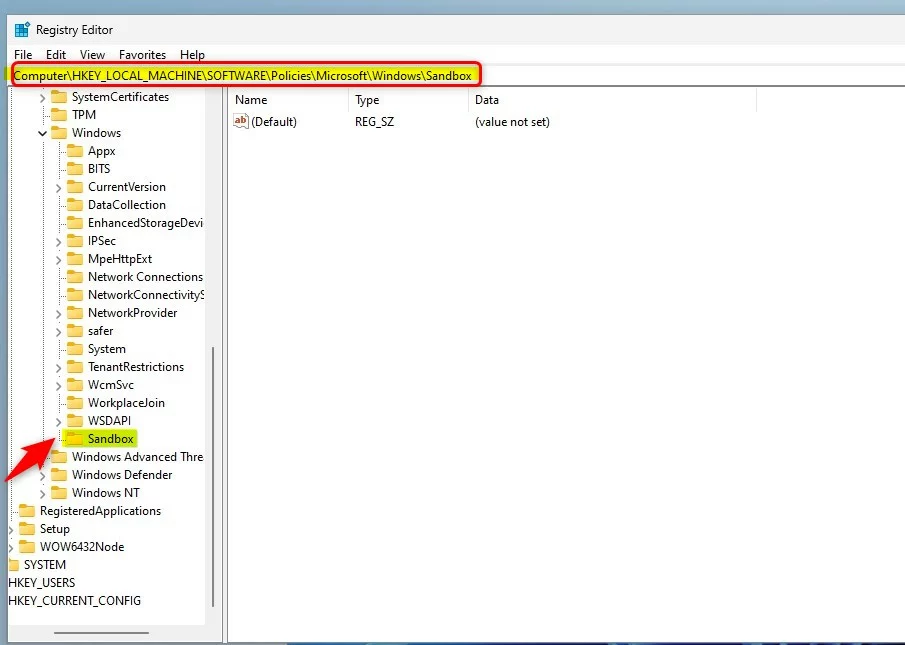
If a folder named "Sandbox" isn't there, create it:
- Right-click the Windows folder.
- Select New, then Key.
- Name the new key Sandbox.
The new Sandbox key should now appear under Windows in the left pane.
- Select the Sandbox key.
- Right-click any empty space on the right side of the window.
- Select New, and choose DWORD (32-bit) Value.
- Name this new value AllowNetworking.
This value is what enables networking features within the Sandbox environment.
AllowNetworking, a DWORD value, controls internet access in Windows 11 Sandbox.
- Double-click AllowNetworking.
- Change its Value data to 1. This turns networking on, allowing the Sandbox to connect to the internet.
- Click OK.
To turn networking off later, change the Value data to 0.
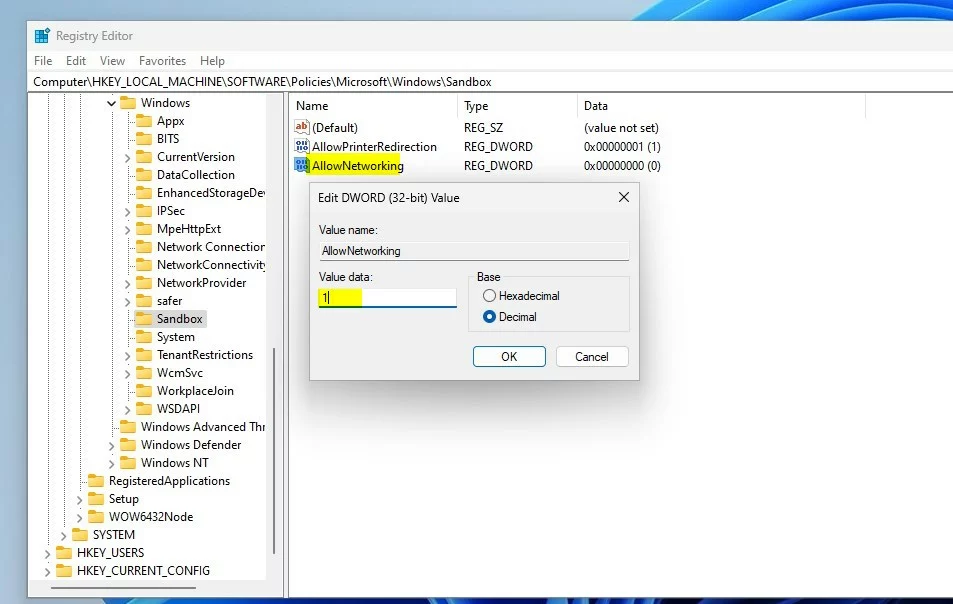
The Sandbox will now connect to external networks whenever this registry value is set to 1. Close any open Sandbox window and start it again so the change applies. If you want to remove the setting entirely, delete the AllowNetworking value.
Reference: Microsoft.com
Have a question about this guide?
Answered by AI from this guide. Good questions may be added to this page — please don't include personal details.
Did this guide fix your problem?

About the Author
Richard
Tech Writer, IT Professional
Richard is a writer at Geek Rewind who turns complex IT tasks into clear, step-by-step guides. He draws on years of hands-on experience in system administration and enterprise IT operations, focusing on Windows, Linux and WordPress: the problems people actually run into, and the fixes that work. His server and WordPress guides come from systems he runs himself. Richard builds and maintains the platform behind Geek Rewind, from its Ubuntu servers and Nginx configuration to its custom WordPress plugins. Many new tutorials start with readers' questions, and he's always glad to answer them in the comments.
No comments yet — be the first to share your thoughts!