How to Adjust Video Frame Rate and Quality in Windows 11


Video frame rate and quality settings in Windows 11 control how smooth and clear your screen recordings look. They do this by managing the number of images per second and the amount of data each second of video uses. Frame rate counts the individual pictures shown each second, measured in frames per second (FPS). 60 FPS makes fast motion look much smoother than 30 FPS, but it also gives the recorder twice as many frames to store.
Bitrate handles video quality by setting how much data goes into each second of the file. Higher bitrate numbers create sharper details, especially in busy scenes with lots of movement. Lower numbers save disk space but can leave the picture looking soft or blocky.
The built-in Xbox Game Bar (a screen recording tool built into Windows 11) lets you change these recording options quickly so your video clips match the quality you want. It is mainly designed to record games and individual app windows. It will not record the full desktop or File Explorer , so if you need that, use a different recorder.
To adjust video frame rate in Windows 11, open Settings , select Gaming, then Captures, and choose 30 fps or 60 fps from the Video frame rate menu. Pick 60 fps for games and fast motion, or 30 fps for tutorials and meetings to keep files smaller. Changes save immediately and apply to your next Xbox Game Bar recording.
How to adjust video frame rate in 🪟 Windows 11
Open Windows Settings , select the Gaming tab, and choose your preferred frames per second rate for screen recordings. These options live under Captures, and Game Bar uses them for every recording it makes. The steps are the same on Windows 11 Home and Pro.
- Open the Settings app by pressing Win+I. The Settings window should open on the System page.
- Click the Gaming tab on the left. The list of gaming options, including Xbox Game Bar, appears on the right.

Turn on or off gameplay video captures in Windows 11 - Select the Captures tile. A page opens with the recording settings for Game Bar.

Turn on or off gameplay video captures in Windows 11 - Look for Video frame rate and Video quality. Each one has a drop-down menu. If you do not see them, scroll down the page, since they sit below the capture location setting.
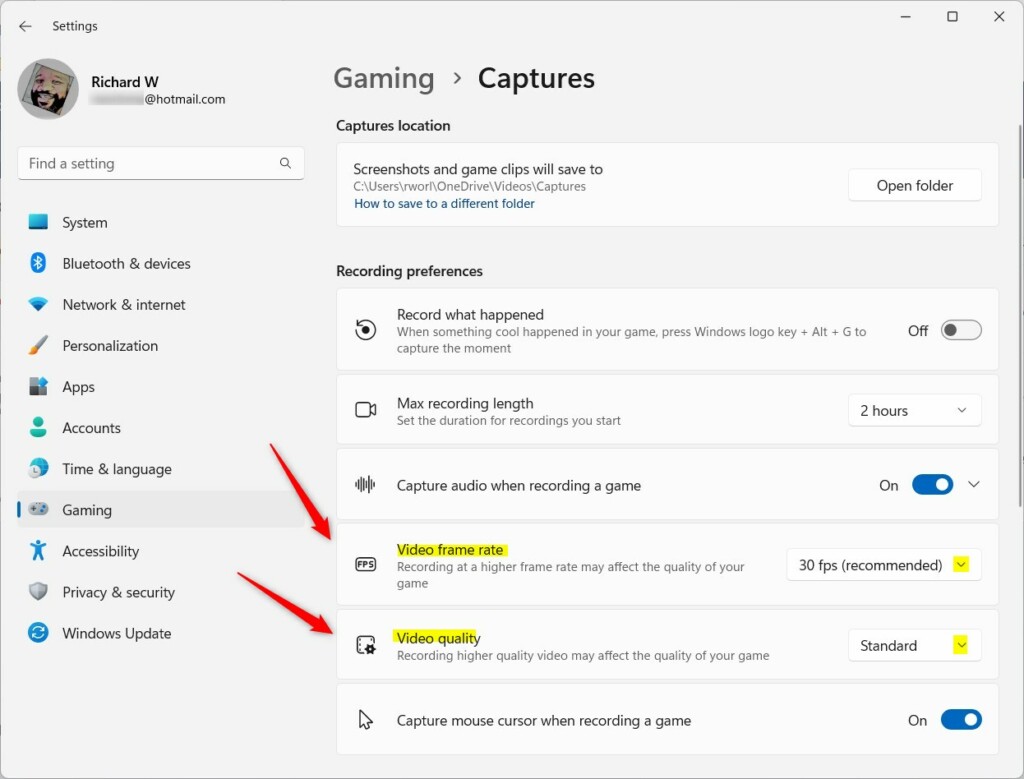
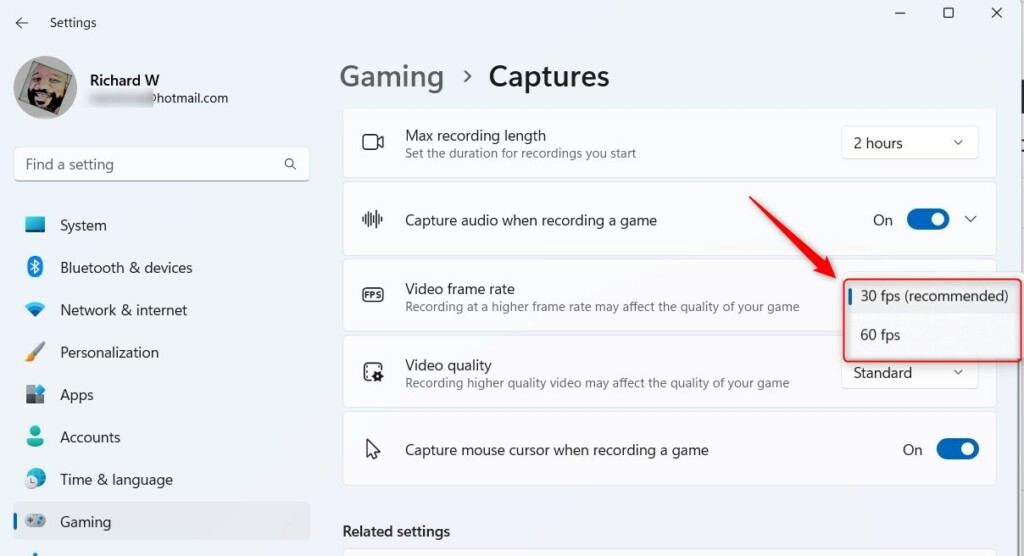
Windows 11 settings showing gameplay capture video frame rate and quality options - Choose 30 fps or 60 fps from the Video frame rate menu. Pick 60 fps for games and other fast motion. Pick 30 fps for tutorials, meetings and other slow content, because the files come out smaller.
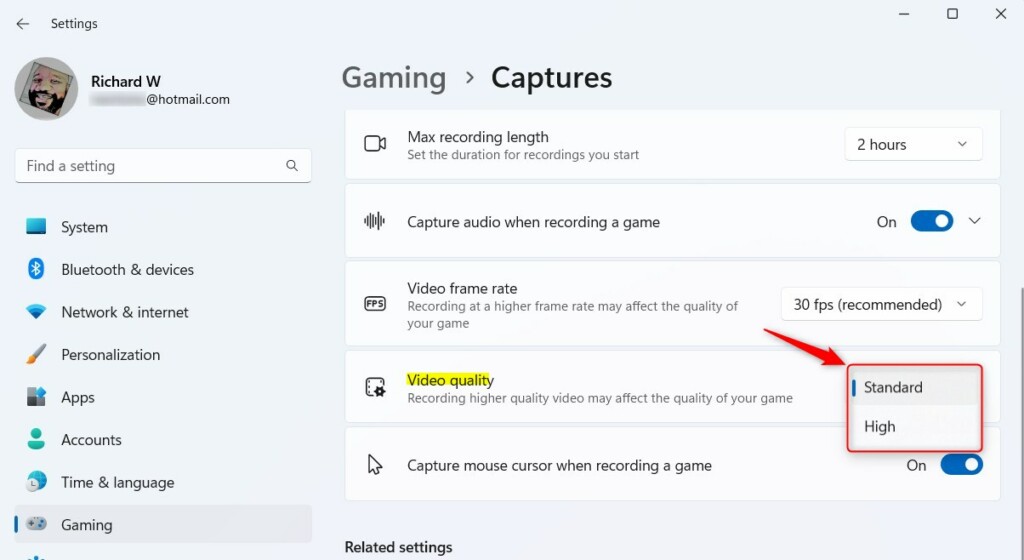
Change video frame rate and quality with gameplay captures - Choose Standard or High quality from the Video quality menu. High gives a sharper picture and larger files. Standard is lighter on disk space and on your PC while recording.
Change video frame rate and quality with gameplay captures
Settings save as soon as you pick them, so there is no Apply button. The new values affect your next recording, not one already running or already saved. To undo a change, return to Settings Gaming Captures and select the previous option. If the menus are greyed out or missing, update Windows and check that the Xbox Game Bar is turned on under Settings Gaming Game Bar
Technical Concepts: VFR vs. CFR
Understanding Variable Frame Rate (VFR) versus Constant Frame Rate (CFR) is key because VFR can cause audio sync issues in video editors, while CFR is often preferred for editing. With VFR, the number of frames per second changes during the clip. With CFR, it stays fixed. If a recording drifts out of sync with its audio on the editing timeline, convert it to constant frame rate first. Most video converters, such as HandBrake, have an option for this.
Glossary of Terms
- Bitrate: The amount of data per second in a video file. A higher bitrate means better detail and a bigger file.
- Codec: The software used to compress and decompress video. It decides how efficiently the video fits into the file and which players can open it.
- Resolution: The number of pixels on the screen (e.g., 1080p). More pixels mean more detail, but they also need more data to keep that detail looking clean.
- Motion Blur: The natural streaking effect seen in high-speed movement. Higher frame rates reduce how blurry fast motion looks.
Summary
Adjusting your video frame rate and quality in Windows 11 helps you balance smooth playback with file size and performance, so choose 60fps for action and 30fps for less demanding content. If your game stutters while recording or your drive fills up quickly, lower the frame rate or set quality to Standard. Then record a short test clip and check it before your next long session.
Have a question about this guide?
Answered by AI from this guide. Good questions may be added to this page — please don't include personal details.
Did this guide fix your problem?

About the Author
Richard
Tech Writer, IT Professional
Richard is a writer at Geek Rewind who turns complex IT tasks into clear, step-by-step guides. He draws on years of hands-on experience in system administration and enterprise IT operations, focusing on Windows, Linux and WordPress: the problems people actually run into, and the fixes that work. His server and WordPress guides come from systems he runs himself. Richard builds and maintains the platform behind Geek Rewind, from its Ubuntu servers and Nginx configuration to its custom WordPress plugins. Many new tutorials start with readers' questions, and he's always glad to answer them in the comments.
No comments yet — be the first to share your thoughts!