How to Install Nginx on Google Cloud Server


You install Nginx on a Google Cloud server to create a high-performance web server capable of handling numerous concurrent connections for websites and web applications.
Nginx is a free, open-source web server renowned for its efficiency and ability to manage a large number of user requests simultaneously. It serves your website’s content to visitors’ browsers.
This process will guide you through setting up Nginx on your Google Cloud server, specifically for an Ubuntu Linux environment. For instance, a common setup involves configuring Nginx to listen on port 80 for HTTP traffic.
By completing these steps, you will have Nginx running, ready to power your online projects.
Connect to your Google Cloud server via SSH. Then, open your terminal and run the commands sudo apt update and sudo apt install nginx.
How to connect to the Google Cloud server
Connecting to your Google Cloud server is easy using SSH right from your web browser through the Google Cloud Console.
SSH from the browser supports the following:
- Web browsers
- The latest version of Google Chrome
- Firefox
- Microsoft Edge
- Microsoft Internet Explorer 11 and later
- Safari 8 and later. Note that Safari is not supported in private browser mode.
- Virtual machine configurations
- All Linux VM images are natively available in Google Cloud.
You won’t need any extra software or browser extensions. Log into the Google Cloud Console and navigate to Menu ==> Compute Engine ==> VM instances.
In the list of virtual machine instances, click SSH in the row of the instance you want to connect to.

Alternatively, you can open an SSH connection to an instance by clicking its name and then SSH from the instance details page.
An SSH terminal window with the Ubuntu Linux instance created in the series’s second post will open.
You should now be able to run commands in Ubuntu Linux created on the Google Cloud server.
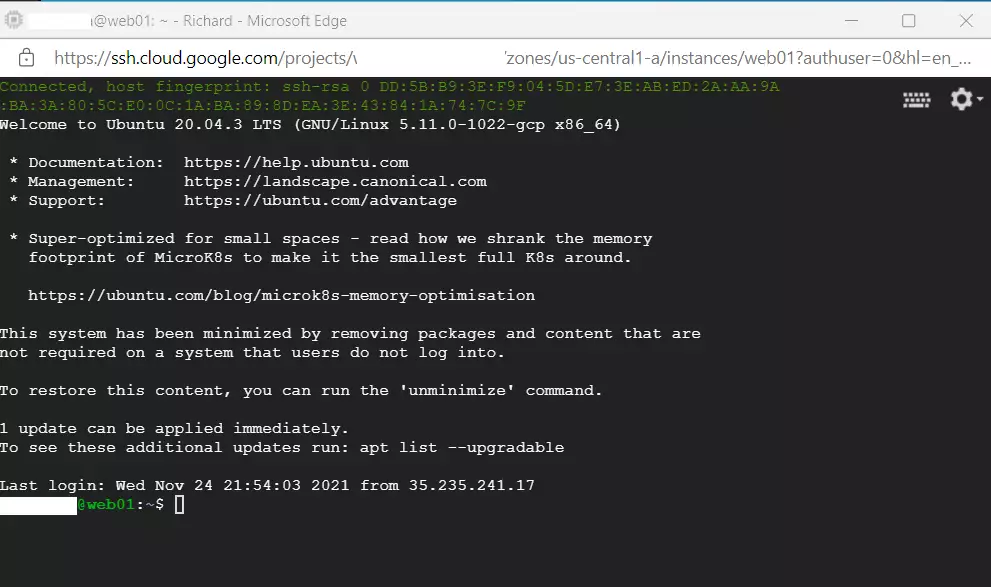
How to install Nginx on Ubuntu Linux on Google Cloud Server
Installing Nginx on your Ubuntu Linux server in Google Cloud is simple because Ubuntu already has Nginx ready to go in its software sources, so you just need a few commands.
You can find Nginx packages right in Ubuntu’s default software sources. You’ll use commands like apt-get to install the Nginx HTTP server on Ubuntu Linux.
For more details on installing and managing Nginx on Ubuntu Linux, check out this other post we have. It’ll give you a deeper dive.
How to install Nginx on Ubuntu Linux
Now that Nginx is installed, let’s see it in action. When people visit your domain name, they should see a default Nginx help page.
Go and type your domain name in your browser, and you should see an example page similar to the one below:
http://example.com
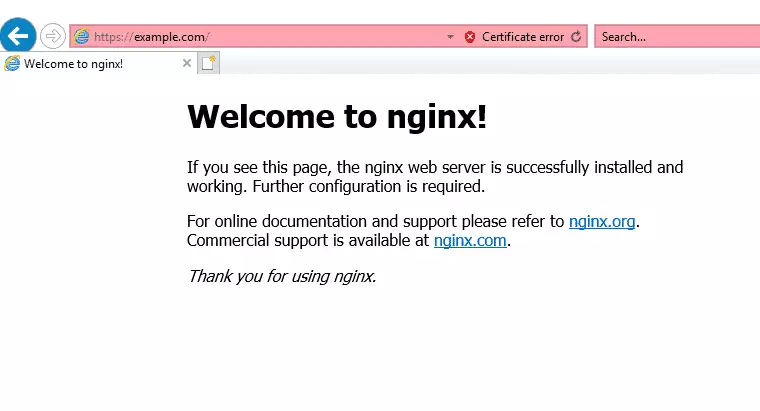
As you can see, your server hosted on Google Cloud is now resolving your domain name and server content with the Nginx HTTP web server.
We’ll continue to add other servers and software so you can run a functional website online.
Conclusion:
Installing the Nginx HTTP server on your Google Cloud server is a crucial step in establishing your online presence. Here are the key points to remember:
- Nginx is a popular open-source web server that efficiently serves web content.
- You can connect to your Google Cloud server using SSH through your web browser.
- Installing Nginx on Ubuntu Linux is straightforward and requires the use of
apt-getcommands. - After installation, your domain should display the default Nginx help page, confirming that your server is operational.
- This guide is part of a series that aims to help you build a fully functioning website online, including domain creation and server setup.
By following these steps, you are well on your way to managing your website and leveraging the power of Google Cloud services.
Was this guide helpful?

About the Author
Richard
Tech Writer, IT Professional
Richard, a writer for Geek Rewind, is a tech enthusiast who loves breaking down complex IT topics into simple, easy-to-understand ideas. With years of hands-on experience in system administration and enterprise IT operations, he’s developed a knack for offering practical tips and solutions. Richard aims to make technology more accessible and actionable. He's deeply committed to the Geek Rewind community, always ready to answer questions and engage in discussions.



No comments yet — be the first to share your thoughts!