How to Set Up a Microsoft Passkey with a Security Key


This article explains how to set up a Microsoft account passkey using a physical security key. The key adds a strong layer of protection to your account, and the setup takes only a few minutes.
Plug your FIDO security key into your PC, sign in to your Microsoft account online, open Advanced Security Options, click Add a new way to sign in or verify, select Security key, enter your PIN when prompted, touch the key’s fingerprint sensor, name the key, and click Next. Your passkey is now active.
What Is a Passkey?
A Microsoft passkey is a safer way to sign in to your Microsoft account without a password. Instead of something you remember, it uses something you have or are: your fingerprint, your face, or a security key. Hackers find this much harder to get around, because there is no password to steal, guess or phish.
You can use a passkey to sign in to Microsoft apps and websites, including Microsoft 365 and Copilot. It works in desktop and mobile browsers. To try it, open your Microsoft account sign-in screen and choose Sign-in options. Then select face, fingerprint, PIN, or security key.
Why Use a FIDO Security Key?
A FIDO security key is a small physical device, often shaped like a USB stick, that gives your Microsoft account an extra strong layer of protection. You plug it into your computer or phone, then verify your identity with your fingerprint or a PIN. That is a much safer method than a password alone.
Before you start, check these points:
- Your key should support FIDO2. Most current keys do, but check the box or the maker’s website if you are not sure.
- Make sure the key’s connector fits your PC. Some keys use USB-A, some USB-C, and some also support NFC for phones.
- Some keys ask you to create a PIN the first time you use them. Pick one you will remember, because the key can lock you out after too many wrong tries.
How to Set Up a Passkey Using a Security Key
Setting up your Microsoft passkey with a security key is straightforward. You plug in the key, sign in to your Microsoft account online, and add the key as a new sign-in method from the Advanced security options page.
- Plug your FIDO security key into your Windows PC. If it connects over NFC or Bluetooth, have it ready to use instead.
- Sign in to your Microsoft account in your browser. Open the Advanced Security Options page. Under the sign-in options, click Add a new way to sign in or verify. If Microsoft asks you to confirm your identity first, complete that prompt. It is a normal security check.
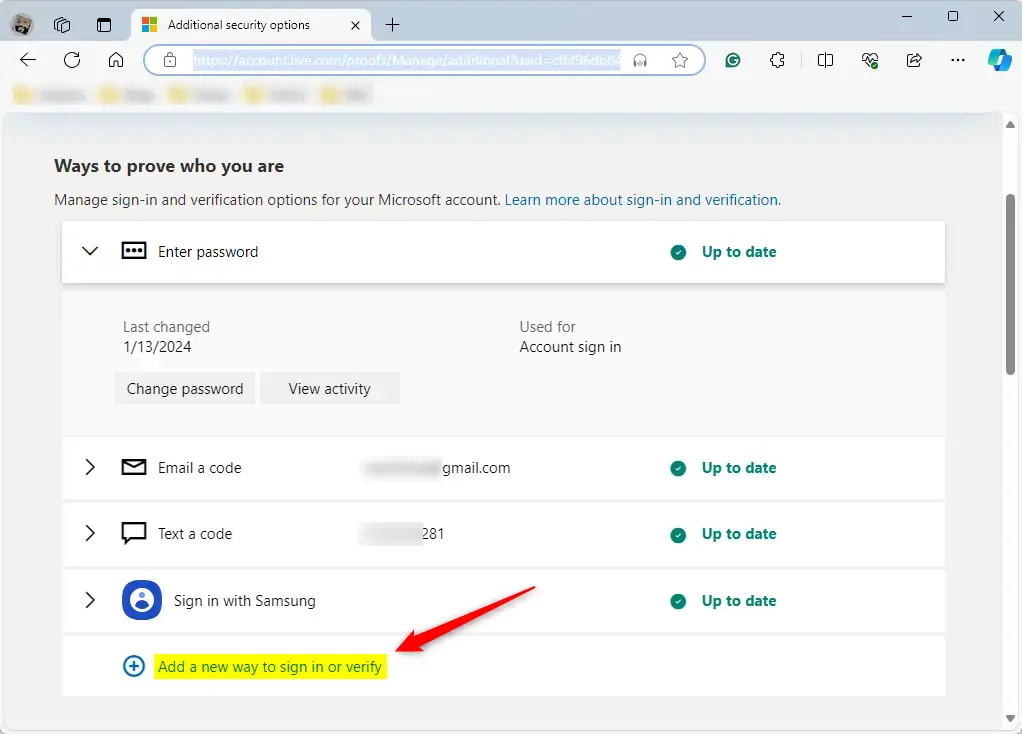
Microsoft account security sign-in options page showing passkey setup. - Select Face, fingerprint, PIN, or security key. Then select Security key and click Next. You should see the passkey setup screen.
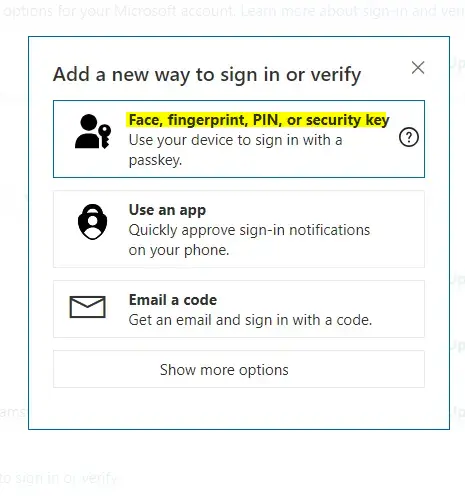
Microsoft account security page for setting up a new passkey. 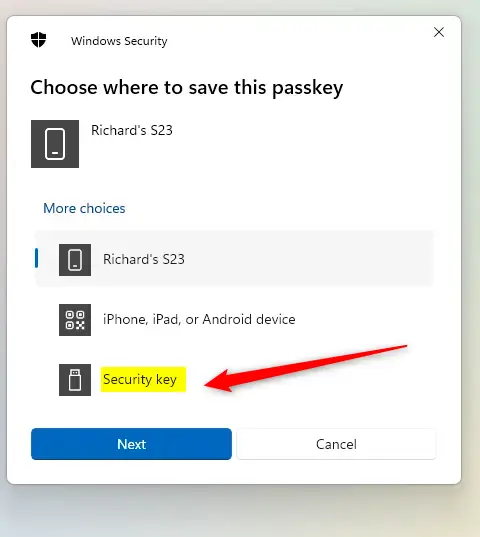
Microsoft account security passkey security key - Click OK to continue the setup. When Windows asks for it, enter the security key PIN. If your key has no PIN yet, Windows prompts you to create one.
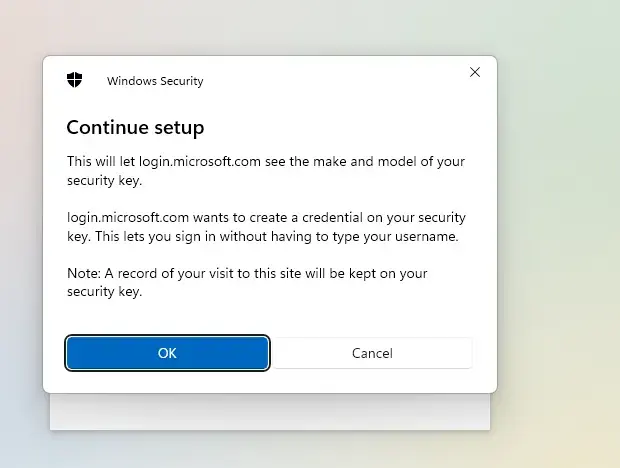
Microsoft account security settings page for adding passkey security key 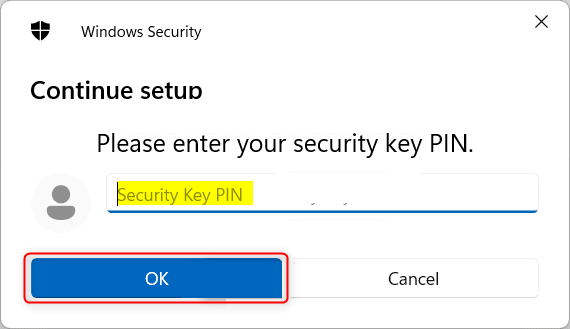
Microsoft account passkey security key - Touch your security key's fingerprint sensor. If your key has a button or touch contact instead, touch that. Then click OK when you are done.
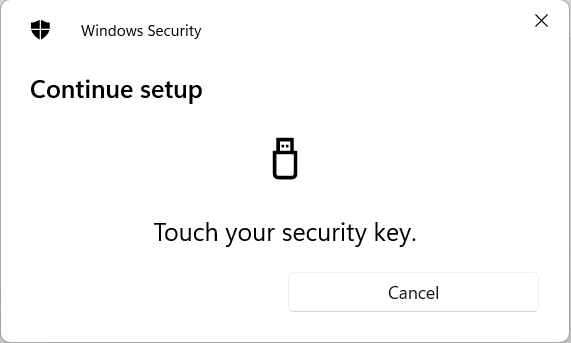
Microsoft account passkey security key touch - Wait for the confirmation that the key has been saved.
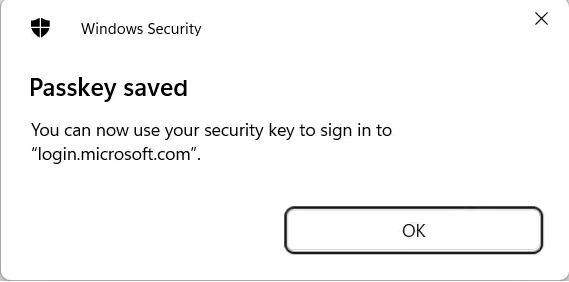
Saved security device key - Give your security key a name. Pick something you will recognize later, especially if you plan to add more than one key. Click Next to finish the setup.
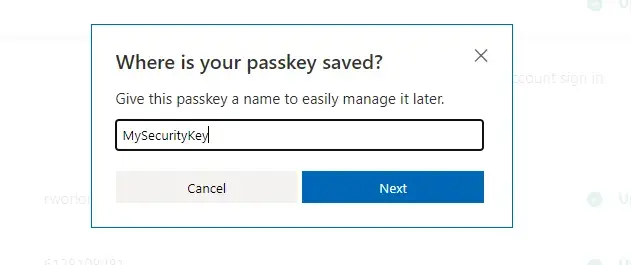
FIDO security key device connected to Microsoft account setup process 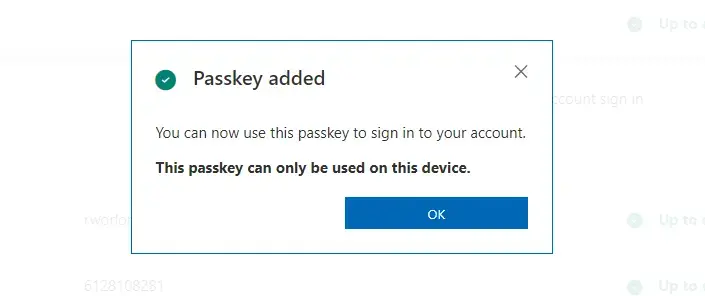
Microsoft passkey security key successfully saved confirmation screen
You're all set! Your security key is now active. Next time you sign in, choose Sign-in options and pick the security key option, then insert the key and enter your PIN or touch it when asked.
If the setup does not work, try a different USB port, or try another browser. Also check that the key is not already locked from too many wrong PIN attempts. A few other tips:
- Consider registering a second key as a backup, and store it somewhere safe. Losing your only key could make it harder to get into your account.
- To remove a key later, go back to the Advanced security options page while signed in and remove it from your list of sign-in methods.
Summary
The physical key adds real protection, and setting it up is quick, so your personal information stays better protected. Register a backup key and keep your key PIN somewhere safe so you do not lock yourself out.
References
Was this guide helpful?

About the Author
Richard
Tech Writer, IT Professional
Richard is a writer at Geek Rewind who turns complex IT tasks into clear, step-by-step guides. He draws on years of hands-on experience in system administration and enterprise IT operations, focusing on Windows, Linux and WordPress: the problems people actually run into, and the fixes that work. His server and WordPress guides come from systems he runs himself. Richard builds and maintains the platform behind Geek Rewind, from its Ubuntu servers and Nginx configuration to its custom WordPress plugins. Many new tutorials start with readers' questions, and he's always glad to answer them in the comments.



[…] article explains how to remove a Passkey from Security Key on your Microsoft […]