How to Open the Performance Monitor in Windows 11

Performance Monitor is a built-in Windows 11 tool that tracks how hard your PC is working by showing live data on your processor, memory, and disk usage. You can launch this diagnostic utility in under five seconds to spot what slows down your computer and view real-time performance charts.
Press the Win, type perfmon, and press Enter to open the app instantly. From there, you can watch live system events as they happen or set up custom alerts to check your PC health later.
Press Win+R to open the Run dialog, type perfmon, and press Enter to open the Performance Monitor tool in Windows 11. This built-in system application lets you view real-time data, check processor and memory usage numbers, review past performance logs, and set up custom reports for your computer.
Option One
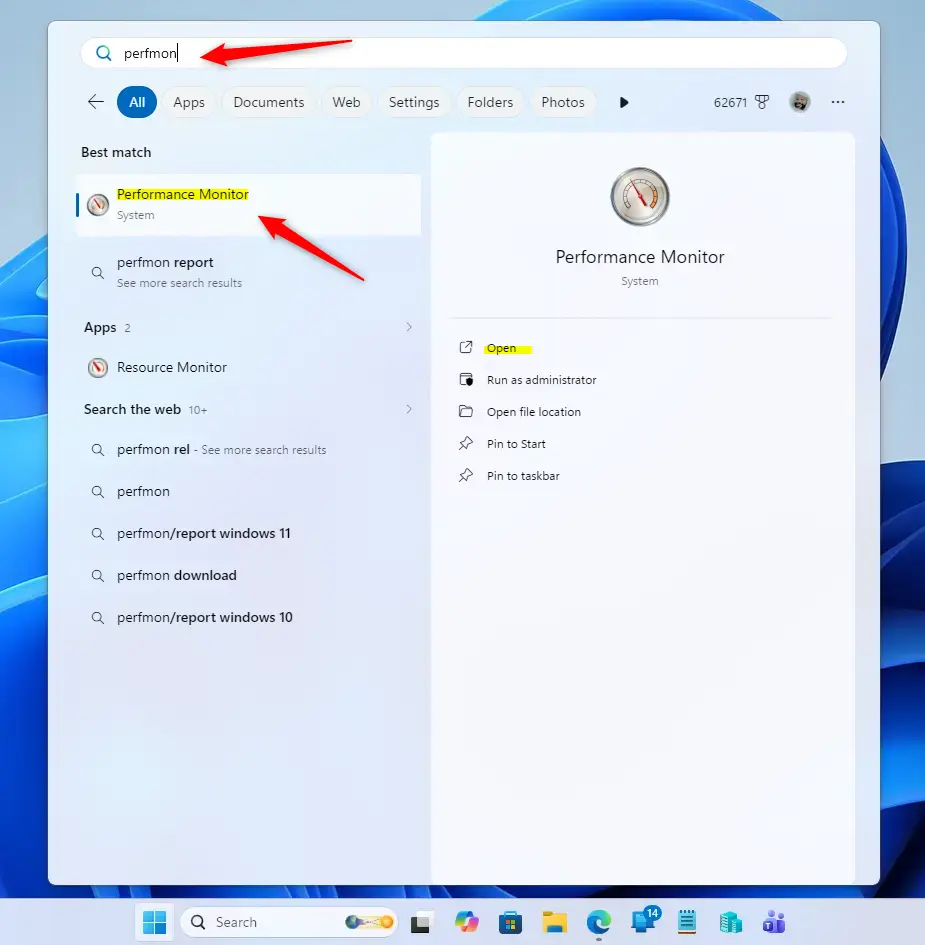
Open Performance Monitor from Windows Search
- Open Windows Search (Win+S) or the Start menu .
- Type perfmon into the search box.
- Click/tap on Open or press Enter.
Option Two
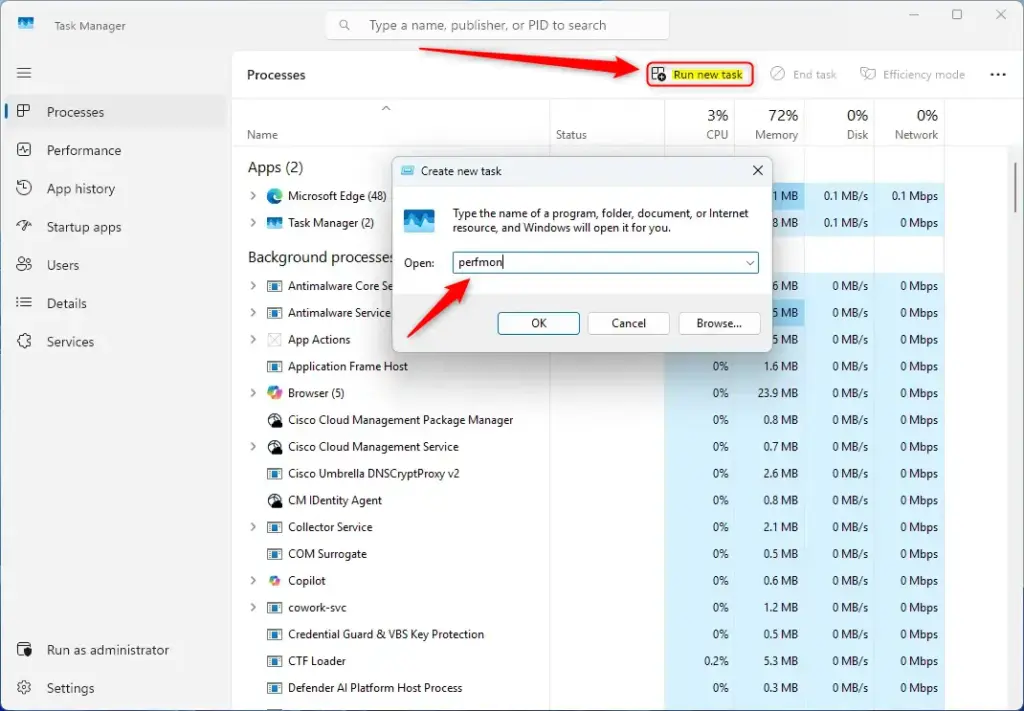
Open Performance Monitor from Task Manager
- Open Task Manager (Ctrl+Shift+Esc).
- Click/tap on Run new task on the command bar.
- Type perfmon, and click/tap on OK.
Option Three
Open Performance Monitor from Windows Tools
- Open Windows Tools.
- Click/tap on Performance Monitor.
Option Four
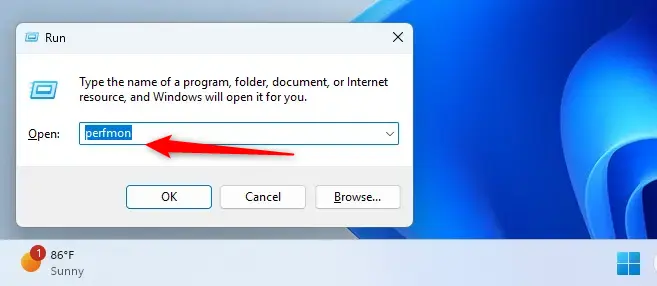
Open Performance Monitor from Run
- Open Run (Win+R).
- Type perfmon into Run.
- Click/tap on OK or press Enter.
Option Five
Open Performance Monitor from System Configuration (msconfig)
- Open System Configuration (msconfig).
- Click/tap on the Tools tab.
- Select Performance Monitor.
- Click/tap on the Launch button.
- Click/tap on OK to close msconfig.
Option Six
Open Performance Monitor from Command Line
- Open Terminal, and select either Windows PowerShell or Command Prompt.
- Type perfmon into Terminal, and press Enter.
That's it,
Summary
This tutorial covers six simple ways to open the Performance Monitor tool in Windows 11, ranging from using Windows Search and the Run dialog to Task Manager, Windows Tools, System Configuration, and the command line.
Was this guide helpful?

About the Author
Richard
Tech Writer, IT Professional
Richard is a writer at Geek Rewind who turns complex IT tasks into clear, step-by-step guides. He draws on years of hands-on experience in system administration and enterprise IT operations, focusing on Windows, Linux and WordPress: the problems people actually run into, and the fixes that work. His server and WordPress guides come from systems he runs himself. Richard builds and maintains the platform behind Geek Rewind, from its Ubuntu servers and Nginx configuration to its custom WordPress plugins. Many new tutorials start with readers' questions, and he's always glad to answer them in the comments.




No comments yet — be the first to share your thoughts!