How to Mount a Folder as a Drive in Windows 11

Sometimes you want to open a folder quickly without clicking through many menus. Mounting a folder as a drive gives it its own drive letter, like D: or E:, making it appear just like a regular hard drive in Windows.
Windows 11 has a tool for this, which we’ll get to in a moment. This guide shows you how to set it up step-by-step.
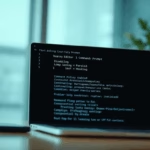
Mount a folder as a drive using the subst command in Windows Terminal. Open Terminal, type subst X: C:PathToYourFolder, replacing X: with your desired drive letter and C:PathToYourFolder with the actual folder path. Your folder will then appear as a new drive in File Explorer.
What You Will Need
- A Windows 11 computer
- Access to Windows Terminal, PowerShell, or Command Prompt
- The folder you want to mount
Steps to Mount a Folder as a Drive
Step 1: Open Windows Terminal
Click the Start button, then type ‘Windows Terminal’ and open it. Alternatively, you can use PowerShell or Command Prompt.
Step 2: Check Existing Mounted Drives
Type the command below and press Enter. This shows if you have any folders already mounted as drives:
substStep 3: Mount Your Folder as a Drive
Type this command and press Enter:
subst X: C:\PathToYourFolderImportant: Replace X: with the drive letter you want to use (for example, B: or G:). Just make sure that letter isn’t already assigned to another drive.
You’ll also need to replace 📁C:\PathToYourFolder with the actual, full path to your folder. Here’s an example:
subst B: "C:\Users\UserName\Documents\Business"Step 4: Access Your New Drive
Open File Explorer and look under ‘This PC’. You should see the new drive letter you chose. Click it, and you’ll go directly to your folder.
Step 5: Remove the Mounted Drive (If Needed)
Do you want to remove the mounted drive later? Open Windows Terminal again and type:
subst B: /DReplace B: with the letter of the drive you want to remove.
Summary
Mounting a folder as a drive provides quick access to your important files. This is a handy way to manage them in Windows 11. You can create and remove these virtual drives whenever you need to using commands. Let us know in the comments if you have any questions or want to share your experience!
Can I mount a folder as a drive?
Method 1 — The quick way: SUBST (Command Prompt) The fastest and most widely used method to mount a folder as a drive letter is the built‑in SUBST command. SUBST creates a virtual drive letter that points to a folder on your computer.
How to make a folder as a drive?
Right-click the ‘This PC’ icon and select ‘Map network drive…’. Then, type or paste the file path, pick a drive letter (you can choose any available letter), and click ‘Finish’. If you don’t know the full path of the folder you’re trying to map, you may be able to browse to it.
How to mount a folder as a CD drive?
So my path will be D under reasoning so I will copy and paste this one path. After that press Enter on the keyboard. This will be mounted as a virtual drive you can see in file explorer.
Can you Map a folder as a network drive?
In the Folder box, type the path to the shared network folder (the format is \hostnamesharename, where hostname is the name or IP address network device and sharename is the name of the shared network folder). You can also click Browse to find the folder you want to map on the network. Click Finish.
Was this guide helpful?

About the Author
Richard
Tech Writer, IT Professional
Richard, a writer for Geek Rewind, is a tech enthusiast who loves breaking down complex IT topics into simple, easy-to-understand ideas. With years of hands-on experience in system administration and enterprise IT operations, he’s developed a knack for offering practical tips and solutions. Richard aims to make technology more accessible and actionable. He's deeply committed to the Geek Rewind community, always ready to answer questions and engage in discussions.
No comments yet — be the first to share your thoughts!