How to Change “All File Access” on linked Mobile Device for Phone Link

You change the “All File Access” setting for your linked mobile device in Windows Phone Link by adjusting permissions within the Phone Link app settings on your PC.
Phone Link allows you to interact with your Android phone directly from your Windows computer, and managing file access is crucial for privacy and functionality. This setting controls whether your PC can view and manage all files on your phone.
For example, you might want to restrict access to specific folders after initially granting broad permissions. Doing this ensures you only share what you intend to.
You change the “All File Access” setting on your Samsung phone within the “Link to Windows” app. Open the app, go to Settings, find Permissions or Access, and adjust the “All File Access” or Storage permission.
Why Control File Access?
Controlling file access for Phone Link is important for privacy and security, letting you decide what your PC can see on your phone.
How to Change “All File Access” on Your Linked Samsung Device
You’ll manage “All File Access” directly on your Samsung phone, not your PC. This involves navigating your phone’s settings and the “Link to Windows” app. Here’s how:
Open the “Link to Windows” App
Open the “Link to Windows” app on your Samsung phone. It might be pre-installed, or you may have downloaded it from the Google Play Store or Samsung Galaxy Store. Then, tap to open it.Open the “Link to Windows” app on your Samsung phone to start managing file access settings.
Navigate to Settings within the App
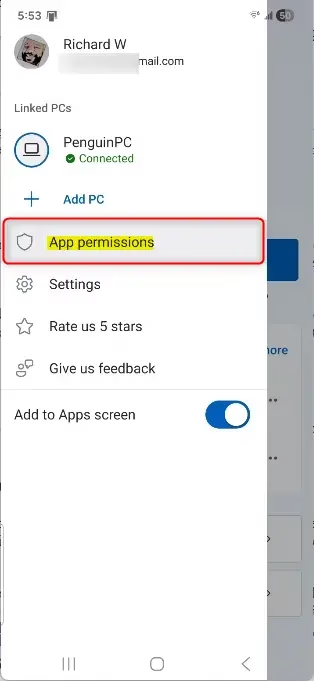
Once the “Link to Windows” app is open, look for a settings or preferences menu. You’ll often see a gear icon or a three-dot menu in the top or bottom corner of the app.Locate Permissions or Access Settings
Within the app’s settings, you’ll want to find an area that deals with permissions, access, or connected devices. The exact wording can vary slightly depending on your Samsung model and Android version.Inside the “Link to Windows” app, find the section for permissions or access settings to manage your phone link file access.
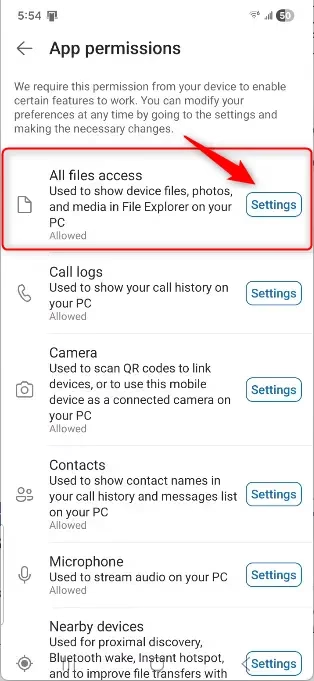
Find the “All File Access” or Storage Permission
Look for an option specifically related to file access, storage, or “All Files Access.” This might be a toggle switch or a setting that you can tap into for more detail. If you don’t see “All File Access” directly, it might be under a broader “Storage” permission category.Adjust the Permission
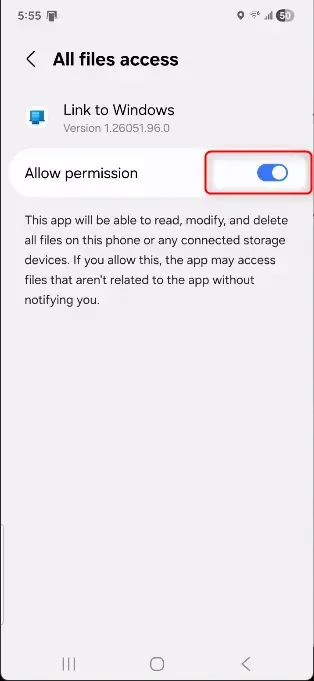
If “All File Access” is currently enabled, you’ll likely see an option to turn it off or change it to a more restricted level. If you’re presented with multiple options, choose the one that best suits your needs. For instance, you might be able to grant access only to specific folders or media types instead of all files.Adjust the phone link file access permission by turning off “All File Access” or choosing a more limited option if available.
Confirm Your Changes
After you’ve made your selection, the app might ask you to confirm your changes. Follow any on-screen prompts to save your new permission settings.Restart or Re-sync (Optional but Recommended)
Sometimes, changes to permissions don’t take effect immediately. To be safe, you might want to close and reopen the “Link to Windows” app on your phone. You could also try restarting the Phone Link app on your PC, or even rebooting both devices, to ensure the updated permissions are recognized.Restarting or re-syncing the Phone Link app on your PC and the “Link to Windows” app on your phone can help apply permission changes.
Understanding Android’s Permission System
Android’s permission system, including “Manage all files” (formerly “All File Access”), lets you control what apps like Phone Link can access on your phone.
When you initially set up Phone Link, you’re prompted to grant these permissions to allow seamless integration. If you want to revoke or modify them later, you’ll typically do so through the app itself or through your phone’s main system settings. On your Samsung phone, you can often find these under:
- Settings > Apps > Link to Windows > Permissions
Here, you’ll see a list of all the permissions the “Link to Windows” app has requested, including access to Storage, Notifications, Contacts, etc. You can then tap into each permission to enable or disable it.
Reference:
Conclusion
Managing “All File Access” through the “Link to Windows” app gives you control over your phone’s data for Phone Link, balancing features with privacy.
How to access files in Phone Link?
To access files in Phone Link, open the Phone Link app on your PC. Navigate to the 'Photos' tab for recent images or use the 'Files' tab (if available for your device) to browse and manage files directly from your linked mobile device. Ensure your phone is connected.
Can I access my phone files on my computer?
Yes, you can access your phone files on your computer using the Windows Phone Link app. Once linked, you can view photos, and depending on your phone model and settings, access other files directly through the app's interface or File Explorer integration.
Does Phone Link allow file transfer?
Yes, Phone Link allows file transfer between your phone and PC. You can drag and drop files directly within the Phone Link app, or use the 'Send files to your phone' and 'Receive files from your phone' options for seamless data exchange.
How do I access on my phone files?
To access your phone's files on your PC via Phone Link, open the app and ensure your device is linked. Navigate to the 'Photos' section for images or explore the 'Files' tab. You can then view, copy, or move files between your phone and computer.
Was this guide helpful?

About the Author
Richard
Tech Writer, IT Professional
Richard, a writer for Geek Rewind, is a tech enthusiast who loves breaking down complex IT topics into simple, easy-to-understand ideas. With years of hands-on experience in system administration and enterprise IT operations, he’s developed a knack for offering practical tips and solutions. Richard aims to make technology more accessible and actionable. He's deeply committed to the Geek Rewind community, always ready to answer questions and engage in discussions.



No comments yet — be the first to share your thoughts!