How to Install Dovecot on Ubuntu 24.04

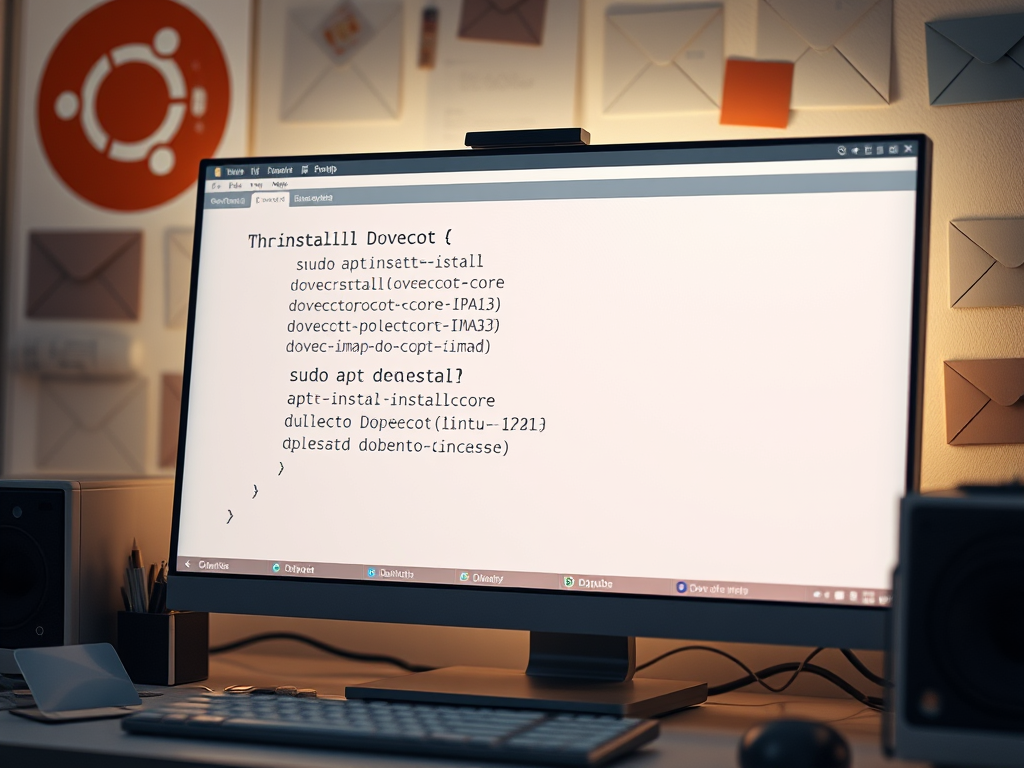
Dovecot is an open-source mail server software for Ubuntu 24.04 LTS that lets you host your own emails and read them using desktop apps like Outlook or Thunderbird. The software handles IMAP (Internet Message Access Protocol) and POP3 (Post Office Protocol), which are the standard rules mail apps use to download messages from a server.
Setting up Dovecot on Ubuntu 24.04 takes a few terminal commands and gives you complete control over personal mailboxes without relying on third-party hosting services. Once you finish the installation, your email programs connect directly to your server to grab incoming mail.
Install Dovecot on Ubuntu 24.04 using the command `sudo apt install dovecot-core dovecot-pop3d dovecot-imapd`. After installation, configure Dovecot by editing `dovecot.conf`, `10-auth.conf`, `10-mail.conf`, and `10-master.conf` to enable desired authentication mechanisms and mail locations. Finally, restart Dovecot with `sudo systemctl restart dovecot`.
Install Dovecot
To install Dovecot Ubuntu 24.04, open your terminal and run the standard package manager command. Make sure you have Postfix installed and running first so your mail server can send and receive messages properly. This setup process takes just a few moments to complete, and then you can move on to editing the main configuration files.
The Postfix mail server must be active before proceeding with Dovecot. Systems lacking Postfix on Ubuntu 24.04 require the preliminary setup detailed below.
How to install Postfix on Ubuntu
Execute the command below once Postfix preparation is complete.
The Dovecot main configuration file, typically located at `/etc/dovecot/dovecot.conf`, requires changes after installing Dovecot on Ubuntu 24.04. Editing these Dovecot settings tailors server behavior to match specific network requirements.
Open the primary configuration file, uncomment the highlighted lines, and save the changes.
sudo nano /etc/dovecot/dovecot.conf
Uncomment the lines highlighted.
# A comma separated list of IPs or hosts where to listen in for connections.
# "*" listens in all IPv4 interfaces, "::" listens in all IPv6 interfaces.

listen = *, ::
Save and exit.
Next, open the `auth.conf` file, uncomment the necessary lines, and save your changes.
sudo nano /etc/dovecot/conf.d/10-auth.conf
Uncomment the highlighted lines.
# Disable LOGIN command and all other plaintext authentications unless
# SSL/TLS is used (LOGINDISABLED capability). Note that if the remote IP
# matches the local IP (ie. you're connecting from the same computer), the
# connection is considered secure and plaintext authentication is allowed.

disable_plaintext_auth = no

# Space separated list of wanted authentication mechanisms:
#   plain login digest-md5 cram-md5 ntlm rpa apop anonymous gssapi otp
#   gss-spnego
# NOTE: See also disable_plaintext_auth setting.

auth_mechanisms = plain login
Save and exit.
Next, open the `mail.conf` file, change the designated line, and save your work.
sudo nano /etc/dovecot/conf.d/10-mail.conf
Change the highlighted line.
#
# <doc/wiki/MailLocation.txt>

mail_location = maildir:~/Maildir
Save and exit.
Next, open the `master.conf` file, locate lines 110 - 112, and uncomment the targeted block before saving.
sudo nano /etc/dovecot/conf.d/10-master.conf
On lines 110 - 112, uncomment the section below.
  # Postfix smtp-auth
  unix_listener /var/spool/postfix/private/auth {
    mode = 0666
    user = postfix
    group = postfix
  }
Save and exit the file.
Restart the service to apply changes.
sudo systemctl restart dovecot
You now have a fully operational mail server running on your network. Review these core takeaways as you move forward:
Proper configuration ensures stable communication across your Ubuntu deployment.
With Dovecot adequately set up, efficient email management is active on your Ubuntu server.
- Dovecot is a reliable open-source IMAP and POP3 email server, ensuring secure email retrieval.
- It integrates seamlessly with popular mail delivery agents like Postfix or Exim.
- The installation process involves simple commands to get Dovecot up and running alongside Postfix.
- Configuration files such as
dovecot.conf,10-auth.conf,10-mail.conf, and10-master.confare essential for tailoring Dovecot to your specific needs. - Remember to restart Dovecot after making changes to apply the new settings.
What email servers are available with Ubuntu?
Email Server Comparison
Was this guide helpful?
0% of readers found this helpful (1 votes)

About the Author
Richard
Tech Writer, IT Professional
Richard, a writer for Geek Rewind, is a tech enthusiast who loves breaking down complex IT topics into simple, easy-to-understand ideas. With years of hands-on experience in system administration and enterprise IT operations, he’s developed a knack for offering practical tips and solutions. Richard aims to make technology more accessible and actionable. He's deeply committed to the Geek Rewind community, always ready to answer questions and engage in discussions.

No comments yet — be the first to share your thoughts!