How to Use Android Nearby Share on Windows 11

You can use Android’s Nearby Share on Windows 11 to wirelessly send files between your phone and PC.
Nearby Share, now officially integrated with Google’s Quick Share, simplifies file transfers using Bluetooth and Wi-Fi Direct. This creates a direct, speedy link between your devices.
This feature lets you bypass cloud storage and email for quick sharing of large files like photos and videos. You can even transfer files reliably without an active internet connection.
Once set up, your Windows 11 PC will appear as a share target on your Android phone. You can then easily drag and drop files directly from your PC to your Android device.
Install the Google Quick Share app on your Windows 11 PC and sign in with your Google account. Ensure Bluetooth and Wi-Fi are enabled on both your PC and Android device. Your PC will then appear as a share target for sending files.
System Requirements
Your Windows 11 PC needs a 64-bit version of Windows 10 or 11 to use Android Nearby Share, and you must have Bluetooth and Wi-Fi turned on.
- Operating System: 64-bit version of Windows 10 or Windows 11.
- Hardware: Bluetooth and Wi-Fi must be enabled.
- Architecture: Currently, Quick Share is optimized for x86-64 processors. ARM-based Windows 11 devices may have limited or no support at this time.
- Account: A Google account is required for synchronization.
Setting up Quick Share on 🪟 Windows 11
Setting up Android Nearby Share on Windows 11 means installing the official Google Quick Share app on your PC, as it’s already on your phone.
Note: You may need administrator privileges to install new software on your computer. Ensure you have access to the 📁C:\Program Files directory if prompted.
- Download the official app: Download Google Quick Share for Windows.
- Run the installer. If you are asked for permission to make changes to your system, confirm that you want to proceed.
- Once installed, the app will ask you to sign in to your Google account.
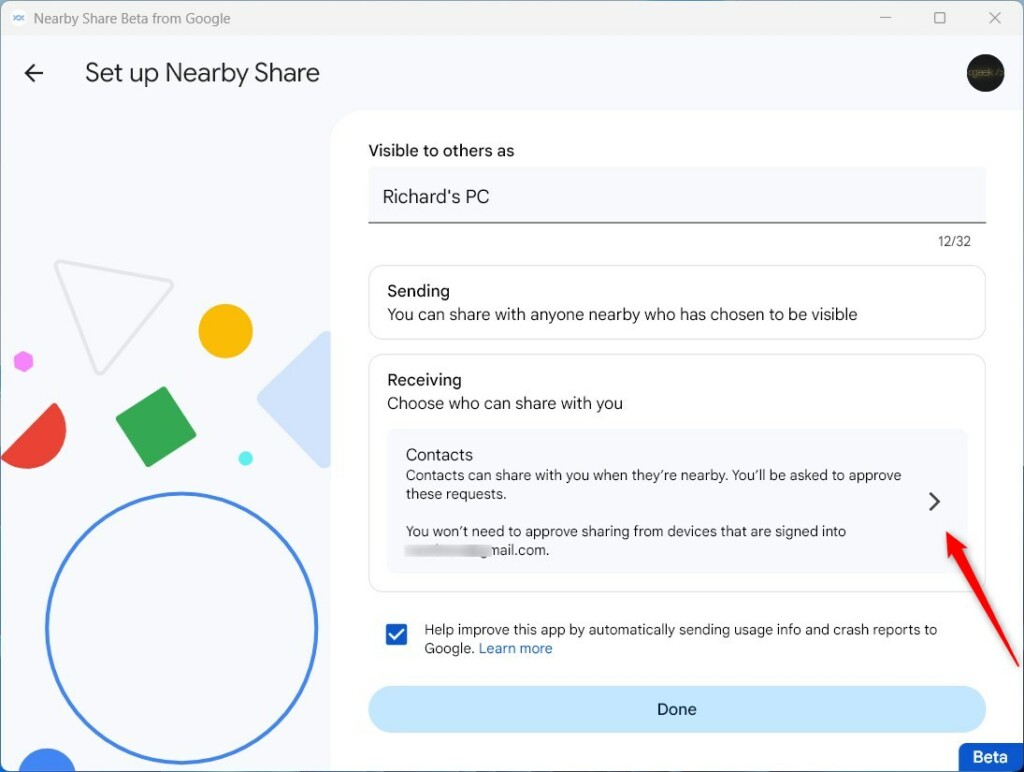
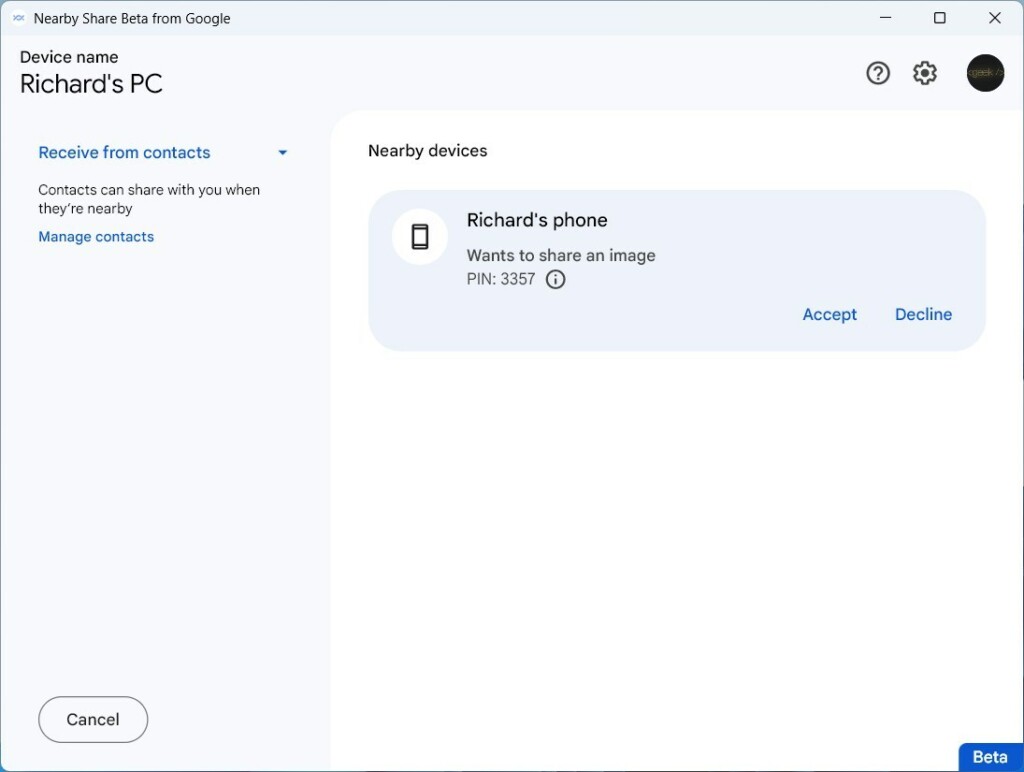
After signing in, you can choose who is allowed to send files to your computer. If you sign in with the same Google account on your phone and your PC, your files will transfer automatically without needing extra approval.
Managing Privacy and Settings
You can control who sees your device in the Quick Share app settings. You can choose between “Everyone,” “Contacts Only,” or “Your Devices.” If you select “Your Devices,” only phones signed into your specific Google account can send files to your PC.
Troubleshooting Quick Share
If your Windows 11 PC and Android phone can’t find each other for Nearby Share, troubleshooting involves checking that both devices are on the same Wi-Fi network and have Bluetooth turned on.
- Ensure both devices are on the same Wi-Fi network for faster transfers.
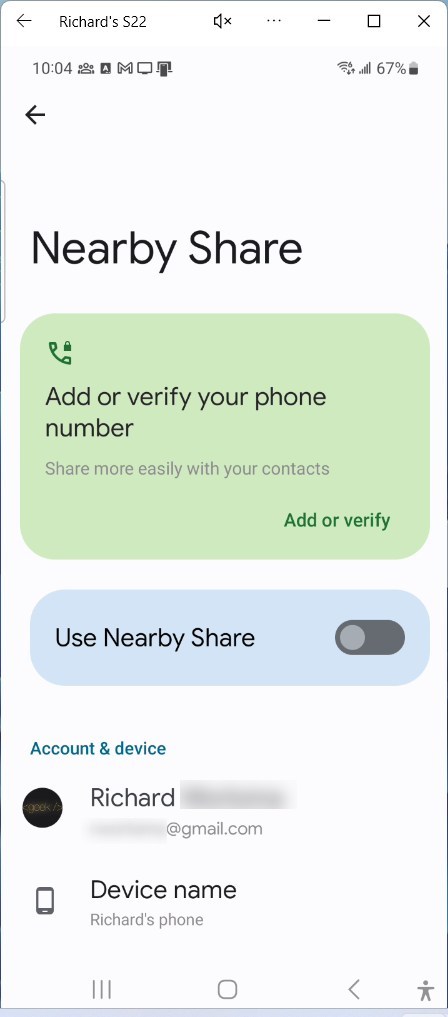
- Check that Bluetooth is toggled ON in both Windows Settings and your Android Quick Settings.
- Verify that your PC is not in “Airplane Mode.”
- Check for firewall blocks in 📁C:\Windows\System32\drivers\etc\hosts if you experience connection issues.
Summary
Android Nearby Share on Windows 11 makes moving files between your phone and PC easy by using the official Google app and your Google account for a secure connection.
Is Quick Share compatible with ARM-based 🪟 Windows 11 devices?
The official Google Quick Share app for Windows 11 is mainly made for standard x86-64 processors, so it’s not officially supported on ARM-based Windows 11 devices and might not work.
Do both devices need to be on the same Wi-Fi network?
While Quick Share uses Bluetooth for discovery, it uses Wi-Fi Direct for the actual file transfer. Being on the same Wi-Fi network often improves discovery speed and stability, but it is not strictly required as the app creates a peer-to-peer connection (meaning devices connect directly to each other) automatically.
Was this guide helpful?

About the Author
Richard
Tech Writer, IT Professional
Richard, a writer for Geek Rewind, is a tech enthusiast who loves breaking down complex IT topics into simple, easy-to-understand ideas. With years of hands-on experience in system administration and enterprise IT operations, he’s developed a knack for offering practical tips and solutions. Richard aims to make technology more accessible and actionable. He's deeply committed to the Geek Rewind community, always ready to answer questions and engage in discussions.
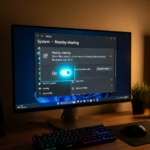
[…] Android Nearby Share feature allows users with Android devices to securely send and receive photos, documents, and more with nearby Windows PCs. […]
[…] Android Nearby Share feature allows users with Android devices to securely send and receive photos, documents, and more with nearby Windows PCs. […]
[…] guide explains how to change where your computer saves files sent from your phone using the Android Nearby Share Android Nearby Share feature. This tool lets you send photos and documents between your phone and […]