How to Enable Non-Native Accent Recognition in Windows 11

Non-native accent recognition in Windows 11 changes how the built-in speech-to-text engine processes different pronunciations, so your PC types what you say with fewer mistakes. The default speech model is tuned for native English speakers. If you speak English with an accent, that often leads to wrong words and missed commands. Turning this feature on helps the system follow your voice and makes dictation more reliable when English is not your first language.
Go to Settings Time & language Speech and check the box for “Recognize non-native accents for this language.” This helps Windows 11’s speech recognition better understand your pronunciation.
How to Enable Non-Native Accent Recognition
Non-native accent recognition helps your computer understand your dictation and voice commands when you speak English with an accent. It is a single checkbox on the Speech page of the Settings app . It is not a separate download, and it works the same on Windows 11 Home and Pro. The steps below take about a minute, and you do not need to restart the PC.
- Open the Settings app. Press the Win+I on your keyboard. The Settings window opens with a list of categories on the left.
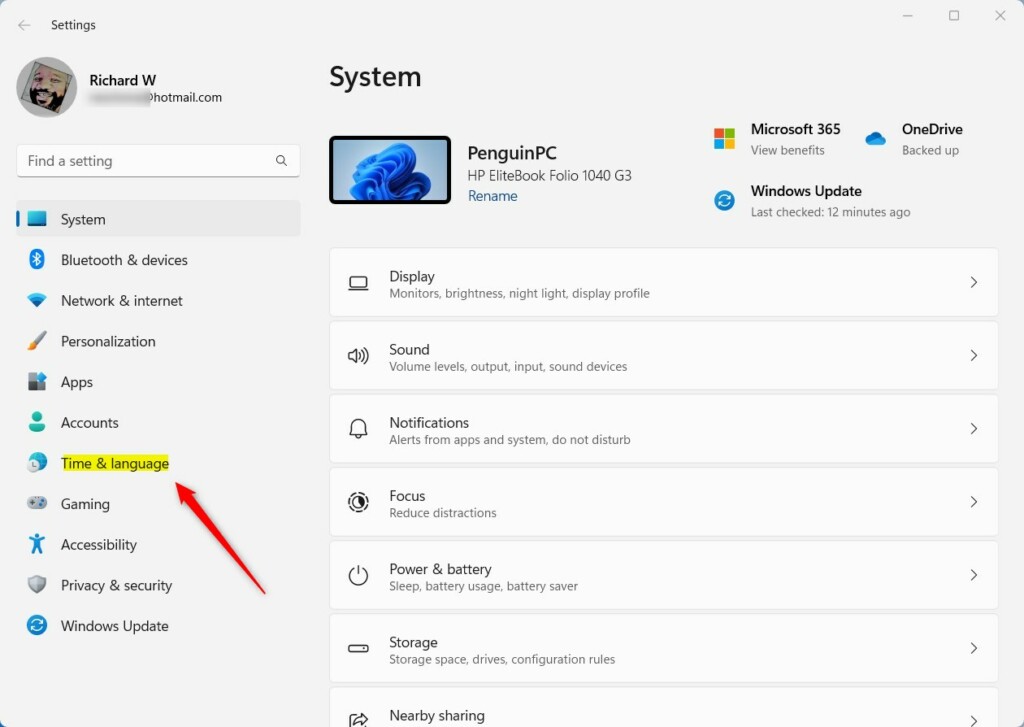
- Click Time & language in the left menu. The right side now shows the date, time, language and speech options.
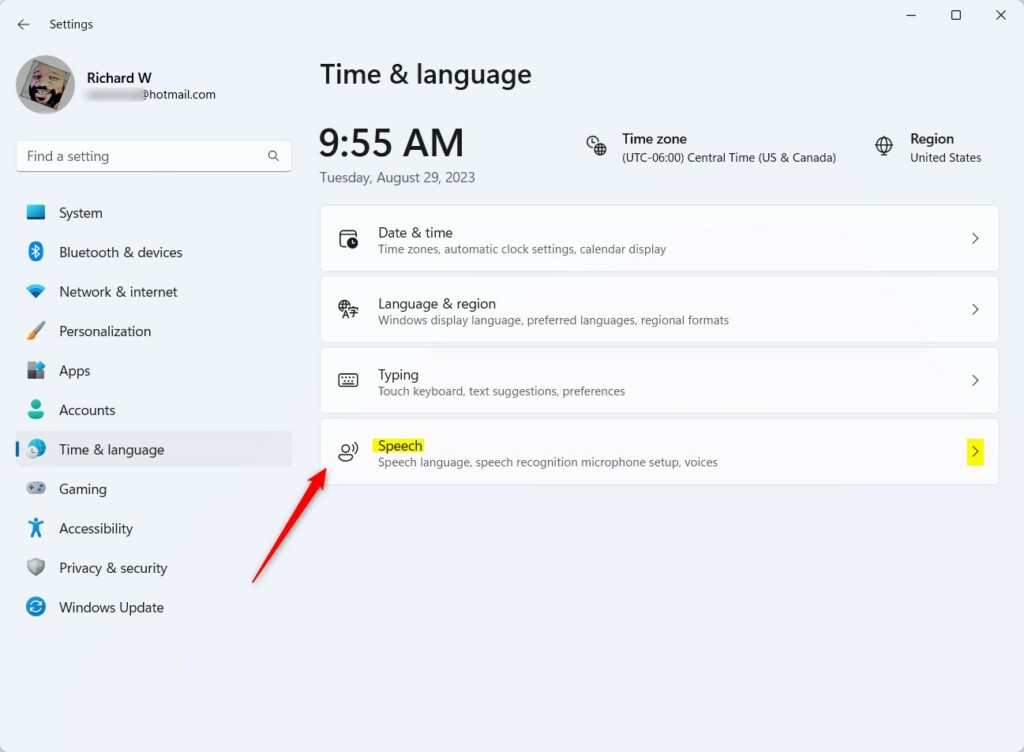
- Click the Speech tile. The Speech page opens (Settings Time & language Speech). It lists your speech language, microphone options and related settings.
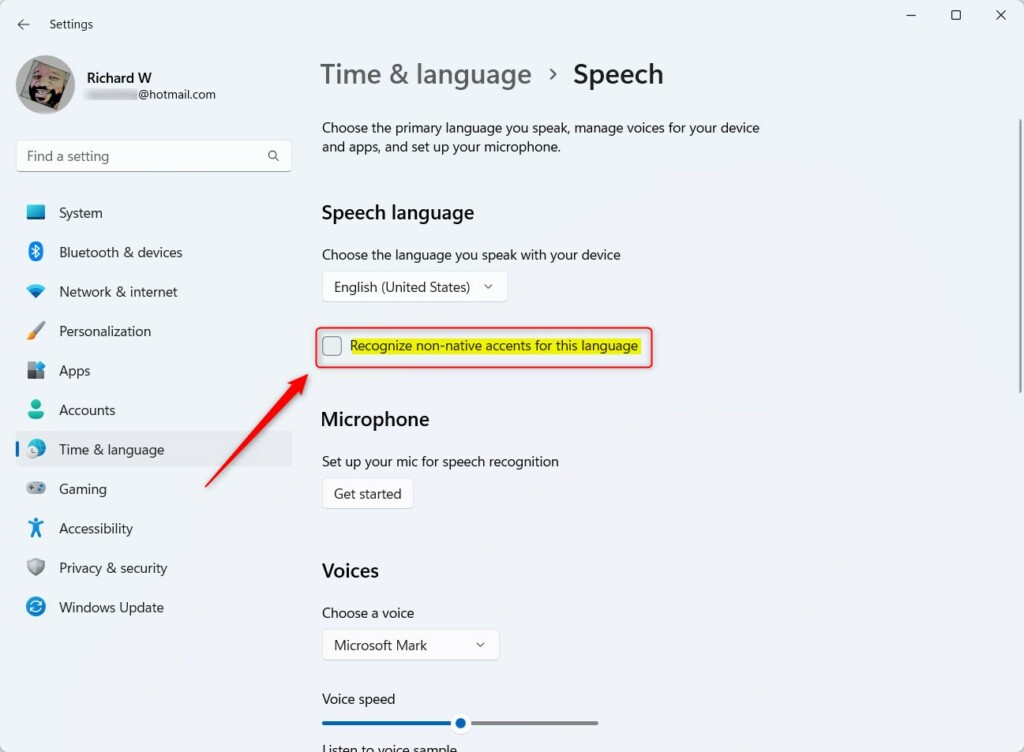
- Find the Speech language section. Check that the language shown there is the one you speak, for example English. If it is not, pick the right one from the list first, because the accent option belongs to the selected language.
- Check the box for Recognize non-native accents for this language. The setting takes effect straight away, with no restart. To undo it, come back to this page and clear the box. If you do not see the box, the selected language probably does not offer it. The option is aimed at English, so switch the speech language to an English variant and look again.
AI Accent Identification Technology and Limitations
This feature relies on artificial intelligence (AI) to adapt to different speech patterns, though it still makes occasional mistakes. Expect better results, not perfect ones. Heavy background noise, fast speech, and unusual names or technical terms can still trip it up. To test the change, dictate a few sentences into a text box, then turn the checkbox off and on again and compare the results.
Improving Your Setup
If you still face issues, your hardware might be the problem. Learn how to improve your microphone quality for better speech recognition to ensure the AI gets a clear signal. A headset microphone close to your mouth usually does far better than a laptop’s built-in one. You can also check the input device and its volume in Settings System Sound For advanced users, check your system files at 📁C:\
Related Tools for Accent Testing
If you need more than what Windows offers, consider these diagnostic tools. They are separate third-party products. They do not change how Windows dictation works, but they can help you see which sounds the software struggles with.
- ELSA Speak: Uses AI to analyze your pronunciation, so you can practice the sounds that cause the most errors.
- Speechace: Provides detailed feedback on your speech patterns, which helps you spot where your pronunciation differs from what the engine expects.
- Google Cloud Speech-to-Text: Offers advanced API options for developers to handle diverse accents. It is meant for building your own apps, not for everyday dictation in Windows.
Summary
Turning on non-native accent recognition in Windows 11 helps your computer understand you better, making it more inclusive, though it has limits. It takes one checkbox in Settings Time & language Speech, it needs no restart, and you can switch it off again at any time. Pair it with a decent microphone and an up-to-date system for the best results.
Was this guide helpful?

About the Author
Richard
Tech Writer, IT Professional
Richard is a writer at Geek Rewind who turns complex IT tasks into clear, step-by-step guides. He draws on years of hands-on experience in system administration and enterprise IT operations, focusing on Windows, Linux and WordPress: the problems people actually run into, and the fixes that work. His server and WordPress guides come from systems he runs himself. Richard builds and maintains the platform behind Geek Rewind, from its Ubuntu servers and Nginx configuration to its custom WordPress plugins. Many new tutorials start with readers' questions, and he's always glad to answer them in the comments.



No comments yet — be the first to share your thoughts!