How to Enable or Disable Seconds in Windows 11 System Tray Clock


Windows 11 lets you see the exact time down to the second in your taskbar. This guide shows you how to turn this setting on or off.
To show or hide seconds in your Windows 11 system tray clock, open Settings , go to Personalization, then Taskbar, and expand Taskbar behaviors. Check or uncheck the “Show seconds in the system tray clock” box. This setting is available in Windows 11 version 22H2 and later.
Why show seconds?
Showing seconds in your Windows 11 system tray clock is helpful for tasks needing precise timing, giving you an instant reference without needing a separate timer.
What happens when done?
Once you apply these changes, your clock in the bottom-right corner of the screen will either display or hide the ticking seconds. This change takes effect immediately without requiring a system restart.
Version Compatibility and History
You can only show seconds in the Windows 11 clock if you’re using version 22H2 or a newer update, specifically the Moment 2 update or later.
Method 1Using the Settings App
You can show seconds in your Windows 11 system tray clock using the Settings app . This is the easiest way to turn the seconds display on or off without needing to make complicated changes to your computer.
- Open the Windows Settings app by clicking the Start menu and selecting the gear icon.
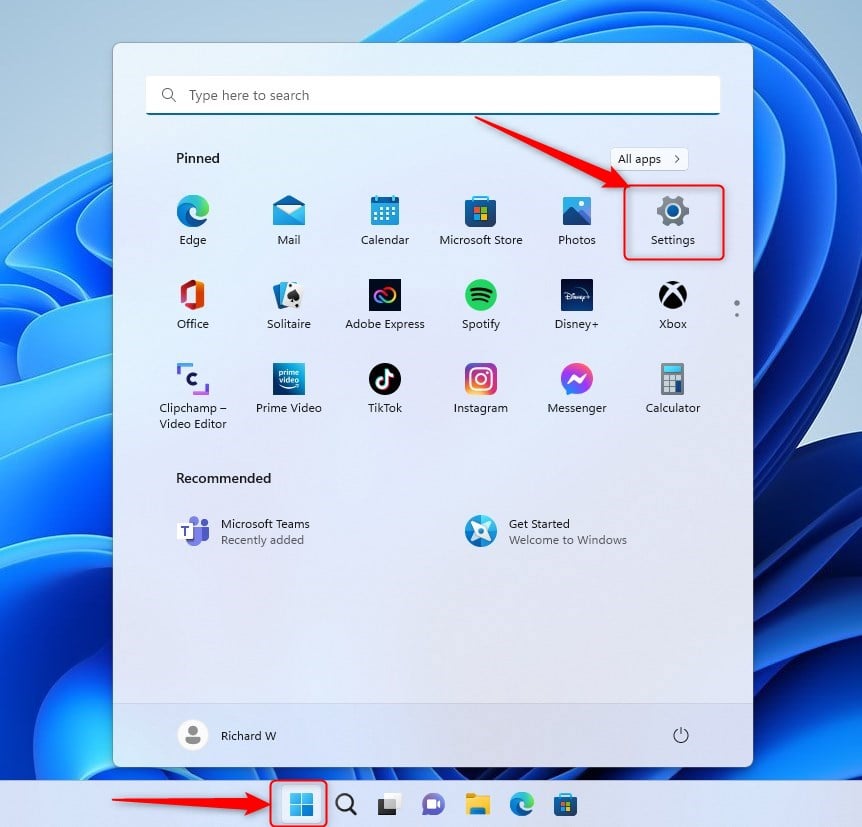
windows 11 new settings button - Click on Personalization in the left menu.
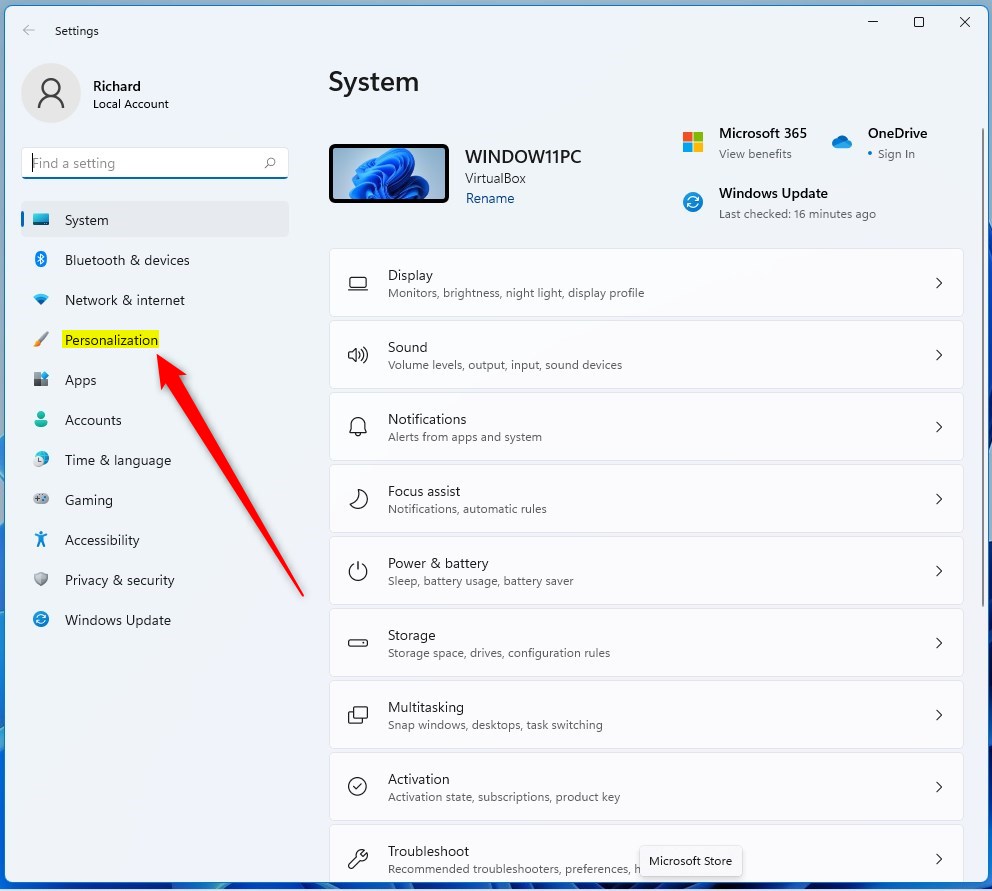
windows 11 personalization tile setting - On the right side, click on Taskbar.
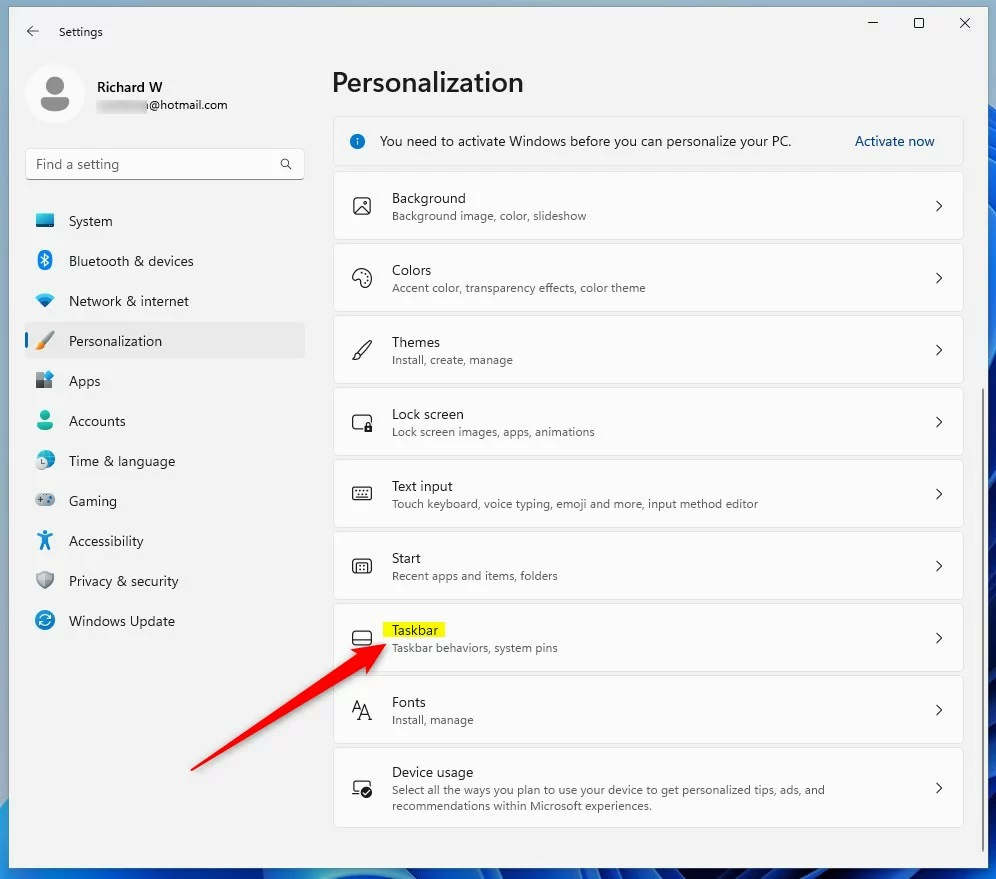
windows 11 personalization taskbar tile - Scroll down and click Taskbar behaviors to open the menu.
- Check the box next to Show seconds in the system tray clock to turn them on. Uncheck the box to hide them.
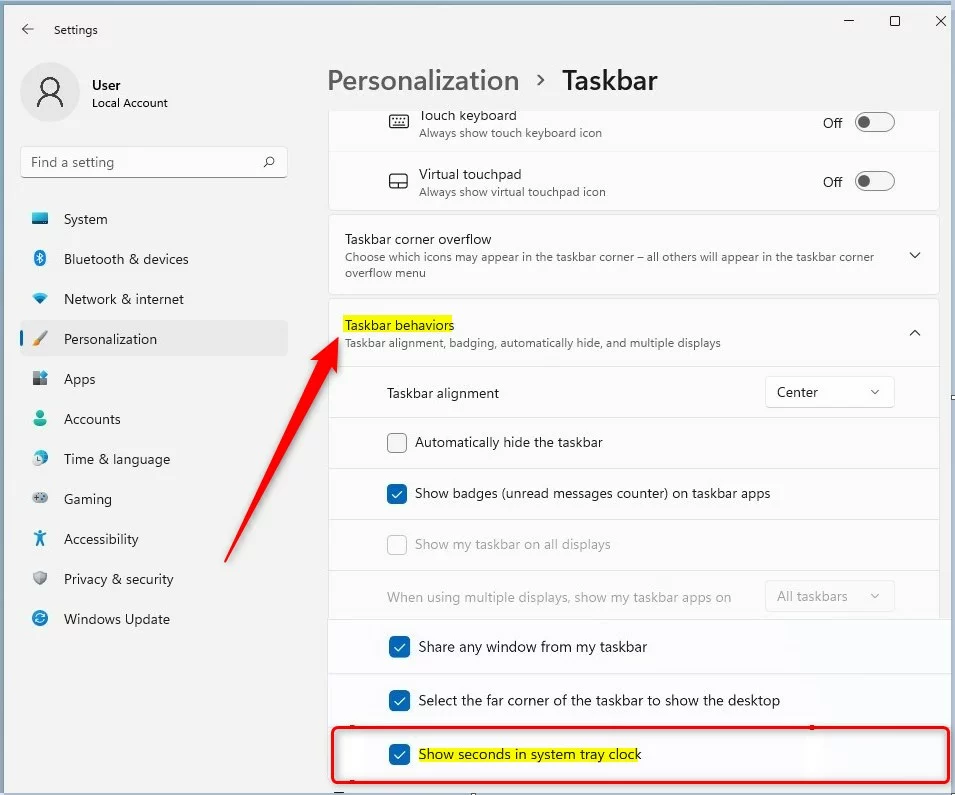
windows 11 show seconds in system tray clock tile - Close the Settings app .
Method 2Using the Windows Registry
If you want to show seconds in your Windows 11 clock and the Settings app isn’t working, you can use the Windows Registry. This method involves making changes to system files, so it’s best for people who are comfortable with more technical steps.
- Open the Windows Registry by typing
regeditin your Start menu search bar. - Go to the following path:
HKEY_CURRENT_USER\Software\Microsoft\Windows\CurrentVersion\Explorer\Advanced 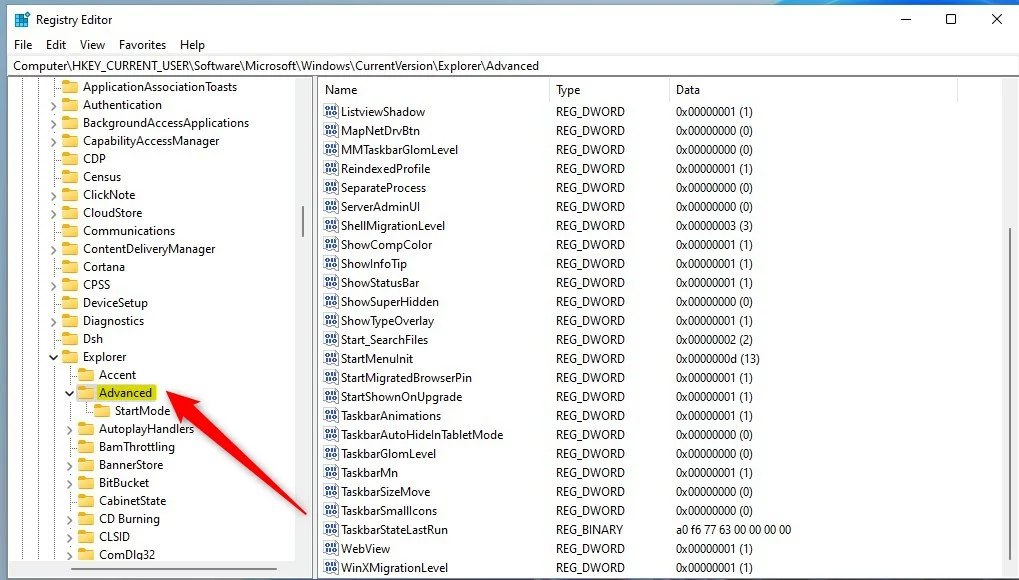
windows 11 show seconds in system tray clock registry - Look for the value named
ShowSecondsInSystemClockon the right side. If you do not see it, right-click an empty space, select New, then DWORD (32-bit) Value, and name itShowSecondsInSystemClock. - Double-click the value. Change the data to
1to show seconds, or0to hide them. 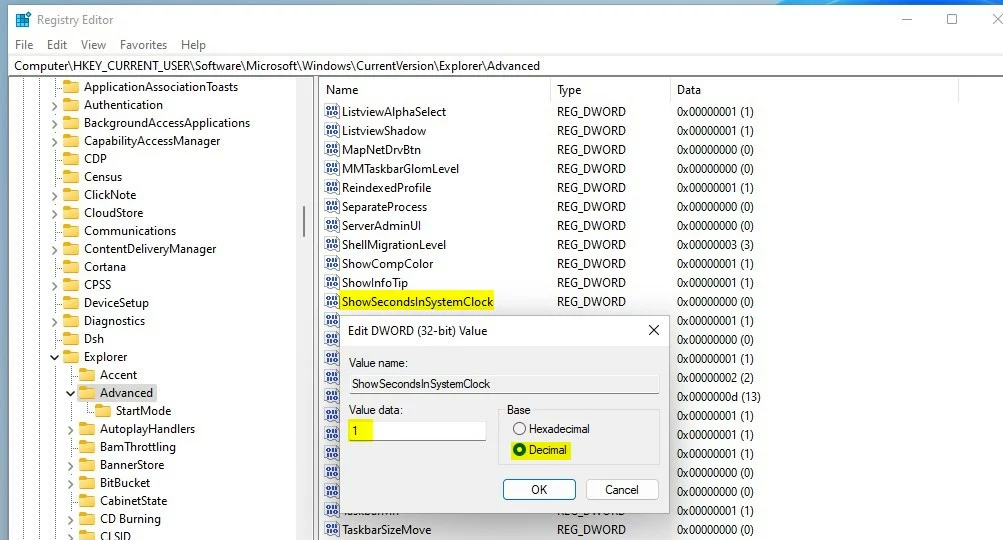
windows 11 showSecondsInSystemClock value key - Close the Registry Editor.
Performance Impact and Battery Life
Troubleshooting Registry Issues
Summary
You can easily turn on or off showing seconds in your Windows 11 clock using either the simple Settings app or the more advanced Registry editor.
Was this guide helpful?

About the Author
Richard
Tech Writer, IT Professional
Richard is a writer at Geek Rewind who turns complex IT tasks into clear, step-by-step guides. He draws on years of hands-on experience in system administration and enterprise IT operations, focusing on Windows, Linux and WordPress: the problems people actually run into, and the fixes that work. His server and WordPress guides come from systems he runs himself. Richard builds and maintains the platform behind Geek Rewind, from its Ubuntu servers and Nginx configuration to its custom WordPress plugins. Many new tutorials start with readers' questions, and he's always glad to answer them in the comments.



No comments yet — be the first to share your thoughts!