How to Boot from USB in Windows 11

Booting from a USB drive in Windows 11 means your computer starts from an external flash drive instead of its main hard drive or SSD. You need this to install a fresh copy of Windows, repair a system that will not load, or run diagnostic and recovery tools from outside the installed system.
The process is simple. You plug a bootable flash drive into a USB port, restart the PC, and either pick the drive from a boot menu or press a manufacturer-specific key such as F2, F12, or Delete during startup. That key opens your motherboard’s BIOS or UEFI (Unified Extensible Firmware Interface) menu, where you can change the boot order so the flash drive loads before your internal storage.
This guide covers two ways to do it. The first uses Windows itself and only works if the PC still starts normally. The second uses the boot menu key and works even if Windows is broken.
Access the Advanced Startup menu by going to Settings System Recovery Restart now. Then select “Use a device” and choose your USB drive from the list. Alternatively, restart your PC and press the boot menu key for your manufacturer.
Preparation of Bootable Media
Before you try either method, you need a bootable flash drive. Make one with Microsoft’s Media Creation Tool or with Rufus (a tool that turns disk images into bootable USB drives). Rufus needs an ISO file (a disk image containing setup files). The Media Creation Tool downloads the Windows files for you.
Keep these points in mind:
- Creating the drive erases everything on the USB. Copy any files you want to keep to another location first.
- Use a drive of at least 8 GB for a Windows 11 installer.
- If the drive does not show up later as a boot option, remake it. Plug it into a different USB port first, and check that the tool used a UEFI-compatible setting. Most modern PCs boot in UEFI mode.
How to Enter the BIOS on a 🪟 Windows 11 PC
To enter the BIOS or UEFI settings, restart the computer and press a specific manufacturer key right as the screen turns back on. Every brand uses a different key, so you need the one that matches your machine. F2, F12, and Delete are the most common. Esc and F10 are also used on some models.
If you are not sure which key your PC uses, look at the logo screen. Many PCs print a line such as "Press F2 to enter Setup" for a second or two. Your PC's manual or the manufacturer's support page will also list it. Tap the key repeatedly, starting as soon as the screen goes dark. Do not hold it down, and do not wait for the logo to appear first.
Some PCs start so quickly that the window for pressing the key is very short. Using Restart rather than Shut down helps. A shutdown with Fast Startup enabled can skip some of the normal startup steps.
| Manufacturer | Boot Menu Key |
|---|---|
| Dell | F12 |
| HP | F9 or Esc |
| Lenovo | F12 or Fn+F12 |
| ASUS | F8 or Esc |
| Acer | F12 |
Booting through Windows Advanced Startup
If your PC already turns on and loads Windows, the built-in Advanced Startup menu is the easiest way to boot from USB. You plug in the drive, open the Settings app, go to the recovery settings, and restart into a menu where you can choose the USB device. You do not need to know your manufacturer's key. This works the same on Windows 11 Home and Pro.
- Plug your USB drive into the computer. Wait a few seconds for Windows to recognize it.
- Go to Settings System Recovery
- Find Advanced startup and click Restart now. Windows may ask you to save your work first. Do that before you continue, because the PC restarts right away.
- Wait for the blue Choose an option screen to appear.
- Select Use a device. You should now see a list of devices you can boot from.
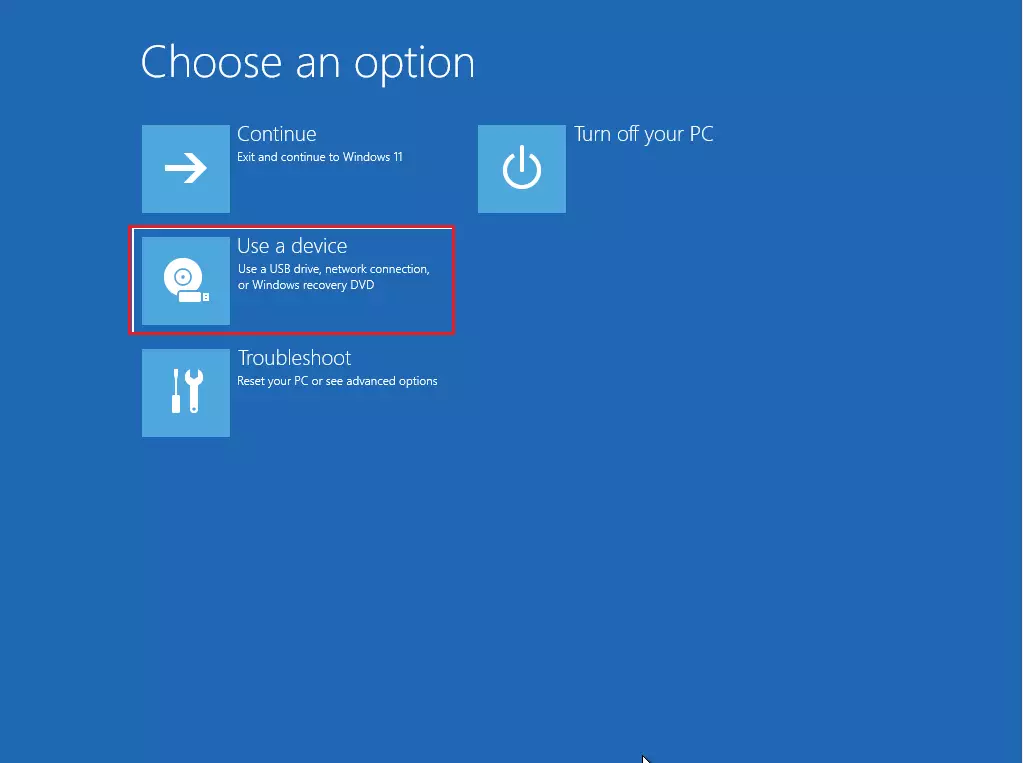
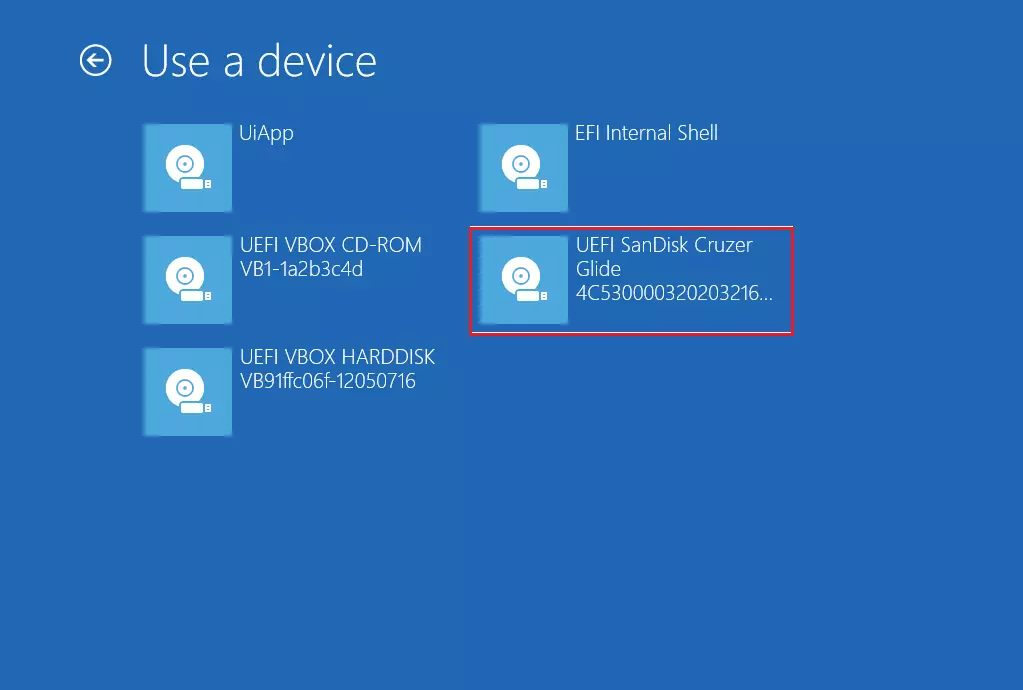
Choose your USB drive from the list. The computer restarts and loads from that device. If you are using a Windows installation drive, you may see a message saying "Press any key to boot from CD or DVD." Press any key right away, or the PC may go back to loading Windows from the internal drive.
If your USB drive is not in the list, shut down, try a different USB port, and check that the drive was created correctly. Some older PCs with traditional BIOS firmware may not show Use a device at all. In that case, use the boot menu method below.
This choice applies to one startup only. To go back to normal, remove the USB drive and restart. Windows loads from your internal drive again.
Booting using the Computer Boot Menu
The boot menu key lets you bypass Windows and start straight from the USB drive. Use this method if Windows will not load, or if the Advanced Startup route did not list your drive. You plug in the drive, restart the machine, and tap your boot menu key repeatedly until a list of drives appears. Then you pick your USB device.
- Plug your USB drive into the computer.
- Restart your computer. If it is off, turn it on instead.
- Immediately start tapping the boot menu key for your model. Common keys are F12 and Esc, but F9 and F11 are used on some brands. The key is often different from the one that opens BIOS or UEFI setup. Check the startup screen text or your PC's manual if the first key does nothing.
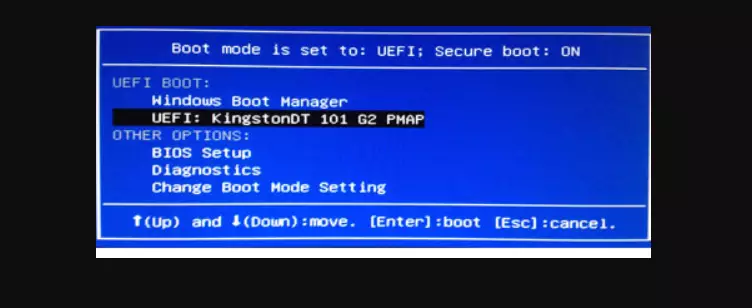
- When the boot menu appears, use the arrow keys to select your USB drive. It is often listed by the drive's brand name, and may show "UEFI" in front of it.
- Press Enter. The PC should now start from the USB drive.
If the key opens full BIOS or UEFI setup instead of a short boot menu, look for a Boot tab. Move the USB drive to the top of the boot order, then save and exit. That setting stays until you change it back, so reset the order when you finish. Otherwise the PC may keep trying the USB drive first.
If the drive still does not appear, check the BIOS or UEFI settings for USB boot support. Some PCs also have Secure Boot or a compatibility setting that blocks certain drives. Change these only if you understand the effect, and note the original value so you can restore it. If your drive is encrypted with BitLocker, have your recovery key available. Firmware changes can sometimes make Windows ask for it on the next normal start.
Summary
To boot from USB in Windows 11, prepare the bootable media first. Then use either the Advanced Startup menu, if Windows still loads, or the hardware boot menu key, if it does not. Back up your data before you start, and check your BIOS or UEFI settings if the drive does not appear. That prevents most cases of unexpected data loss. When you finish, remove the USB drive and restart so the PC goes back to its normal startup.
Was this guide helpful?

About the Author
Richard
Tech Writer, IT Professional
Richard is a writer at Geek Rewind who turns complex IT tasks into clear, step-by-step guides. He draws on years of hands-on experience in system administration and enterprise IT operations, focusing on Windows, Linux and WordPress: the problems people actually run into, and the fixes that work. His server and WordPress guides come from systems he runs himself. Richard builds and maintains the platform behind Geek Rewind, from its Ubuntu servers and Nginx configuration to its custom WordPress plugins. Many new tutorials start with readers' questions, and he's always glad to answer them in the comments.



No comments yet — be the first to share your thoughts!