How to Enable Automatic Page File Size in Windows 11


Automatic page file size in Windows 11 manages virtual memory without any manual setup. Virtual memory is space on your drive that Windows uses like RAM when your main memory fills up. Letting Windows control this setting helps prevent random crashes and lets your PC save error information if something goes wrong.
Leave enough free space on your 📁C:\
Open Settings with Win+I, then go to System About Advanced system settings In System Properties, click Settings under Performance, open the Advanced tab in Performance Options, and click Change under Virtual memory. Check Automatically manage paging file size for all drives, click OK, and restart your PC to apply it.
How to Enable Automatic Page File Size in 🪟 Windows 11
With automatic sizing on, Windows picks the best size for your page file and changes it as your workload changes. The page file is a hidden system file on your drive that works as temporary memory. You turn this on in a few steps, starting from the Settings app.
On a standard account, Windows asks for administrator credentials or leaves the options greyed out. The steps are the same on Windows 11 Home and Pro.
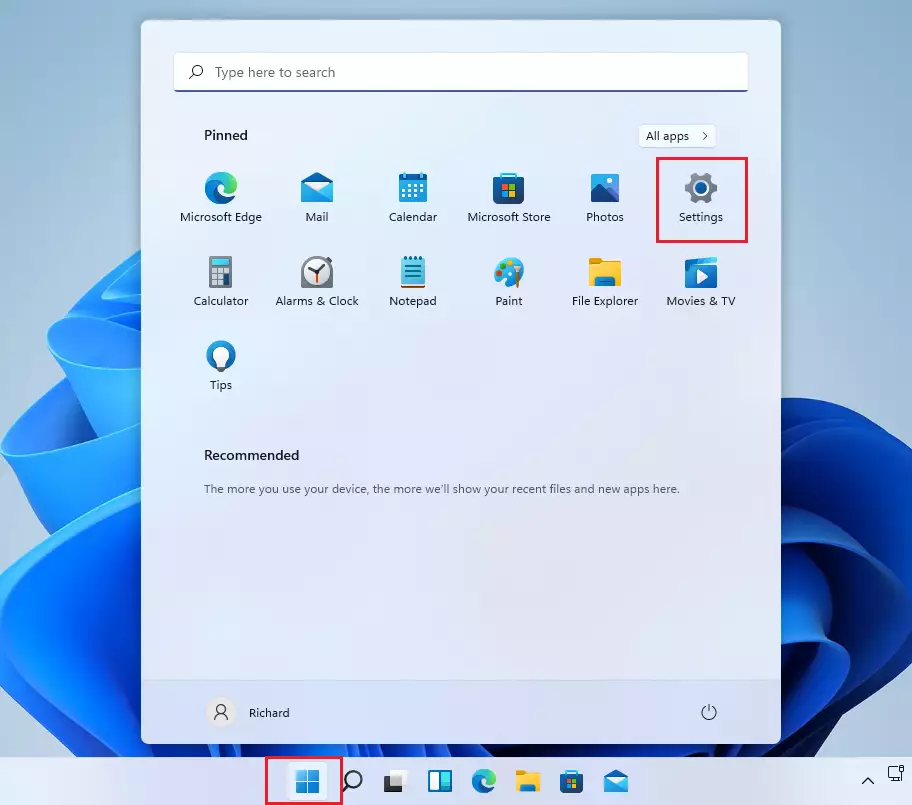
- Press Win+I to open Settings. The Settings window opens with the System page selected.
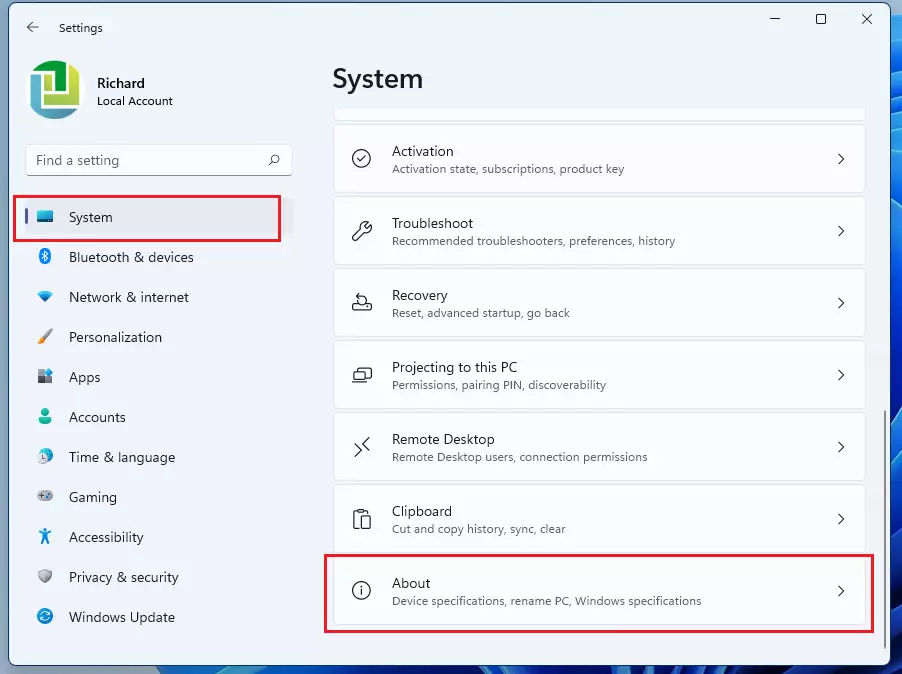
- Click System, then scroll down and select About. You should see your device name, processor, installed RAM and Windows specifications.
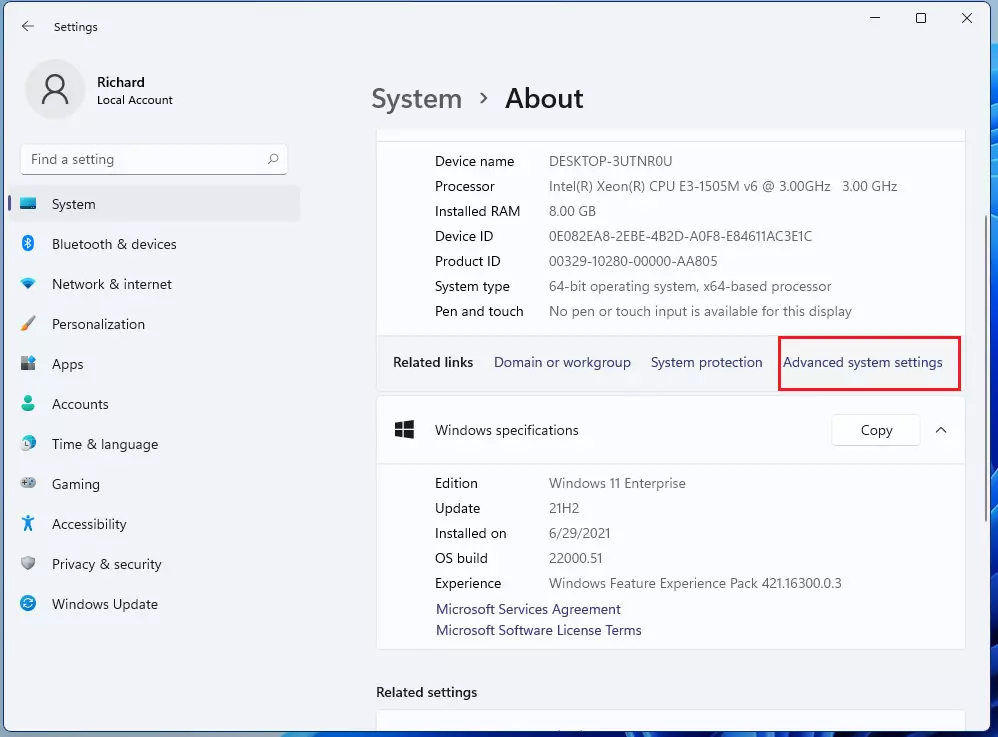
- Under Related links, click Advanced system settings. If Windows shows a User Account Control prompt, click Yes. The System Properties window opens.
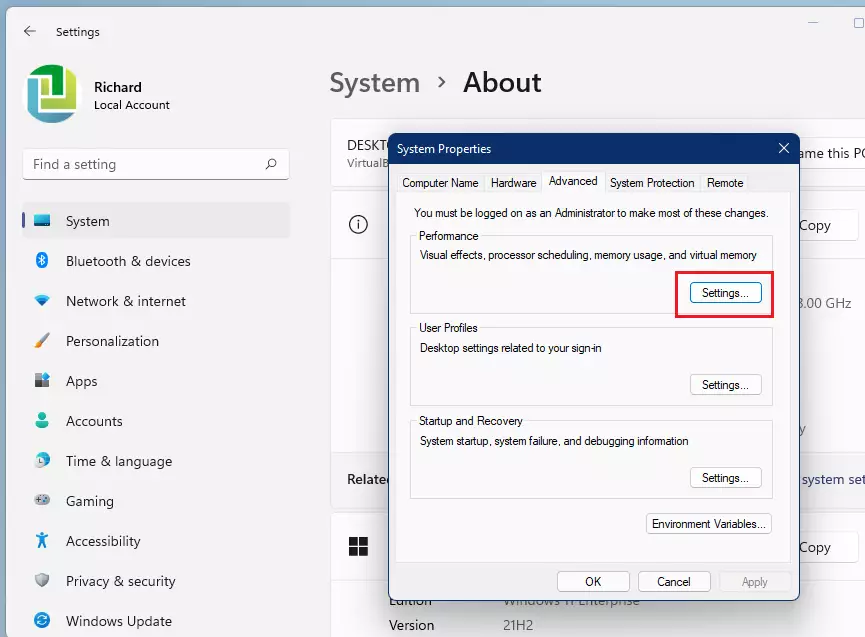
- In System Properties, stay on the Advanced tab and click Settings in the Performance section. A second window, Performance Options, opens.
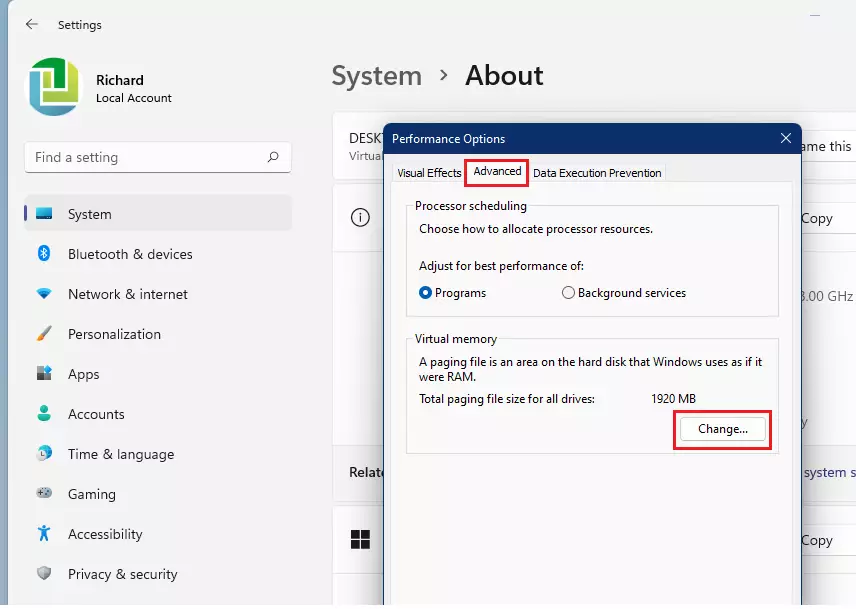
- In Performance Options, click the Advanced tab, then click Change under Virtual memory. The Virtual Memory window opens with a list of your drives.
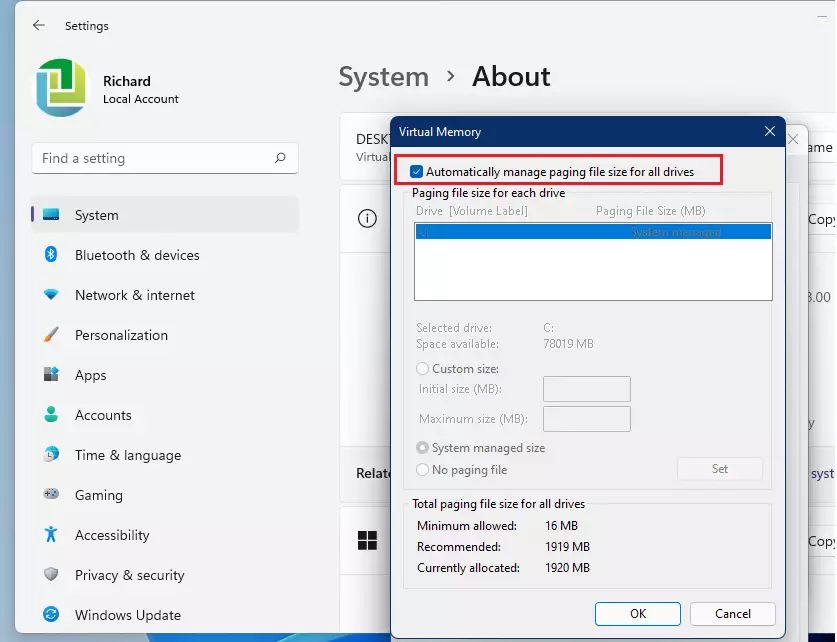
- Check the box Automatically manage paging file size for all drives. The drive list and the size fields below it turn grey, because Windows now controls them. Click OK to save, then click OK in the remaining windows.
If the box is already checked, automatic sizing is on and you do not need to change anything. If you cannot click it, open the window again from an administrator account.
- Restart your computer to apply the changes. Windows usually shows a message asking you to restart. Save your work first.
To undo this later, return to the same Virtual Memory window and clear the check box. You can then set a custom size for each drive, but this is rarely needed.
How to Enable Automatic Page File Size in 🪟 Windows 10
The process is similar in Windows 10. Right-click This PC on your desktop, select Properties, then click Advanced system settings. Follow the same steps above to reach the Virtual memory window. The dialogs from that point on look almost the same as in Windows 11.
Performance and Troubleshooting
Windows still uses the page file for other jobs, and it needs one on the system drive to write crash information after a serious error. A large amount of RAM lowers how often the page file is used, but it does not make the file unnecessary.
Automatic vs Manual Page File Size
- Automatic management lets Windows adjust virtual memory dynamically based on your current workload
- Manual sizing requires you to guess or calculate minimum and maximum limits, which often leads to errors
- Disabling the page file entirely can cause apps to run out of memory and stop working, even if you have plenty of RAM
With automatic management, Windows adjusts virtual memory to match your current workload. With manual sizing, you pick fixed limits yourself. Manual limits that are too low are a common cause of app crashes and out-of-memory errors, because Windows cannot expand the file when a heavy task needs more space. Leaving Windows in charge avoids that problem.
The main reason to size it manually is a specific technical need, such as a vendor requirement for a particular application. If you do not have one, leave the automatic option on.
If you prefer command-line tools, you can also review your virtual memory settings in PowerShell. Click Start, type PowerShell, right-click Windows PowerShell, and select Run as administrator. Click Yes at the prompt. From there you can check how your computer currently handles temporary memory storage. To change the setting, use the Virtual Memory window described above.
Summary
Enabling automatic page file size is the simplest way to let Windows manage virtual memory well. It helps prevent crashes, supports system diagnostics, and keeps performance steady without manual tuning. Keep this setting enabled unless you have a specific technical reason to change it.
Have a question about this guide?
Answered by AI from this guide. Good questions may be added to this page — please don't include personal details.
Did this guide fix your problem?

About the Author
Richard
Tech Writer, IT Professional
Richard is a writer at Geek Rewind who turns complex IT tasks into clear, step-by-step guides. He draws on years of hands-on experience in system administration and enterprise IT operations, focusing on Windows, Linux and WordPress: the problems people actually run into, and the fixes that work. His server and WordPress guides come from systems he runs himself. Richard builds and maintains the platform behind Geek Rewind, from its Ubuntu servers and Nginx configuration to its custom WordPress plugins. Many new tutorials start with readers' questions, and he's always glad to answer them in the comments.
No comments yet — be the first to share your thoughts!