How to Enable or Disable Google Drive Launch on Login

Google Drive launch on login is an automatic startup feature in Google Drive for desktop (an app that keeps your local files synced with cloud storage). When it is on, the program opens every time Windows starts and you sign in.
Turning it off stops Google Drive from running in the background right after you sign in. That can make your computer feel quicker at startup and frees a little system memory. The trade-off is that nothing syncs until you open the app yourself. The steps below cover Windows and macOS, plus a few fixes for when the app will not start.
Open Google Drive from the system tray , click Settings , select Preferences, then click the gear icon and find Launch on login. Check the box to enable startup, or uncheck it to disable. The change takes effect at your next login.
How to Configure Google Drive Startup on Windows
Google Drive startup settings on Windows control whether the app opens automatically when you turn on your computer. You change them inside the Google Drive app. Open the menu from the system tray , go to Preferences, and adjust the startup option. The steps below take you there one screen at a time.
- Look at your taskbar near the clock. Click the Taskbar overflow (the small arrow) and select the Google Drive icon to open the flyout window. If the Google Drive icon is already visible next to the clock, click it directly. If you cannot find it in either place, Google Drive is not running. Open it from the Start menu first, then come back to this step.
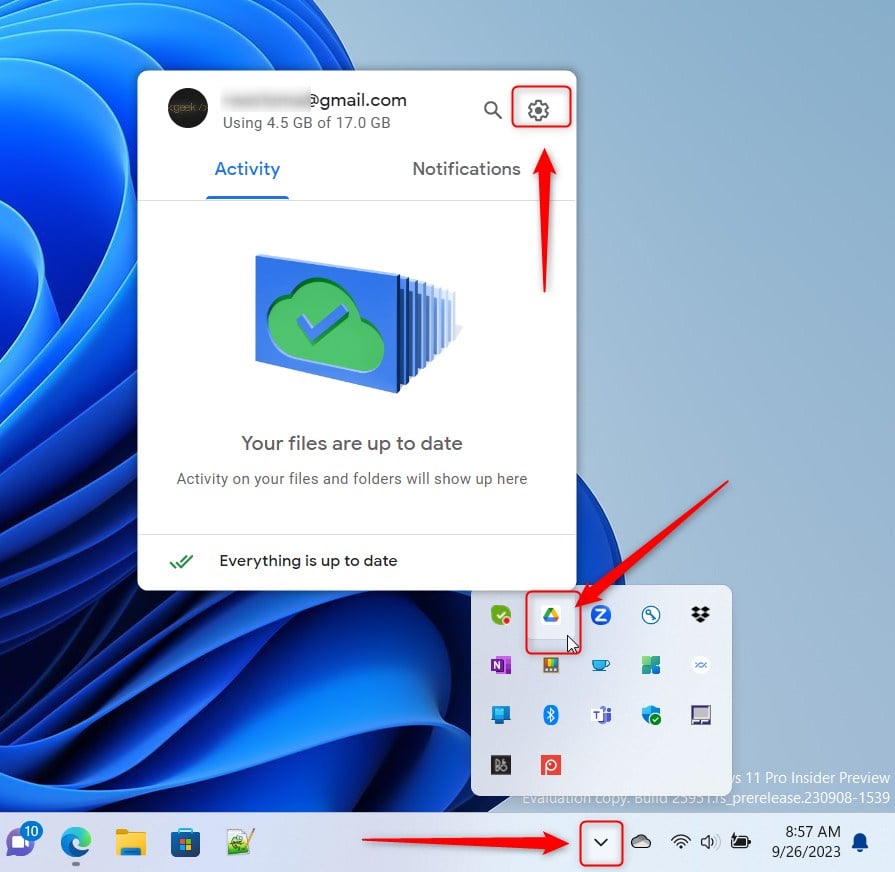
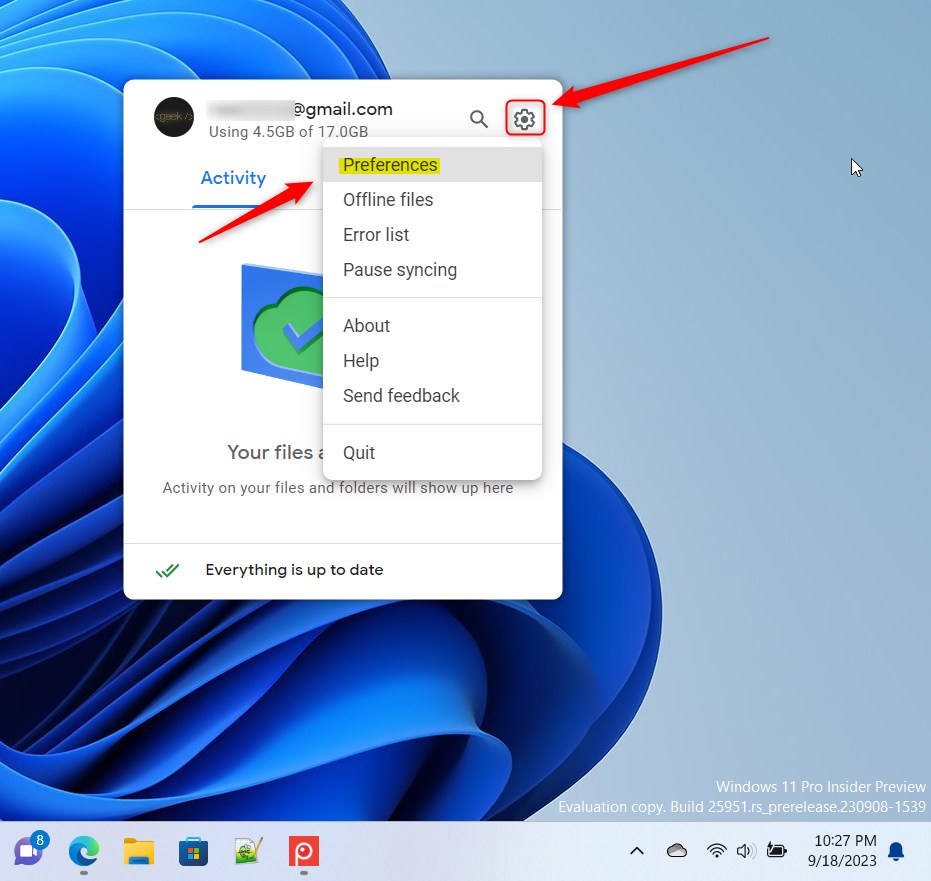
- In the window that appears, click the Settings (gear icon) at the top and select Preferences. A new Google Drive Preferences window should open on your screen.
- On the new screen, click the Settings gear icon located at the top right. This is a second gear, inside the Preferences window, and it is separate from the one in the flyout. A list of general app options should appear.
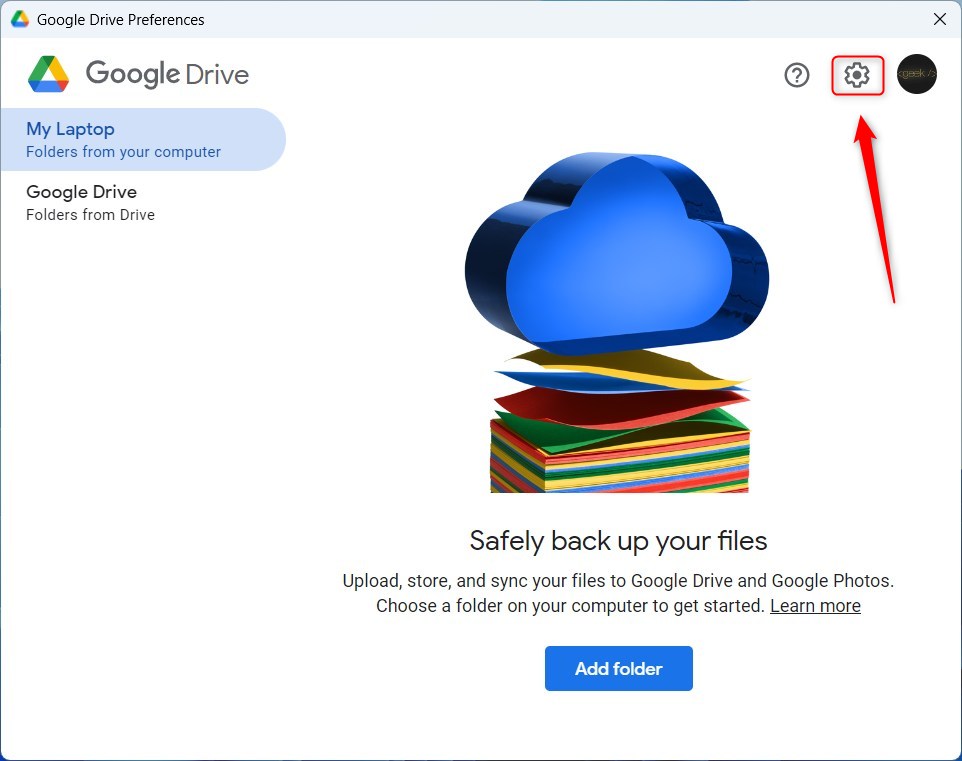
- Find the section labeled Launch on login. Check the box to have Google Drive start with Windows, or uncheck it to stop that. The change applies the next time you sign in, and you do not need to restart right now. To undo it, open the same screen and set the box back the way it was. If you cannot see the option, update Google Drive for desktop to the latest version. The layout of Preferences changes between releases.
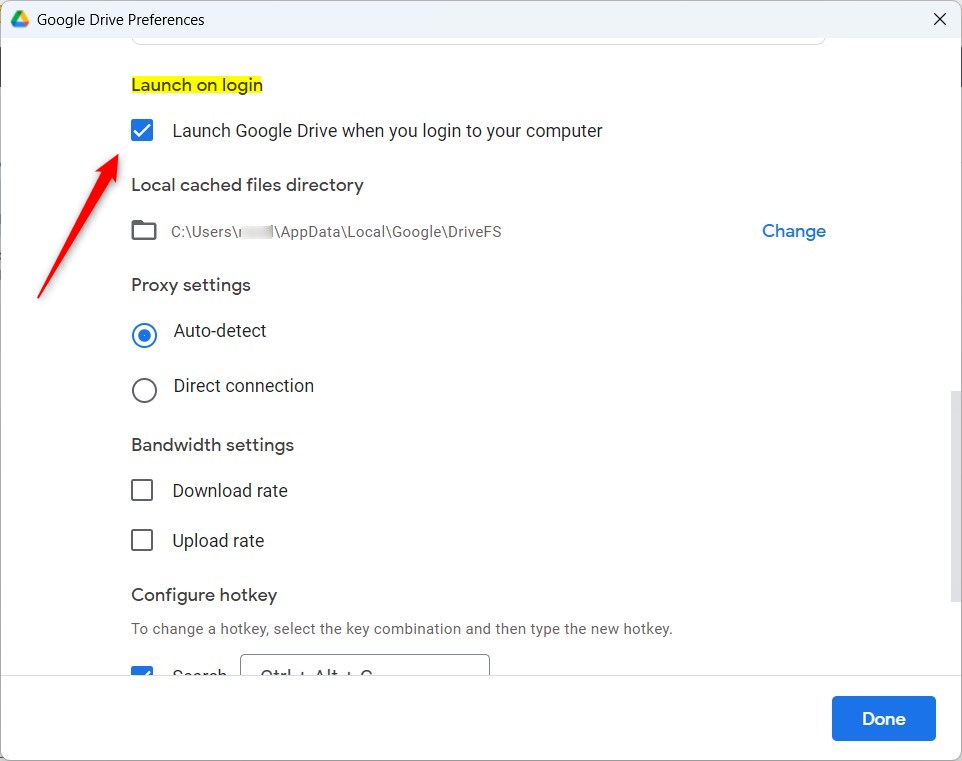
It applies to your own user account, so on a shared PC each person sets it for themselves. This works the same on Windows 11 Home and Pro.
Managing Startup Items on macOS
On macOS, you can stop Google Drive from opening every time you log in through the system settings. Open your login items and remove Google Drive from the list of apps allowed to run at startup. The steps below use the System Settings layout of recent macOS versions (Ventura and later).
- Open the Apple Menu and select System Settings. The System Settings window should open with a sidebar on the left.
- Navigate to General and then click Login Items. On newer macOS releases, this entry may be named Login Items & Extensions. You should see a list of apps under the heading for apps that open at login.
- Look for Google Drive in the list. If it is present, select it and remove it using the minus (-) button to stop it from launching at login. The entry disappears from the list, and Google Drive will no longer open the next time you log in. To undo this, click the plus (+) button under the list and add Google Drive from your Applications folder. If Google Drive is not in the list, it is not set to open at login.
Troubleshooting Launch Failures
When Google Drive does not launch at startup, the cause is usually a system setting that blocks it or damaged program files. Most problems can be fixed by checking the app’s status in Task Manager (a tool that shows running apps and resource usage) or by reinstalling the software. Work through the checks below in order.
- Check Task Manager (Windows): Press Ctrl + Shift + Esc. Look under the Startup tab to ensure Google Drive is set to Enabled. In Windows 11, this page is named Startup apps and is in the left sidebar. If the status says Disabled, right-click Google Drive and choose Enable. Windows can also turn startup items off on its own, so this is worth checking even if the Google Drive setting looks correct. You can also review the same list in Settings Apps Startup
- Reinstall the App: Sometimes, corrupted files prevent the app from launching. Reinstalling the latest version from the official Google website often resolves this. Uninstall the current version first, then download a fresh installer. You may need to sign in to your Google account again afterwards.
- Check System Permissions: Ensure your user account has the necessary permissions to execute files in the installation directory, typically located at C:\Program Files\Google\Drive File Stream. If you use a work or school PC, an administrator or a security policy may be blocking the app. In that case, ask your IT team.
Advanced Configuration: Streaming vs. Mirroring
With Streaming, files are downloaded only when you open them, so they use little disk space. With Mirroring, the files are stored on your drive, and the app uploads your changes whenever it is running. This matters for startup. If you use Mirroring and turn off launch on login, changes to your local files will not sync until you open Google Drive yourself.
Summary
Whether to enable Google Drive launch on login depends on what you value more: a faster startup or immediate background syncing. Leaving the setting on keeps your cloud files up to date automatically. Turning it off saves system memory and helps your computer boot faster. If you rely on Drive every day, leave it on. If you use it only now and then, turn it off and open the app when you need it.
- Disabling automatic startup helps your computer boot faster and uses less memory.
- Enabling automatic startup ensures your files stay synced without you having to remember to open the app.
- You can manage these settings via the Google Drive Preferences menu or your OS startup settings.
- Always ensure your app is updated to the latest version to avoid background sync issues.
Did this guide fix your problem?

About the Author
Richard
Tech Writer, IT Professional
Richard is a writer at Geek Rewind who turns complex IT tasks into clear, step-by-step guides. He draws on years of hands-on experience in system administration and enterprise IT operations, focusing on Windows, Linux and WordPress: the problems people actually run into, and the fixes that work. His server and WordPress guides come from systems he runs himself. Richard builds and maintains the platform behind Geek Rewind, from its Ubuntu servers and Nginx configuration to its custom WordPress plugins. Many new tutorials start with readers' questions, and he's always glad to answer them in the comments.
[…] can use the Google Drive app on Windows to manage your files. You can install and start Google Drive at login, stream Google Drive to a folder or driver letter, pause syncing, add files and photos to sync with […]
[…] can install and start Google Drive at login, stream Google Drive to a folder or driver letter, pause syncing, add files and photos to sync with […]
[…] can manage many options with the Google Drive app. Users can install and start Google Drive at login, stream Google Drive to a folder or driver letter, pause syncing, and […]
[…] can change many settings in the Google Drive app. You can install and start Google Drive at login, stream Google Drive to a folder or driver letter, pause syncing, add files and photos to sync with […]