How to Sync Files &Amp; Photos to Google Drive in Windows 11

Google Drive for desktop is a free app that automatically copies your files and photos from Windows 11 to cloud storage, so you can open them on any device. It creates a dedicated Google Drive folder on your PC. It can also back up specific locations, such as your Pictures or Documents folders, while you work. It runs on both Windows 11 Home and Pro.
Install Google Drive for desktop and sign in with your Google account. In Preferences, select “Folders from your computer,” click “Add folder,” choose your desired files, and select “Sync with Google Drive” or “Back up to Google Photos.
Why sync your files?
Syncing keeps your data safe. If your computer breaks or is lost, your files are still in the cloud. It also lets you open documents or view photos from your phone or tablet. Because the backup runs automatically, you don’t have to remember to copy files by hand.
What happens when done?
Once setup is finished, your computer uploads new and changed files to your Google account. You can see them on any device where you’re signed in. The Google Drive app runs in the background and keeps everything up to date.
Uploads depend on your internet connection, so a large folder of photos can take hours the first time. That’s normal. Let the PC stay on and connected until the app reports that syncing is complete.
Google Drive for Desktop: Stream vs. Mirror
Google Drive for Desktop offers two main methods for syncing files: ‘Stream’ and ‘Mirror’. Pick the one that matches how much free disk space you have and whether you need files offline.
- Stream files: Your files live in the cloud, and the app downloads one to your PC only when you open it. This saves disk space, but you need an internet connection for files you haven’t opened before. You can mark individual files or folders as available offline.
- Mirror files: A full copy of your files is stored on your PC and in the cloud. This uses more disk space, but everything is available offline, and changes sync in both directions.
If your PC has a small drive, streaming is usually the better choice. If you often work without internet access, mirror instead. You can change the method later in the app’s Preferences.
| Feature | Stream Files | Mirror Files |
|---|---|---|
| Hard Drive Space | Uses very little space | Uses space for all files |
| Offline Access | Only for selected files | All files are available |
| Best For | Users with limited space | Users who need constant access |
Installing Google Drive for Desktop
If you're on a work computer without them, ask your IT team to install it for you.
- Download the installer from the official Google Drive website.
- Open the downloaded file from your Downloads folder and run it. If User Account Control asks for permission, click Yes.
- Follow the on-screen prompts and sign in with your Google account. A browser window usually opens for the sign-in.
- When setup finishes, look for the Google Drive icon in the taskbar tray. If you don't see it, click the small up arrow (Show hidden icons) next to the clock.
You should also see a new Google Drive entry in File Explorer's left pane.
Adding Folders to Sync
To sync files, you tell the Google Drive app which folders on your Windows 11 computer to back up. The steps below take you through it. You can add any folder on your hard drive.

- Click the Google Drive icon in the taskbar tray. A small panel opens showing your sync status.
- Click the Settings gear icon at the top right of the panel and select Preferences.
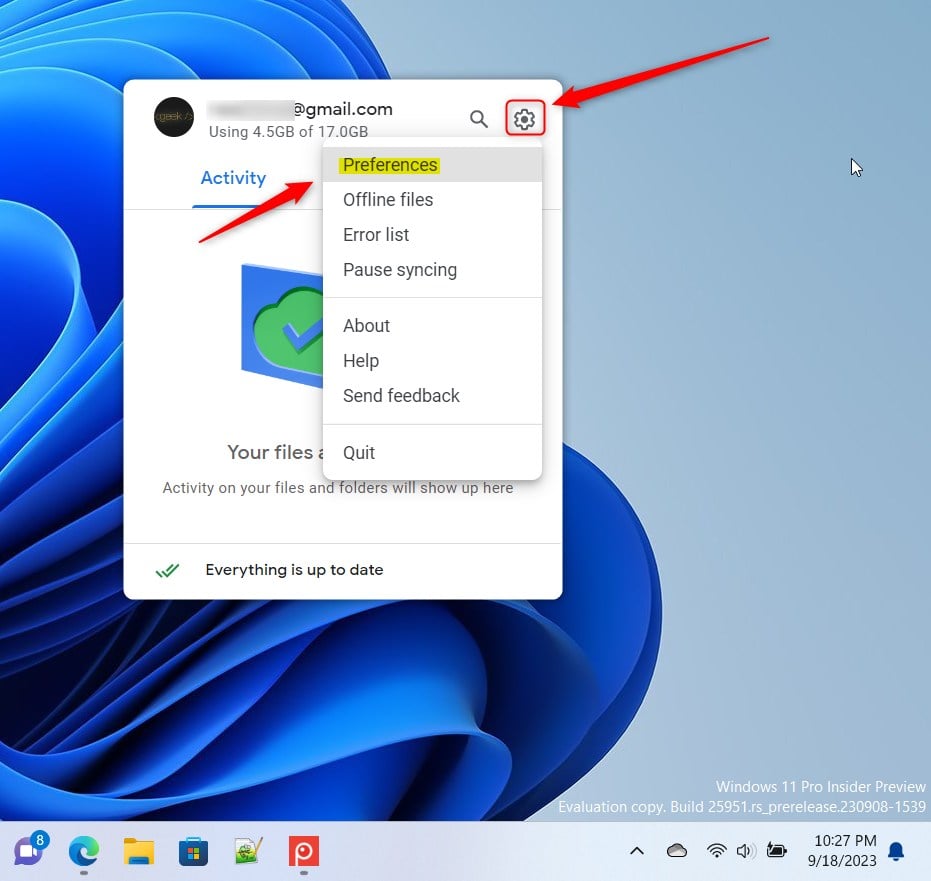
A separate Preferences window should now open. If nothing happens, check that the window didn't open behind other apps on your taskbar.
- On the left side, select Folders from your computer.
- Click the Add folder button to choose a folder on your PC, like C:\Users\GenericUser\Documents.
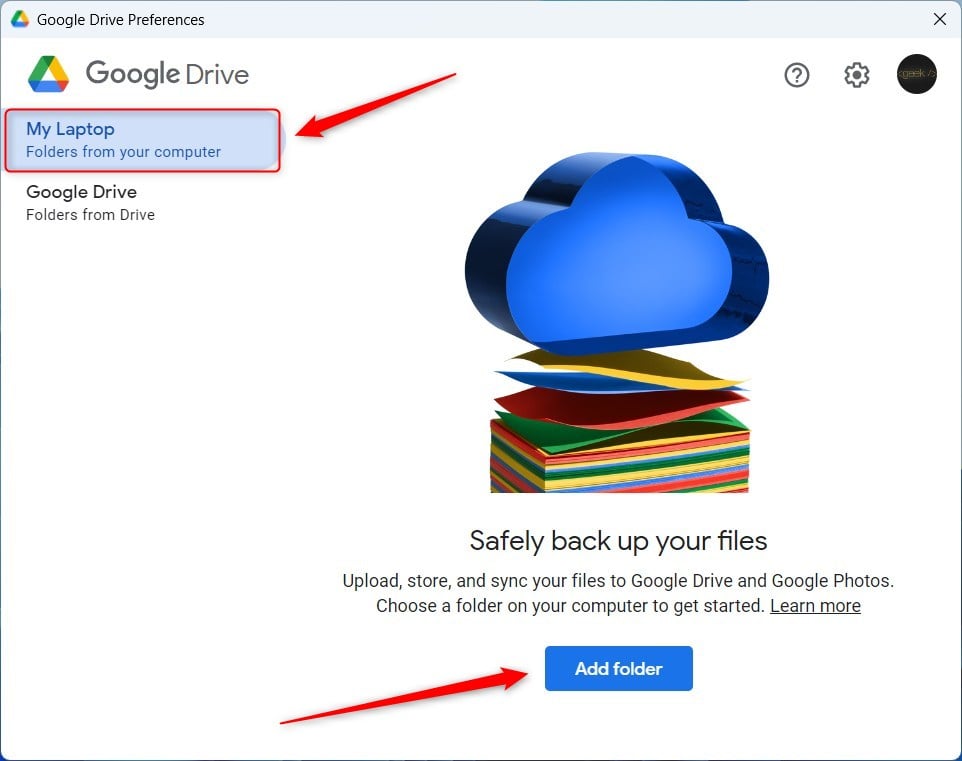
A File Explorer window opens so you can browse to the folder. The folder you add stays where it is on your PC, and the app keeps a copy in the cloud.
- In File Explorer, select the folder you want to back up and confirm your choice.
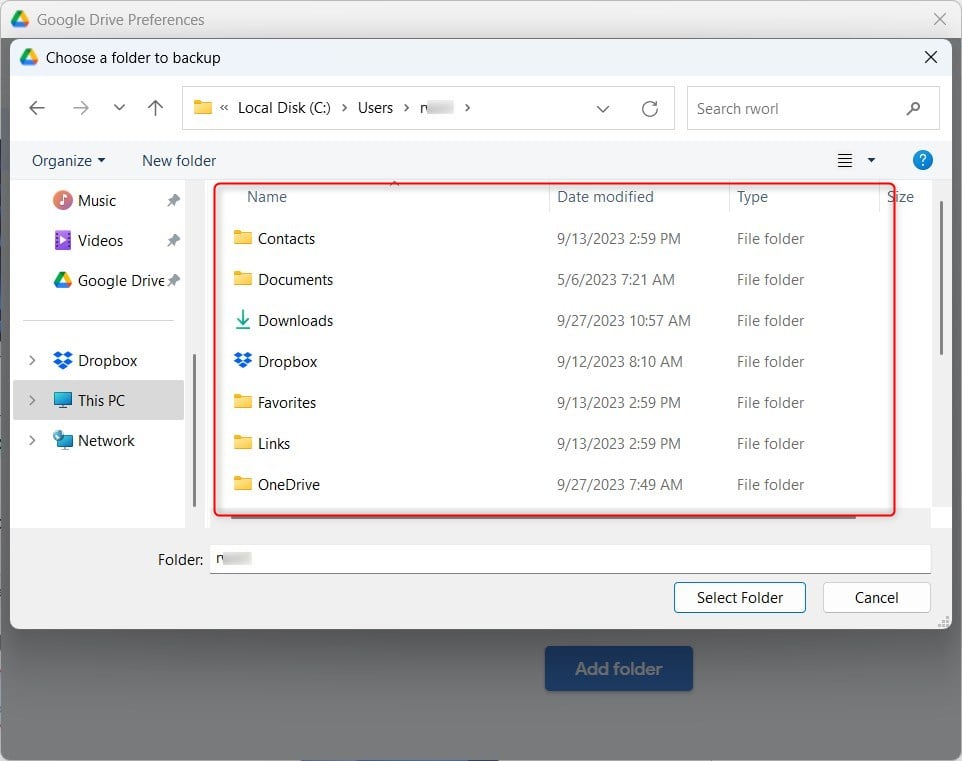
Google Drive now asks how you want to back up that folder. You will see one or both of the options in the next two steps.
- If you are backing up documents, choose Sync with Google Drive. The files then show up in Google Drive on the web and on your other devices.
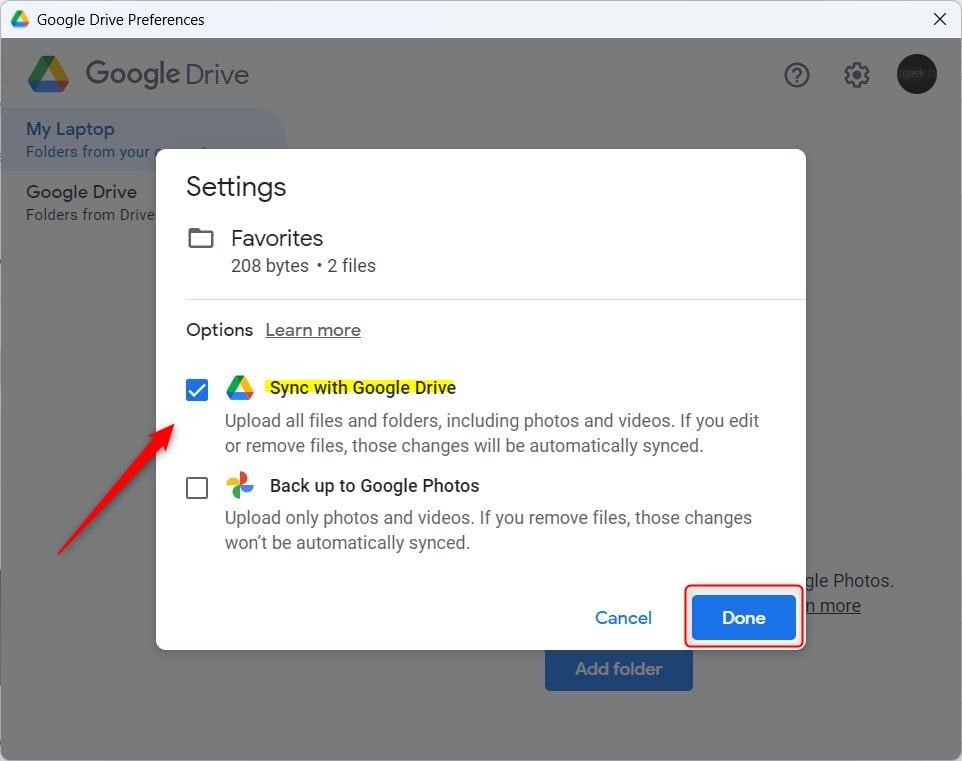
Each option is a choice for that one folder. You can add more folders later and pick a different option for each.
- If you are backing up photos, choose Back up to Google Photos instead. This option is meant for photos and videos. Everything you upload counts against your Google account storage.
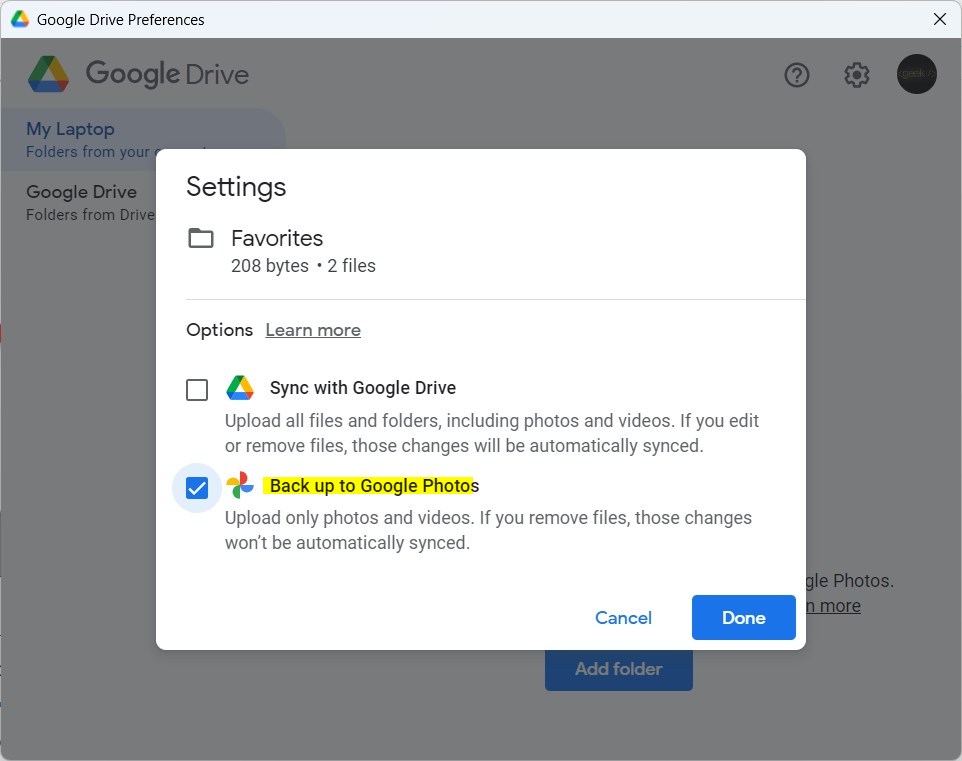
Your chosen folder should now appear in the list under Folders from your computer.
- Click Done to save your changes. If the Preferences window also shows a Save button, click that too.
The app starts uploading right away. To undo this later, open Preferences Folders from your computer and remove the folder from the list. That stops the syncing, and the folder on your PC stays where it is.
Advanced Configuration and Bandwidth
You can control how much internet speed Google Drive uses. This matters most during the first big upload.
- In Preferences, click the Settings gear icon.
- Look for Bandwidth settings.
- Set a limit for the download rate, the upload rate, or both.
This is helpful if your internet connection is slow. It stops the app from using up all your bandwidth while you're working, video calling or streaming. Remove the limits when you're away from the PC so syncing finishes faster.
Troubleshooting Sync Errors
If files are not syncing, work through these checks:
- Check the Sync status icon in your taskbar. If it shows an error, click it to see the specific messages.
- Check your internet connection. Open a website to confirm you're online.
- Make sure you have enough storage space available in your Google account. A full account stops uploads.
- Quit the Google Drive app and open it again. This fixes many stuck syncs.
- If the problem remains, restart your PC and check the status icon again.
Also check that the file isn't open in another program. Some apps lock files and block syncing until you close them.
Multi-Account Management
Google Drive for Desktop allows you to add multiple accounts, which is handy for keeping work and personal files apart.
- Click your profile icon in the app settings.
- Select Add another account.
- Sign in with the second Google account in the browser window that opens.
You can then switch between accounts to manage work and personal files separately. Each account has its own storage and its own sync settings.
Summary
Syncing your files to Google Drive gives you a secure, automatic backup of your important data. By choosing between streaming and mirroring, managing your bandwidth, and using multiple accounts, you can set up cloud storage to suit how you work. For more help, visit the Google Drive Support page.
Was this guide helpful?

About the Author
Richard
Tech Writer, IT Professional
Richard is a writer at Geek Rewind who turns complex IT tasks into clear, step-by-step guides. He draws on years of hands-on experience in system administration and enterprise IT operations, focusing on Windows, Linux and WordPress: the problems people actually run into, and the fixes that work. His server and WordPress guides come from systems he runs himself. Richard builds and maintains the platform behind Geek Rewind, from its Ubuntu servers and Nginx configuration to its custom WordPress plugins. Many new tutorials start with readers' questions, and he's always glad to answer them in the comments.

Why does my google drive app not have a settings icon or “flyout window” as you describe?
Download the official Google Drive Windows app from the link below.
https://www.google.com/drive/download/
[…] Drive at login, stream Google Drive to a folder or driver letter, pause syncing, add files and photos to sync with Google Drive, stream or mirror files on Google Drive, and […]
[…] Google Drive at login, stream Google Drive to a folder or driver letter, pause syncing, add files and photos to sync with Google Drive, stream or mirror their files on Google Drive, and […]
[…] and start Google Drive at login, stream Google Drive to a folder or driver letter, pause syncing, add files and photos to sync with Google Drive, stream or mirror their files on Google Drive, and […]