How to Stream or Mirror Google Drive Files in Windows 11

Google Drive for desktop gives you two ways to work with your cloud files in Windows 11, and the choice decides how much of your local drive Google Drive uses. Streaming keeps files online and downloads them only when you open them. Mirroring stores a complete offline copy of every file on your PC.
Both modes work on Windows 11 Home and Pro. You make the choice inside the Google Drive desktop app, not in Windows Settings .
Open the Google Drive icon in your taskbar , click Settings (gear icon) and select Preferences, then click Folders from Drive on the left side. Choose either Stream files or Mirror files from the options on the right. Streaming keeps files online and downloads them only when you open them; mirroring downloads everything to your computer for offline access.
Why should you change how Google Drive works?
The sync settings let you save local drive space or keep your files available offline. Streaming leaves your drive mostly empty, while mirroring uses as much space as your cloud files take up. The right balance keeps your drive from filling up and still gives you easy access to what you need.
You are not locked in. You can change the mode later, so pick whichever suits you today.
What happens when you are done?
This choice determines whether your computer streams files from the internet as you open them or saves a full copy locally. It affects two things: how much bandwidth you use, and whether you can open files without a connection.
As a rule of thumb:
- Stream if your drive is small or nearly full, or if you are almost always online.
- Mirror if you work offline often, have plenty of free space, or have a slow or metered connection.
Stream files
Streaming conserves space on your hard drive. Your files stay in the cloud, and you reach them through a virtual folder that appears in File Explorer. Files download only when you open them, so the first open of a large file can take a moment on a slow connection.
This method works best if you have limited storage or a fast, reliable internet connection. If you need a particular file offline, you can still right-click it in the Google Drive folder and choose to make it available offline.
Mirror files
Mirroring downloads a complete copy of your cloud storage to a local folder, so every file is available offline immediately. Changes you make on the PC sync to the cloud, and changes made elsewhere sync back down to the PC.
You need at least that much free space on the drive that will hold the folder.

With streaming, you open your files from the Google Drive entry in File Explorer, which works like a normal drive or folder. With mirroring, you open them from an ordinary folder on your computer.
With mirroring, all files are automatically available offline. With streaming, a file is available offline only if you open it recently or mark it for offline use yourself.
How to switch between Stream and Mirror
You stream or mirror Google Drive files by changing your sync settings inside the desktop app. Streaming keeps all your files in the cloud to save space on your hard drive. Mirroring downloads everything to your computer so you can open it offline. You can switch between the two whenever your storage needs change.
You need Google Drive for desktop installed and signed in first. No restart of Windows is needed when you change the setting.
- Open the Google Drive icon in your taskbar. You may need to click the Taskbar overflow arrow first, because Windows 11 hides some tray icons there. A small Google Drive window should open and show your sync status.

- Click the Settings (gear icon) and select Preferences. A new Preferences window should open.

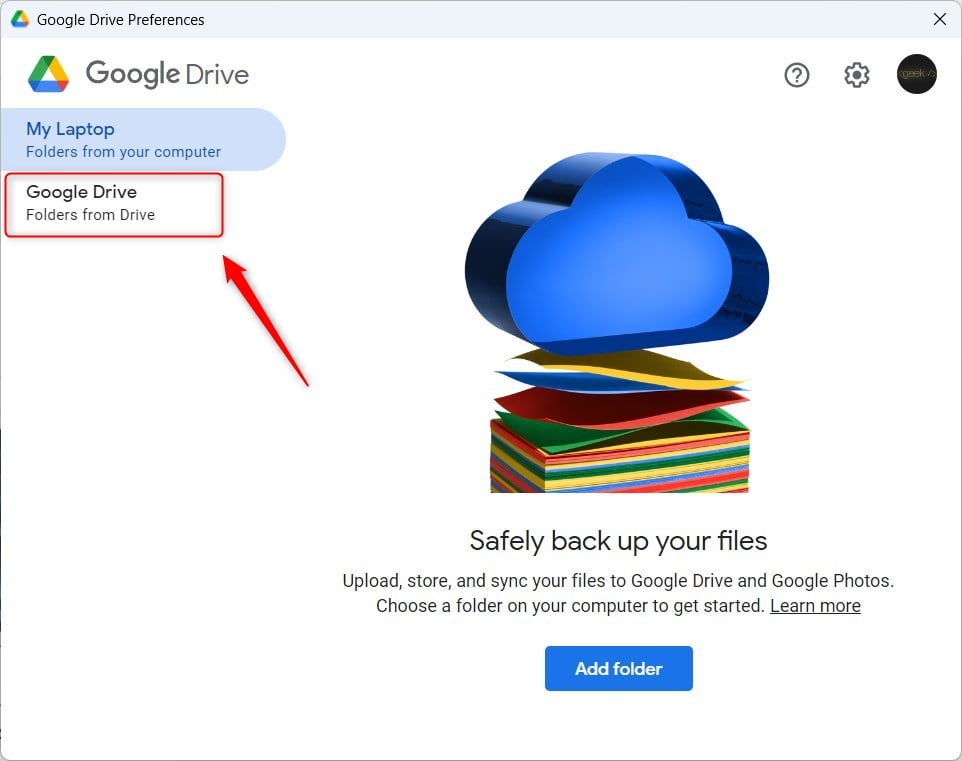
- Click Folders from Drive on the left side of the window. The settings for how your Drive files sync should appear on the right.
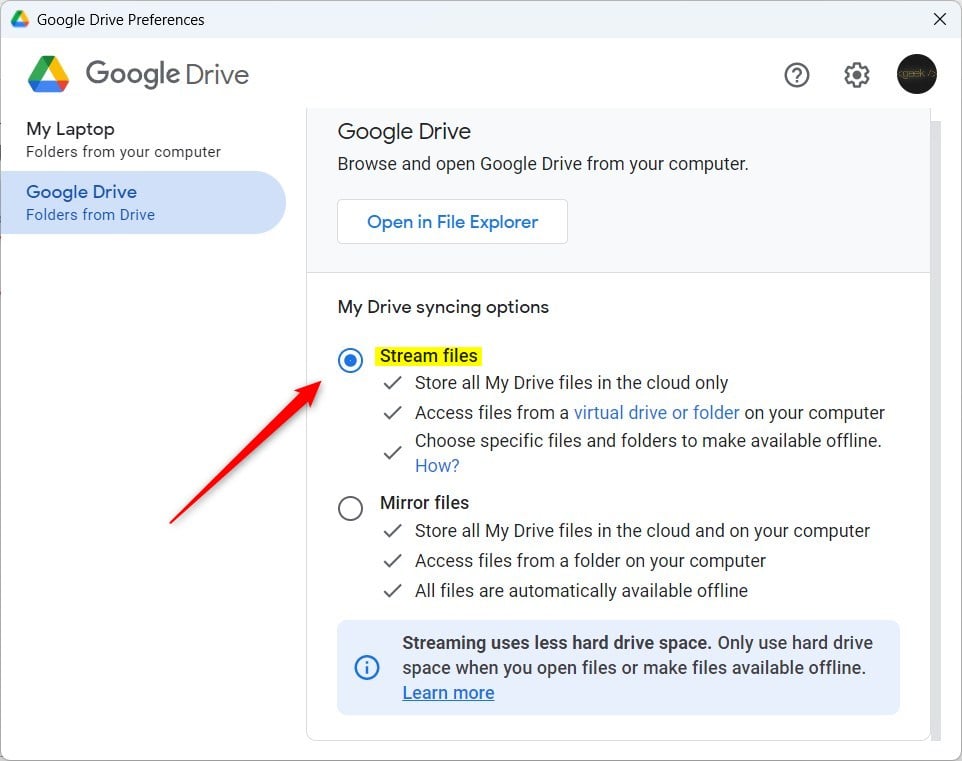
- Choose either Stream files or Mirror files. If you are switching from one to the other, the app may ask you to confirm. Read the message before you accept, especially when moving to mirroring, because it will start downloading your whole Drive.
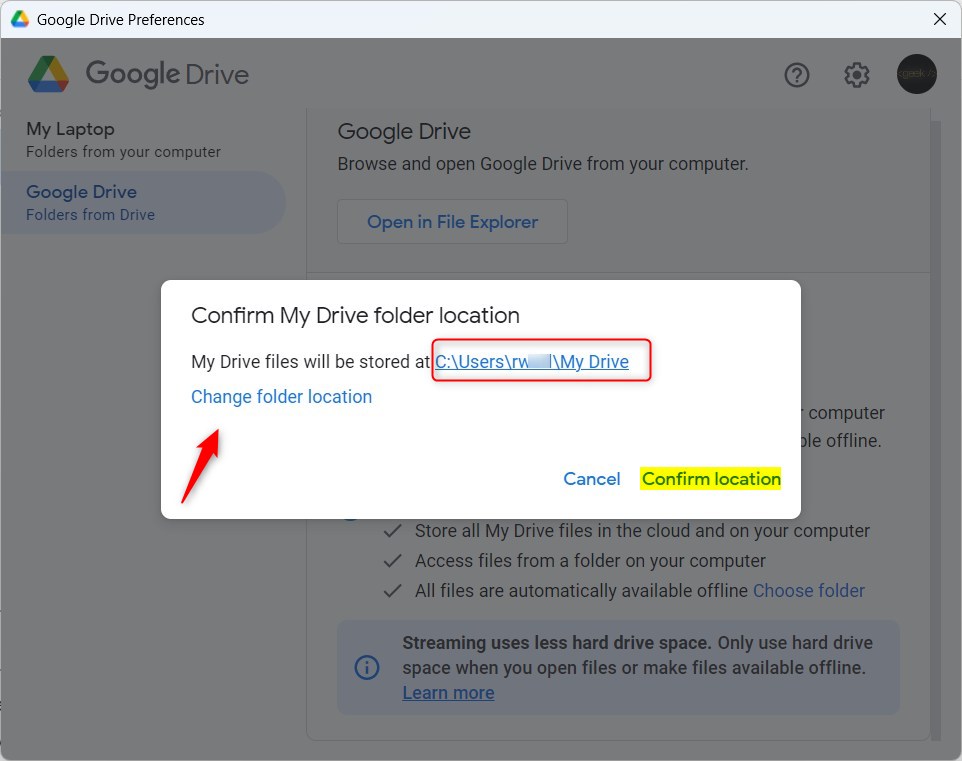
- If you choose to mirror, you must pick a folder on your computer. By default, it creates a folder at
C:\Users\genericuser\My Drive. Choose a different folder if the default drive is short on space.
You can also change the Google Drive download location to any folder you prefer. Clicking "Confirm location" in Google Drive for Desktop version 64.0.4.0 locks in the new download location for your streamed files. If you do not see that option, your app may be an older or newer version. Update Google Drive for desktop and check again.
Watch the Google Drive taskbar icon after you switch. It shows whether the app is still syncing or is up to date. A first mirror of a large Drive can take hours, so let it finish before you rely on offline access.
Storage Impact and Local Disk Management
Disk space usage depends entirely on which sync method you pick.
- Streaming: Uses little space. Only files you have opened or marked for offline use take room on your drive.
- Mirroring: Uses roughly as much space as all the files in your cloud storage combined. If your Drive holds 200 GB, plan for about 200 GB free locally.
Check your free space in Settings System Storage before you switch to mirroring. If the drive fills up, syncing will stall.
Troubleshooting and Common Errors
Troubleshooting Google Drive streaming or mirroring on Windows 11 means checking the common causes of files not syncing or not showing up. Work through these in order:
- Check your internet connection. Streaming needs it to open files, and both modes need it to sync.
- Open the Google Drive taskbar icon and look for a paused sync or an error message. Resume syncing if it is paused.
- Confirm you are signed in to the right Google account.
- Check free space on the drive that holds your mirrored folder. A full drive stops downloads.
- Update Google Drive for desktop to the latest version.
- Quit Google Drive from the taskbar menu and open it again.
If a file is still missing, look for it on the Google Drive website. If it is there, the problem is local syncing. If it is not, it was never uploaded or was moved.
Use-Case Decision Matrix
Deciding whether to stream or mirror your Google Drive files depends on your internet speed and how much storage space you have on your computer. A small SSD and a good connection point to streaming. A big drive, poor Wi-Fi, or frequent offline work points to mirroring. If you are unsure, start with streaming. It is easy to switch to mirroring later if you find you need more files offline.
Summary
Google Drive offers two main ways to access your files on Windows 11. Streaming saves space by keeping files online and downloading them when you open them. Mirroring keeps a full copy on your PC for offline access. Change the setting any time in Google Drive Settings Preferences Folders from Drive.
Was this guide helpful?

About the Author
Richard
Tech Writer, IT Professional
Richard is a writer at Geek Rewind who turns complex IT tasks into clear, step-by-step guides. He draws on years of hands-on experience in system administration and enterprise IT operations, focusing on Windows, Linux and WordPress: the problems people actually run into, and the fixes that work. His server and WordPress guides come from systems he runs himself. Richard builds and maintains the platform behind Geek Rewind, from its Ubuntu servers and Nginx configuration to its custom WordPress plugins. Many new tutorials start with readers' questions, and he's always glad to answer them in the comments.
[…] Turning on chat backup will prompt you to select a folder to store the backups into or create a new folder. If you want your backup synced to the cloud, save it into a backup folder like OneDrive, Dropbox, or Google Drive. […]
[…] to a folder or driver letter, pause syncing, add files and photos to sync with Google Drive, stream or mirror files on Google Drive, and […]
[…] Drive to a folder or driver letter, pause syncing, add files and photos to sync with Google Drive, stream or mirror their files on Google Drive, and […]