How to Transfer Files from Memory Card to Windows 11

Transferring files from a memory card (a small, removable storage chip used in cameras and phones) to Windows 11 lets you back up photos, videos, and documents using File Explorer . Windows 11 treats the inserted card like a regular USB flash drive. It assigns the card a drive letter such as E: or F:, so you can copy your data over the same way you would from any other drive.
The short version:
- Insert the card into your PC using a built-in card slot or a USB card reader.
- Open File Explorer from your taskbar and click the card’s drive name.
- Drag your files to your desktop or Pictures folder.
The sections below cover each step in more detail, plus what to do if the card doesn’t show up.
Insert the memory card into your PC’s card slot or a USB card reader, then open File Explorer and navigate to the card’s drive letter. Select your files, press Ctrl+C to copy, go to your destination folder like Pictures, and press Ctrl+V to paste.
Why Transfer Files?
Transferring files protects your important data, frees up space on your memory card or computer, and lets you move documents between devices. A copy on your PC gives you a physical backup. It also means your photos and work are available when you set up a new computer.
Don’t treat one as the only place your photos live. Copy files off the card regularly, and check the copies before you erase anything.
How to Transfer Files from a Memory Card
A memory card is a portable way to store photos and documents. Windows 11 supports SD, mini SD, and micro SD cards. Here is what you need:
- A card slot or a USB card reader. If your PC lacks a slot, use a USB card reader. They are cheap and work with Windows 11 without extra software.
- The right size. A micro SD card needs the adapter it came with to fit a full-size SD slot. Many USB readers have separate slots for each size.
- Enough free space on the PC. Check the size of the files on the card first, so the copy doesn't stop halfway.
Step 1Insert Your Memory Card
- Push the card into the slot or reader with the label side facing the way the slot shows. It should seat firmly without force.
- If you use a USB reader, plug it into a USB port on the PC.
If the computer doesn't see the card, check that the USB connection is secure. Try a different USB port, and reseat the card. Plug the reader directly into the PC rather than into a hub if you can. If the card still doesn't appear, try it in another reader or device to find out whether the card or the reader is the problem.
Step 2Choose What to Do
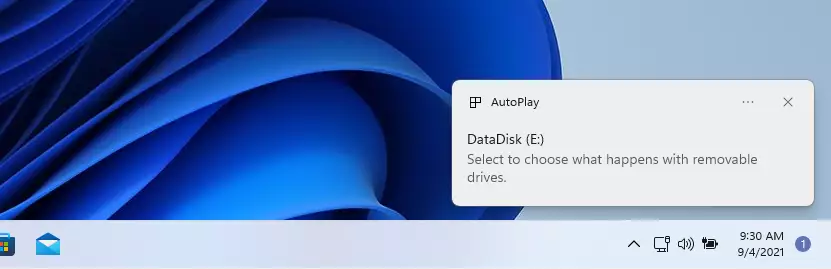
After a few seconds, Windows 11 pops up a notification in the corner of the screen.
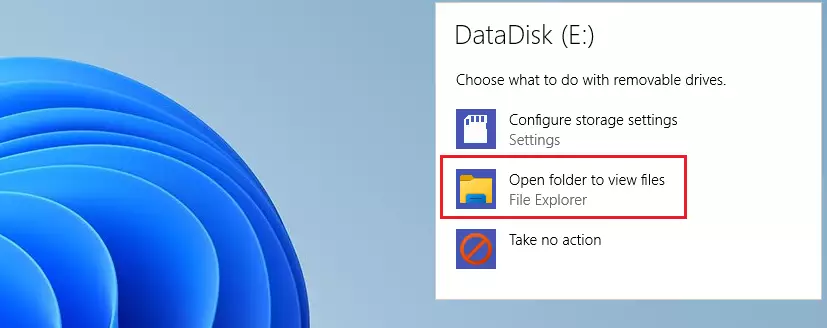
- Click the notification while it is still showing.
- Click Open folder to view files.
A File Explorer window should open showing the contents of the card. Photos and videos from a camera are usually inside a folder named DCIM.
The notification only shows for a short time. If you miss it, use the File Explorer method below.
Step 3Use File Explorer
If no prompt appears, the card may still be working. Windows just didn't show the notification. Follow these steps:
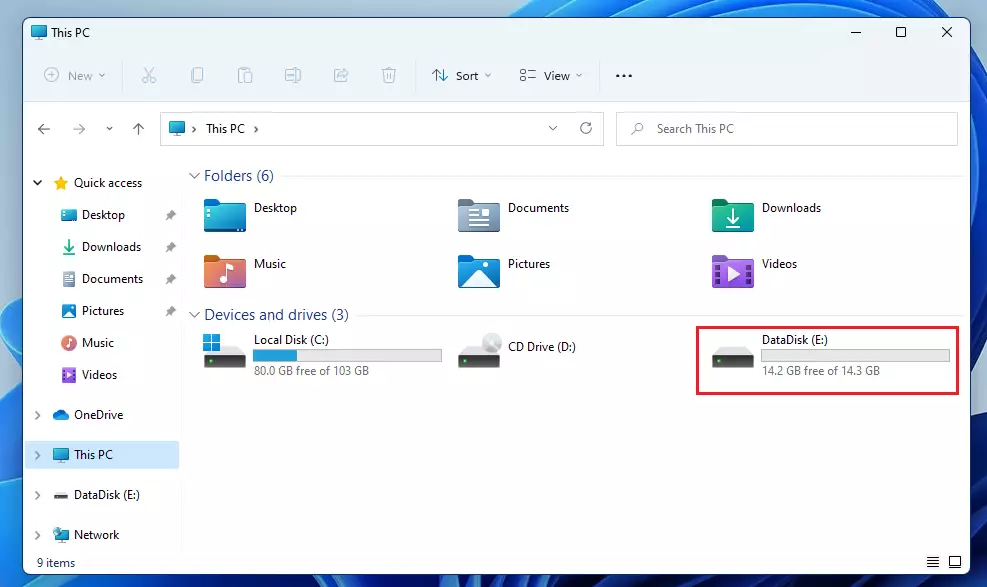
- Open File Explorer.
- Click This PC on the left side.
- Look under the devices and drives section for your drive letter, which might appear as E: or F:.
- Double-click the drive to open it.
You should now see the files and folders stored on the card.
If you see a drive letter but Windows says the card needs to be formatted, stop. Formatting erases everything on the card. Try another reader or PC first so you can copy your files before you change anything.
Step 4Copy and Paste
- Select your files. Click one file, or press and hold Ctrl while you click several. To select everything in the folder, click inside it and press Ctrl + A.
- Press
CTRL + Cto copy. - Navigate to your destination folder, for example Pictures or a folder you created for the backup.
- Press
CTRL + Vto paste.
A progress window appears while Windows copies the files. Large video files take longer, so wait until it closes. If Windows asks what to do about files with the same name, read the options carefully before choosing. Replacing a file overwrites the one in the destination.
Once the copy has finished, open the destination folder and check that the files are there and open properly. Only then should you delete anything from the card.
When you are done, eject the card before you pull it out. Right-click the card's drive in File Explorer and click Eject. Remove the card once Windows says it is safe. This helps avoid corrupted files.
Transferring Files Between Two PCs
You can transfer files between two different computers by connecting both PCs to the same Wi-Fi network and sharing folders through File Explorer. You can also use a direct USB-C cable connection or an external storage drive to move large folders quickly without relying on your home network.
For large file transfers between PCs, especially if they are not on the same network, consider using cloud storage like OneDrive or an external hard drive. This avoids potential network speed limitations.
Latest Update
Windows 11 makes it easier to share files between computers on the same network. You can use File Explorer to share folders. Both Home and Pro editions can share folders this way.
- Right-click the folder you want to share.
- Select Show more options.
- Select Properties.
- Go to the Sharing tab.
- Click Share.
A sharing window opens where you choose which people can access the folder. Pick the user, set what they are allowed to do, and confirm.
If the other PC can't see the folder, check that both computers are on the same network and that the network is set to private. You can also check that network discovery and file sharing are turned on in Settings Network & internet Advanced network sharing settings To stop sharing later, go back to the same folder's Sharing tab and remove the access you granted.
Using Cloud Syncing with OneDrive
OneDrive is the built-in cloud storage service that syncs your documents across all your devices automatically. It comes with Windows 11, and a free Microsoft account includes a limited amount of storage.
- Sign in to OneDrive with your Microsoft account.
- Open File Explorer.
- Click the OneDrive folder in the left pane.
- Drag your files into the OneDrive folder to upload them to the internet.
Small icons next to each file show its sync status. A sync icon means the upload is still in progress. Wait until the files finish uploading before you turn off the PC or leave the network. On the new computer, sign in with the same Microsoft account and the files appear in its OneDrive folder.
If you go over your storage limit, syncing stops until you free up space or buy more.
Using External Hard Drives
An external hard drive is a good choice when you have large folders of photos, videos, or music to move between computers.
- Plug the drive into a USB port on your computer.
- Open File Explorer.
- Drag your files directly onto the drive letter to copy everything.
- Right-click the drive and click Eject when the copy is finished.
When transferring files to a new Windows 11 PC, an external drive is a reliable method. Copy files from your old computer to the drive, then connect the drive to your new PC and copy them over. Ensure the external drive has enough space for all the files you want to move.
Use a USB 3.0 or faster port and cable if you can. A slow USB 2.0 connection can make big copies take much longer.
External Drives vs. Cloud Storage
Both methods work well, but they suit different situations. Here is how they compare.
External hard drive
- Fastest for large files if USB speed is high
- No internet needed for transfer
- Physical device required
- Can be lost or damaged
Cloud storage (like OneDrive)
- Accessible from any device with internet
- Good for backup and syncing across multiple PCs
- Speed depends on internet connection
- Requires sufficient cloud storage space
Administrative Tasks
Summary
Moving files from a memory card to Windows 11 works best with a few proven methods. For most people, copying from the card in File Explorer is the quickest option. Keep a second backup on an external drive or in OneDrive if the photos matter to you.
Can I transfer files from 🪟 Windows 10 to 🪟 Windows 11?
Yes. You can use an external hard drive, OneDrive, or a network transfer to move files from a Windows 10 PC to a Windows 11 PC. Copy your files to the storage device on the old PC and paste them onto the new one.
Transferring Programs and Settings
Installed programs and system settings move differently than standard documents. Most installed programs need a fresh installation on your new computer, so copying the program folder over won't work. Use your Microsoft account and the built-in backup tools to restore your personal preferences and app settings automatically.
Before you retire the old PC, make a list of the apps you use, and note any license keys or sign-ins you will need to reinstall them.
Have a question about this guide?
Answered by AI from this guide. Good questions may be added to this page — please don't include personal details.
Did this guide fix your problem?

About the Author
Richard
Tech Writer, IT Professional
Richard is a writer at Geek Rewind who turns complex IT tasks into clear, step-by-step guides. He draws on years of hands-on experience in system administration and enterprise IT operations, focusing on Windows, Linux and WordPress: the problems people actually run into, and the fixes that work. His server and WordPress guides come from systems he runs himself. Richard builds and maintains the platform behind Geek Rewind, from its Ubuntu servers and Nginx configuration to its custom WordPress plugins. Many new tutorials start with readers' questions, and he's always glad to answer them in the comments.
This does not work.