How to Enable or Disable Device Encryption in Windows 11

You enable or disable device encryption in Windows 11 to protect your files by scrambling them so only you can access them with your login details.
Device encryption is a security feature that makes your personal data unreadable to unauthorized individuals. This is crucial for safeguarding sensitive information if your device is lost or stolen.
You can manage this feature directly within the Windows 11 Settings app. To utilize device encryption, your PC must have a Trusted Platform Module (TPM) version 2.0 or newer, and you need to be signed in with a Microsoft account.
Enable device encryption in Windows 11 by going to Settings > Privacy & security > Device encryption and toggling it on. This feature requires TPM 2.0 and signing in with a Microsoft account.
Why Use Device Encryption?
Device encryption is a security feature that protects your data by turning it into unreadable code. If your laptop is lost or stolen, unauthorized users cannot access your files without your recovery key. This is essential for protecting sensitive personal information.
What Happens When You Enable It?
Turning on device encryption in Windows 11 scrambles your files, making them unreadable without your login details or a recovery key.
Hardware and Software Prerequisites
Before you can enable device encryption on Windows 11, your PC needs specific hardware like TPM 2.0 and Secure Boot turned on.
Device Encryption vs. BitLocker
| Feature | Device Encryption | BitLocker |
|---|---|---|
| Availability | Home & Pro | Pro, Enterprise, Education |
| Setup | Automatic/Simple | Manual/Advanced |
| Management | Limited | Full control via Group Policy |
How to Enable Device Encryption
You can easily enable device encryption in Windows 11 by opening the Settings app.
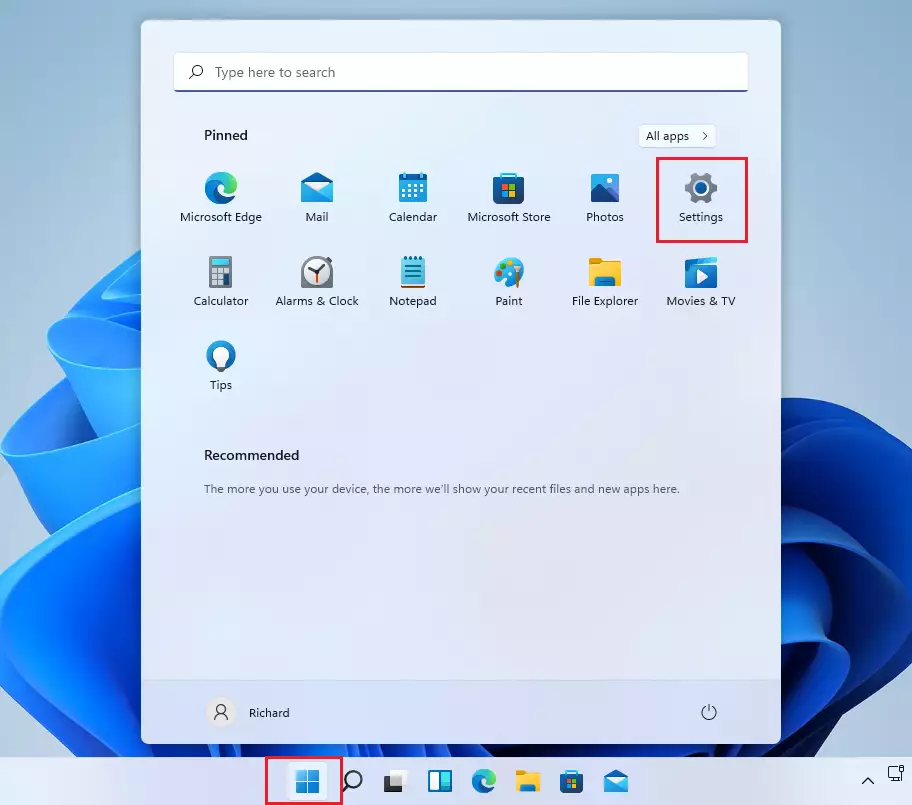
Press Windows key + I or click Start and select Settings.
Step 2: Find Privacy & Security
Click Privacy & security on the left sidebar.
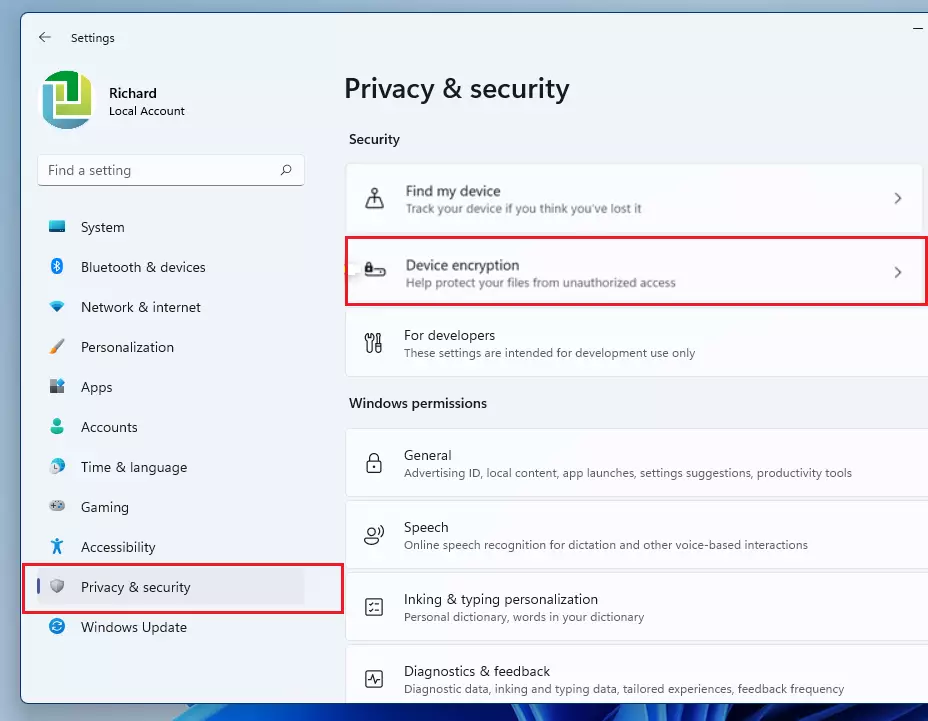
Step 3: Enable Device Encryption
Click Device encryption. If the toggle is currently off, click it to turn it On. Note: This step requires admin privileges.
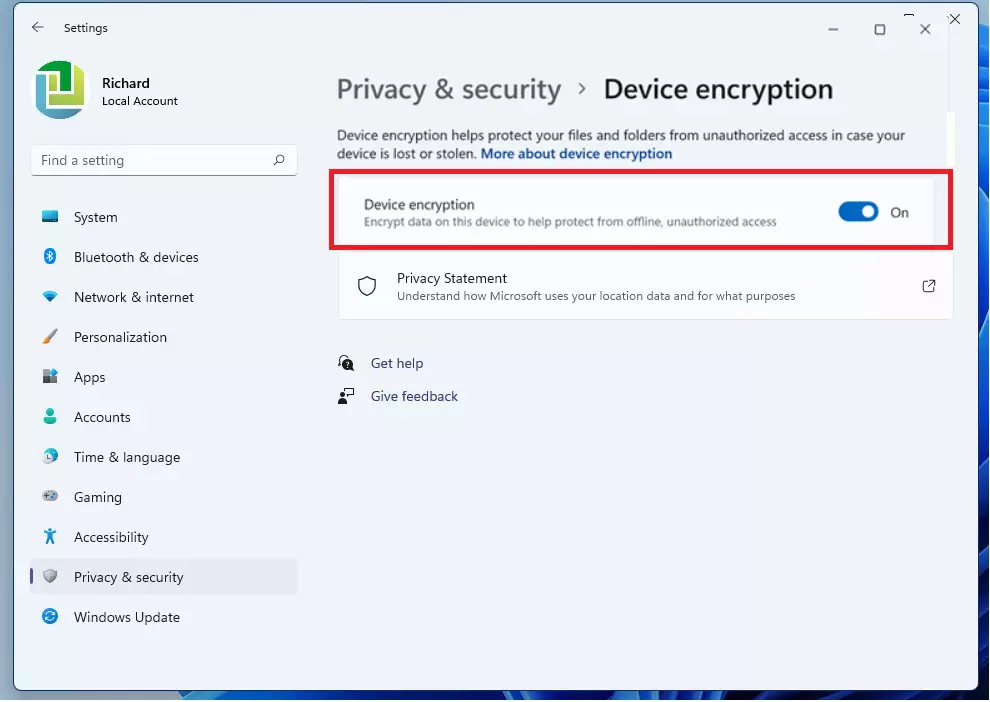
Warning: Before proceeding, ensure you have backed up your recovery key to your Microsoft account. You can find it at account.microsoft.com/devices/recoverykey.
Troubleshooting Missing Options
If you do not see the Device Encryption option, your hardware may not meet the requirements. You can verify your TPM status by running tpm.msc in the Run dialog. If your device lacks these features, you may need to use standard BitLocker if you are running Windows 11 Pro.
Summary
Device encryption adds a crucial security layer to your Windows 11 PC by scrambling your data, keeping it safe if your device is lost or stolen.
Does 🪟 Windows 11 Home support device encryption?
Yes, Windows 11 Home supports device encryption, provided your hardware meets the necessary security requirements like TPM 2.0 and Secure Boot. If your device does not meet these specific hardware standards, the option will not appear in your settings menu, and you cannot enable it manually.
What happens if I forget my recovery key?
If you lose your recovery key and cannot log in, you will be permanently locked out of your files. Windows requires this key to verify your identity during major hardware changes or system errors. Always store your key in your Microsoft account or a secure physical location.
Was this guide helpful?

About the Author
Richard
Tech Writer, IT Professional
Richard, a writer for Geek Rewind, is a tech enthusiast who loves breaking down complex IT topics into simple, easy-to-understand ideas. With years of hands-on experience in system administration and enterprise IT operations, he’s developed a knack for offering practical tips and solutions. Richard aims to make technology more accessible and actionable. He's deeply committed to the Geek Rewind community, always ready to answer questions and engage in discussions.




No comments yet — be the first to share your thoughts!