Windows

How to Use Your Android Camera as a Webcam on Windows 11

Richard
Written by
Richard
Mar 1, 2024 Updated May 2, 2026 3 min read

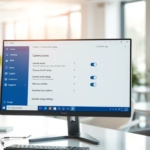
Windows 11 now includes a native feature that lets you use your Android phone or tablet as a high-quality wireless webcam. This works across all your favorite video conferencing apps.

System Requirements

Before you start, ensure your devices meet these requirements:

  • Android: Version 9.0 or higher.
  • Windows 11: Latest updates installed.
  • Link to Windows: The app must be installed and updated on your Android device.
  • Cross-device experience host: This system component must be updated via the Microsoft Store.
  • Network: Both devices must be on the same Wi-Fi network.

Comparison: Native vs. Third-Party Apps

FeatureNative Windows 11Third-Party (Iriun/DroidCam)
SetupBuilt-inRequires drivers
LatencyLowVariable
IntegrationSystem-levelApp-specific

Step-by-Step Setup

Step 1: Open Settings
Click the Start menu and select Settings, or press Windows key + I.

Windows 11 Bluetooth and devices settings page

Step 2: Go to Bluetooth & devices
On the left sidebar, click Bluetooth & devices.

Windows 11 Mobile devices tile

Step 3: Select Mobile devices
Click the Mobile devices tile.

Windows 11 mobile devices manage devices

Step 4: Manage Devices
Click Manage devices to see your linked phone.

Use as a connected camera button

Step 5: Enable Camera Access
Toggle Use as a connected camera to On. Note: This step may require admin privileges if your organization manages your PC settings.

use mobile device as webcam in Windows 11 updated
Pro Tip: Streaming video consumes significant battery. Keep your phone plugged into a charger during long video calls to prevent it from shutting down.

Troubleshooting Connection Issues

If your camera does not appear, check these common fixes:

  • Ensure both devices are on the same Wi-Fi network.
  • Check for updates in the Microsoft Store for the Cross-device experience host.
  • Verify that the Link to Windows app has camera permissions enabled in your Android settings.
  • Restart both your PC and your phone to refresh the connection.

Summary

Using your Android phone as a webcam on Windows 11 provides a high-quality alternative to standard PC cameras. By enabling the Use as a connected camera setting, you gain access to features like lens switching and better image quality. Always ensure your software is updated to avoid connection issues. Why use this? To get better video quality for meetings. What happens when done? You simply toggle the setting off to disconnect your phone.

Why is my phone camera not appearing in the video app list?

If your camera is missing, ensure the ‘Use as a connected camera’ toggle is enabled in Windows Settings. Also, verify that your phone and PC are on the same Wi-Fi network and that the Cross-device experience host is fully updated via the Microsoft Store on your computer.

Does this feature work over mobile data or only Wi-Fi?

This feature currently requires a stable Wi-Fi connection to maintain low camera stream latency. It does not support mobile data connections for the webcam stream, as the high bandwidth required for video conferencing is best handled by a local wireless network connection between your devices.

How do I switch between front and rear cameras during a call?

Once the camera is active, you can switch between the front and rear lenses directly from the notification panel on your Android phone. A persistent notification will appear while the camera is in use, allowing you to toggle the lens or pause the video stream instantly.

What should I do if the video stream is lagging or stuttering?

Lag is usually caused by network congestion. Move your phone closer to your Wi-Fi router or disconnect other devices from the network. Ensure your PC is not running heavy background tasks that might interfere with the Cross-device experience host process, which manages the video feed.

Was this guide helpful?

Tags: #Windows 11
Richard

About the Author

Richard

Tech Writer, IT Professional

Richard, a writer for Geek Rewind, is a tech enthusiast who loves breaking down complex IT topics into simple, easy-to-understand ideas. With years of hands-on experience in system administration and enterprise IT operations, he’s developed a knack for offering practical tips and solutions. Richard aims to make technology more accessible and actionable. He's deeply committed to the Geek Rewind community, always ready to answer questions and engage in discussions.
Leave a Reply

Your email address will not be published. Required fields are marked *

Exit mobile version