Use Windows Hello for Faster Credit Card Confirmation


- 8 steps
- Includes a restart or sign-out
Enable Windows Hello in Chrome’s Payment methods settings to confirm purchases with your face, fingerprint, or PIN. Navigate to Settings Autofill and passwords > Payment methods, then toggle on “Windows Hello” and follow the prompts. This replaces manual CVC entry for faster, more secure checkouts.
Use Windows Hello to confirm credit cards instead of CVC
Windows Hello (a built-in security feature that uses your face, fingerprint, or PIN) lets you confirm online credit card purchases in Google Chrome without typing your CVC security code. It speeds up checkout, and your card details stay behind your device’s biometric sensors. Setting it up takes less than two minutes in the browser settings.
Before you start, check two things. Chrome has to be running on Windows, and Windows Hello needs to be set up on your PC. If you have not done that yet, go to Settings Accounts Sign-in options and add a PIN, face, or fingerprint sign-in. Windows Hello is available on both Windows 11 Home and Pro. Face and fingerprint options also need a compatible camera or fingerprint reader. A PIN works on any PC.
Windows Hello credit card confirmation lets you use your face or fingerprint instead of typing the three-digit CVC security code when you buy something online in Google Chrome. It saves time, and it also keeps your card code out of reach of keyloggers, which record what you type. You can turn the setting on or off in Chrome’s settings whenever you want. Nothing is permanent, and you do not need to restart your PC.
Follow these steps to turn the feature on or off. The first three open Chrome’s Settings page:
- Open Google Chrome browser.
- Click the Customize and control Google Chrome button (the three vertical dots) in the top right corner.
- Select Settings from the menu.
A new tab opens with the Chrome Settings page and a list of categories down the left side.

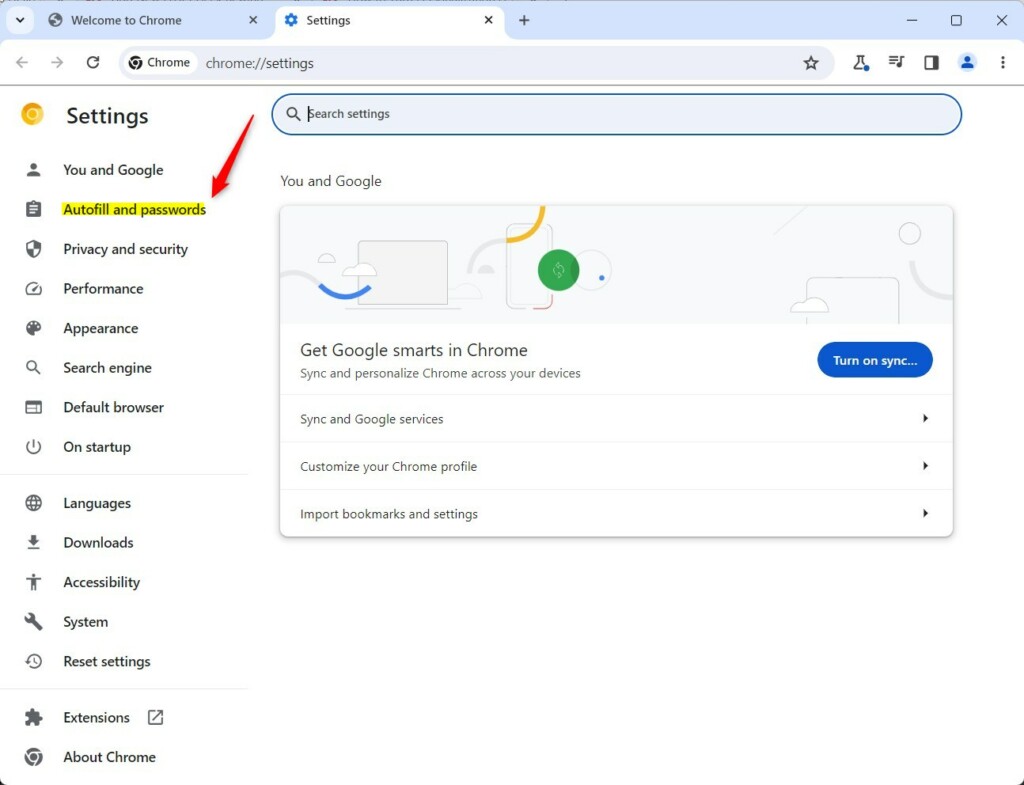
- On the left side of the screen, click Autofill and passwords.
The right side now shows the autofill options, including passwords and payment methods.
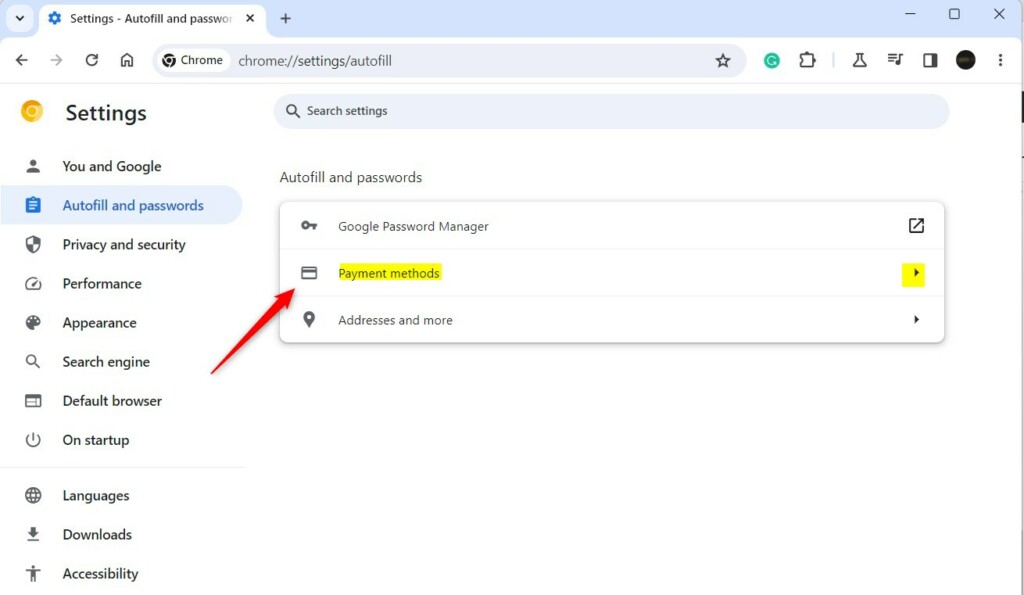
- On the right, click Payment methods.
You should now see the page that lists your saved cards and the payment settings. If you have no saved cards, the list will be empty, but the settings are still there.
Shortcut: type chrome://settings/payments directly into your address bar and press Enter. This takes you straight to the Payment methods page and skips the menus above.
- Find the Windows Hello toggle and switch it to the On position.
If you cannot find the toggle, the usual cause is that Windows Hello is not set up on the PC, or the device does not support it. Set up a sign-in method in Windows first, then reload the page. An outdated Chrome can also hide the option, so update the browser if it still does not appear.
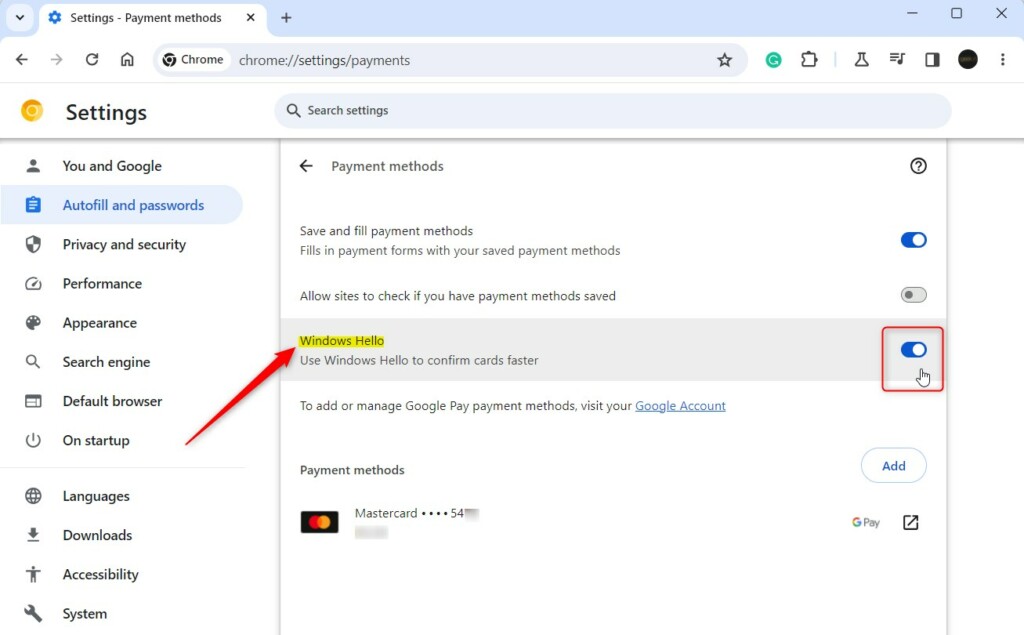
- When you turn it on, you will be asked to confirm your identity using your Windows Hello PIN or the fingerprint you use to sign in to your computer.
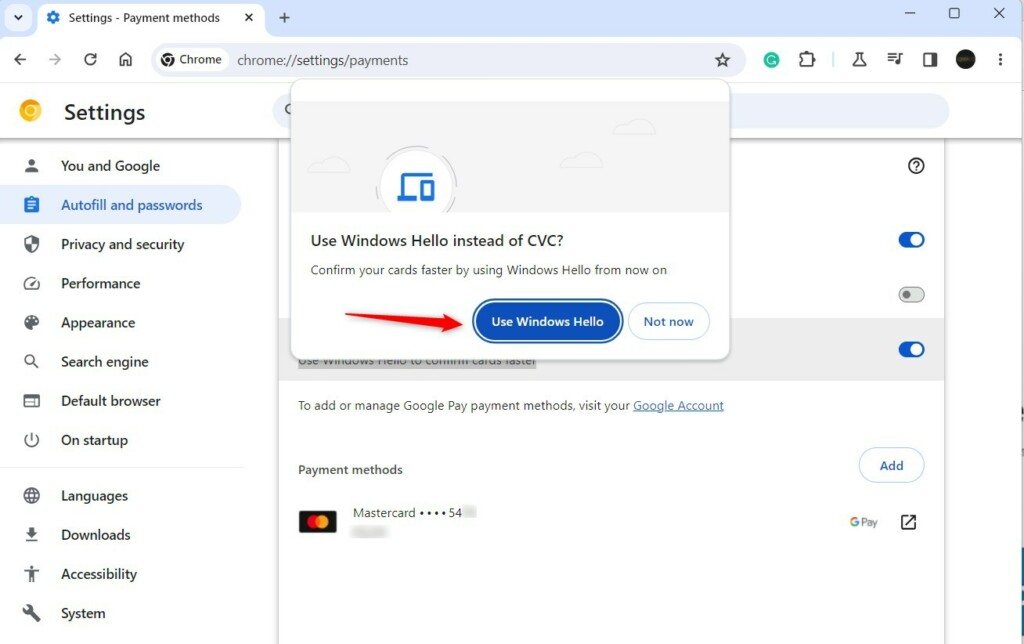
- In the pop-up window, click Use Windows Hello and enter your PIN or scan your fingerprint.
Once Windows accepts your PIN or fingerprint, the pop-up closes and the toggle stays on. If the verification fails, the toggle goes back to off. Switch it on again and retry.
Once the setting is enabled, use your Windows PIN, face scan, or fingerprint to confirm a saved card instead of typing the CVC code. You can then close the browser settings tab. To undo the change later, return to the same page and switch the Windows Hello toggle to Off. Chrome will go back to asking for the CVC code at checkout.
Conclusion
Windows Hello credit card confirmation makes online shopping faster by replacing manual CVC entry with a quick biometric scan, such as facial recognition or a fingerprint. It also stops thieves from capturing card details as you type them. The change fits a broader industry move toward secure passkeys. Setting it up protects your personal data and makes everyday checkouts quicker.
This feature is part of a wider shift toward passkeys and biometric authentication. Modern browsers use the security built into your computer to move away from passwords and card codes that are easy to steal.
Have a question about this guide?
Answered by AI from this guide. Good questions may be added to this page — please don't include personal details.
Did this guide fix your problem?

About the Author
Richard
Tech Writer, IT Professional
Richard is a writer at Geek Rewind who turns complex IT tasks into clear, step-by-step guides. He draws on years of hands-on experience in system administration and enterprise IT operations, focusing on Windows, Linux and WordPress: the problems people actually run into, and the fixes that work. His server and WordPress guides come from systems he runs himself. Richard builds and maintains the platform behind Geek Rewind, from its Ubuntu servers and Nginx configuration to its custom WordPress plugins. Many new tutorials start with readers' questions, and he's always glad to answer them in the comments.
It appears you cannot turn the “Always verify when using autofill”” feature on in Chrome “if” you use a desktop PC that has no webcam or fingerprint reader. It seems without these you cannot use windows hello, is that correct? The switch to turn it on is there but it cannot be toggled on, it’s permanently stuck in the off position. So is there a way to use the feature in Chrome without paying the extra M$ hardware tax? It’s just one thing after the other with redmond these days. It’s there way or the highway(or Linux)
Thanks in advance Greg