How to Manage Copilot Plugins in Windows 11


Copilot plugins in Windows 11 are small add-ons that let the built-in AI assistant talk to programs like Spotify and OpenTable. Through them it can fetch information and run tasks for you, such as starting a playlist or looking up a restaurant table. Turning on a plugin gives the AI permission to read the data that service holds for you. Turning it off cuts off that access right away.
You can manage these extra tools in the Windows 11 settings menu at any time to control your privacy or speed up your daily workflow. A plugin you rarely use is a good one to switch off. A plugin you rely on every day is worth keeping on. Nothing is permanent, so you can change either choice later.
Enable or disable Copilot plugins in Windows 11 via the Copilot settings. Open Copilot, click the Plugins icon, and use the switches to turn plugins on or off. Disabling the Search plugin deactivates all other plugins.
Enterprise Administrative Controls
Enterprise administrative controls let IT administrators manage Copilot plugins across an entire organization using the Microsoft 365 admin center. Tenant-level permissions override individual user settings. A choice made there applies to every user, and a person cannot switch a plugin back on for themselves if the tenant has blocked it. If a plugin is missing or greyed out on a work or school PC, this is the first thing to check.
Because one change affects the whole company, test any plugin deployment in a sandbox environment (a secure, isolated testing area) first. A small test group will show you unexpected issues, such as a plugin asking for more data access than you expected, before you roll the change out more widely. Keep a note of what you changed so you can reverse it if needed.
Preinstalled vs. Custom Plugins
Preinstalled plugins come standard with Microsoft 365 Copilot to provide core functionality. Internal developers build custom plugins to connect internal systems with specific business applications. Varying contributor permissions within the organization dictate who can manage these add-ons. If you cannot see a management option, your account probably lacks the required role, so ask your administrator rather than looking for a workaround.
How to Manage Copilot Plugins in 🪟 Windows 11
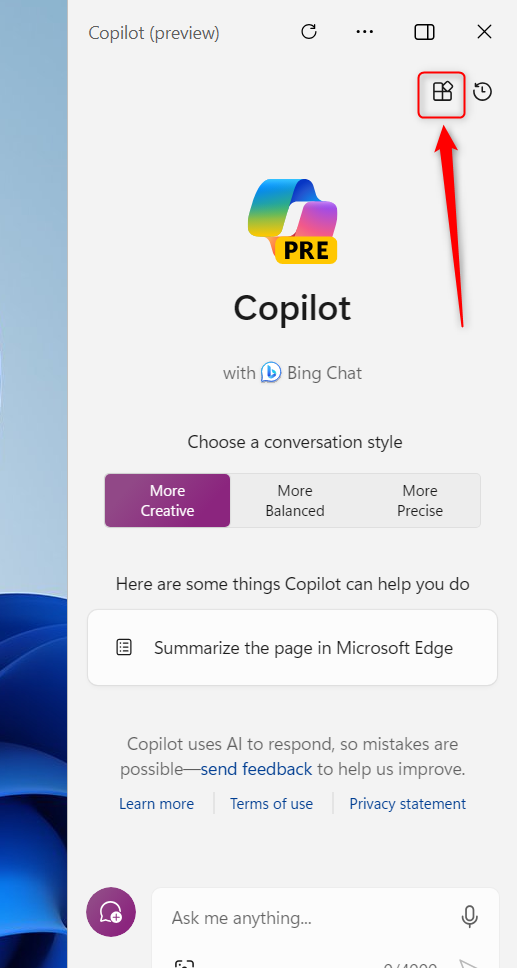
You can manage Copilot plugins in Windows 11 directly inside the AI sidebar to turn extra tools on and off. Open Copilot with the Win+C shortcut, click the plugins icon in the top right corner, and toggle your preferred add-ons to change how the assistant helps you with daily tasks. No restart is needed. The change takes effect as soon as you flip the switch.
This layout comes from the Windows Copilot sidebar. Microsoft has been changing Copilot in Windows 11 and moving it toward a standalone Copilot app. If your version has no plugins icon, or the shortcut opens something different, your build does not include this feature. Check Windows Update to see which version you are on.
- Open the Windows Copilot by clicking its icon on the taskbar or pressing Win+C. The Copilot pane should slide in on the right side of the screen. If nothing opens, make sure you are signed in and that Copilot is not turned off by your organization.
- Look for the Plugins (blocks) icon in the top right corner of the pane. Click it. A list of available plugins should appear, each with a switch beside it.
- To enable a feature, find it in the list and click the switch to the On position. The switch should change to show it is active, and Copilot can now use that service. Some plugins may ask you to sign in to the linked service first.
- To disable a feature, click the switch to the Off position. Copilot loses access to that service straight away. To undo the change, flip the same switch back to On.
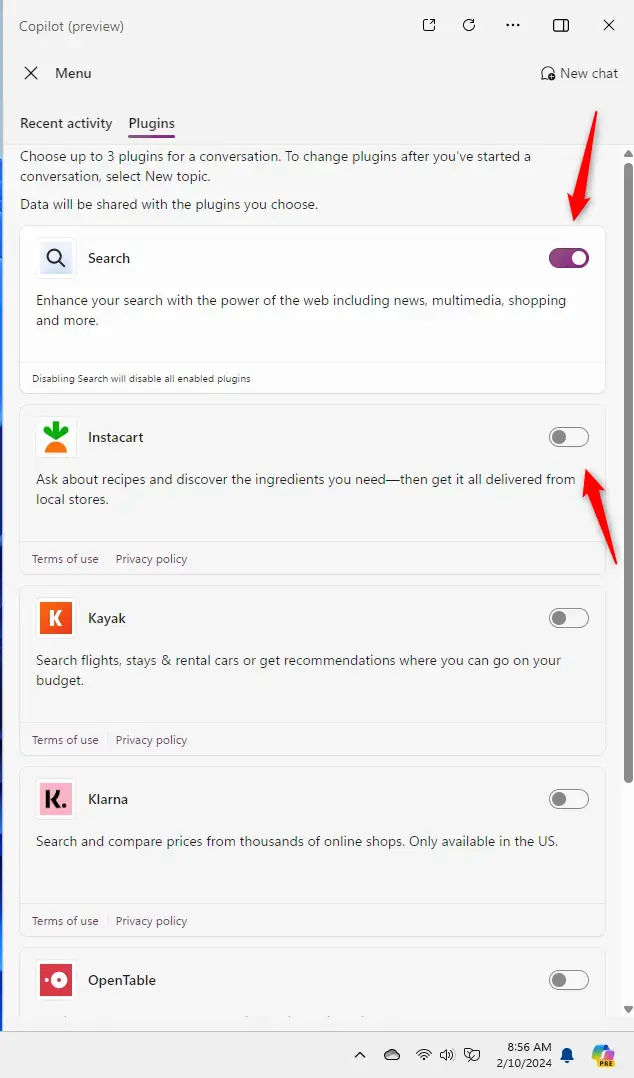
If other plugins suddenly stop working, check that the Search switch is still On. You will need to turn each of the others back on by hand afterward.
Summary
Proper plugin management preserves daily productivity while keeping company data secure. Review your plugin list from time to time, switch off anything you no longer use, and keep each plugin's data access limited to what the job needs.
Related Articles
Have a question about this guide?
Answered by AI from this guide. Good questions may be added to this page — please don't include personal details.
Did this guide fix your problem?

About the Author
Richard
Tech Writer, IT Professional
Richard is a writer at Geek Rewind who turns complex IT tasks into clear, step-by-step guides. He draws on years of hands-on experience in system administration and enterprise IT operations, focusing on Windows, Linux and WordPress: the problems people actually run into, and the fixes that work. His server and WordPress guides come from systems he runs himself. Richard builds and maintains the platform behind Geek Rewind, from its Ubuntu servers and Nginx configuration to its custom WordPress plugins. Many new tutorials start with readers' questions, and he's always glad to answer them in the comments.
[…] from Edge, refresh Copilot prompts, resize the Copilot side pane, delete recent activity, enable or disable Copilot plugins, and […]