How to Install VirtualBox on Ubuntu 24.04

You install VirtualBox on Ubuntu 24.04 by adding its official repository and using the apt package manager.
VirtualBox is free, open-source virtualization software that lets you run other operating systems, like Windows or macOS, within your current Ubuntu installation as virtual machines. This is perfect for testing software or using applications incompatible with Linux without dual-booting.
This guide focuses on Ubuntu 24.04 LTS, codenamed ‘Noble Numbat.’ We’ll ensure you install the latest compatible VirtualBox version and its vital Extension Pack.
Install VirtualBox on Ubuntu 24.04 by opening a terminal and running the command: sudo apt update && sudo apt install virtualbox virtualbox-ext-pack. Accept the license agreement when prompted during installation.
Install VirtualBox
You can install VirtualBox on Ubuntu 24.04 using a simple command, which makes the process much easier than you might think.
To install VirtualBox and its extension pack, run the following command:
sudo update
sudo apt install virtualbox virtualbox-ext-pack
During the installation, you’ll be prompted to accept the license agreement. Accept and continue.
Once installed, you can list details of the extension package by running the command below.
VBoxManage list extpacks
You should see output similar to this:
Extension Packs: 2
Pack no. 0:   VNC
Version:        7.0.16
Revision:       162802
Edition:
Description:    VNC plugin module
VRDE Module:    VBoxVNC
Crypto Module:
Usable:         true
Why unusable:

Pack no. 1:   Oracle VM VirtualBox Extension Pack
Version:        7.0.16
Revision:       162802
Edition:
Description:    Oracle Cloud Infrastructure integration, Host Webcam, VirtualBox RDP, PXE ROM, Disk Encryption, NVMe, full VM encryption.
VRDE Module:    VBoxVRDP
Crypto Module:  VBoxPuelCrypto
Usable:         true
Why unusable:
VirtualBox should now be installed and ready for you to start creating virtual machines.
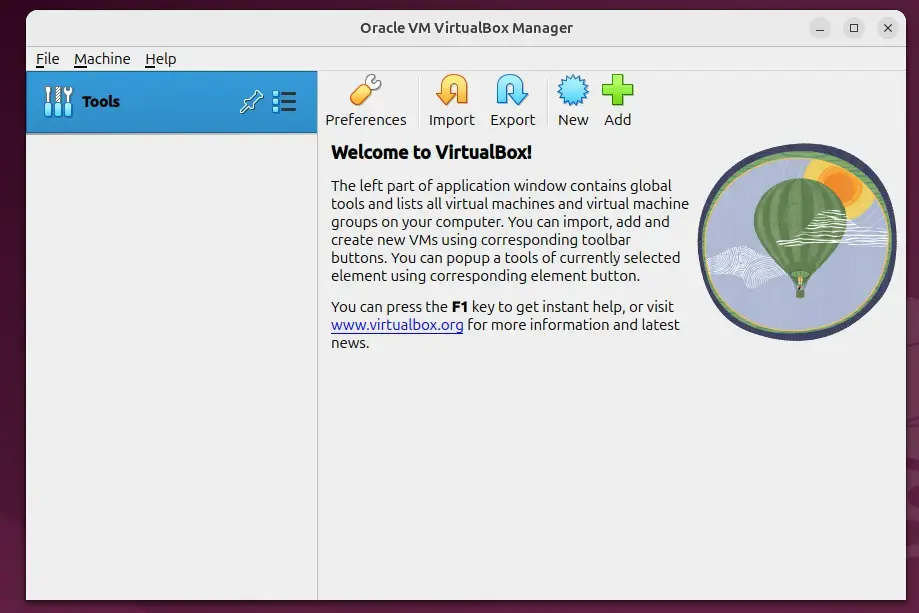
That should do it!
Conclusion:
In summary, installing VirtualBox and its extension pack on Ubuntu 24.04 is a smooth process for creating and managing virtual machines. Here’s what you gain:
- Easy Installation: Use a single command in the terminal to install VirtualBox and its extension pack.
- Isolation for Testing: Create isolated environments for testing applications across different operating systems without additional physical hardware.
- Legacy Support: Run legacy applications by replicating specific operational environments through virtual machines.
- Versatile Applications: Utilize VirtualBox for various purposes, including development, testing, and concurrently running different operating systems.
- User-Friendly Management: Manage your virtual machines quickly and access detailed information about installed extension packs.
With VirtualBox ready, you can explore all the possibilities of virtualization on your Ubuntu system!
Was this guide helpful?

About the Author
Richard
Tech Writer, IT Professional
Richard, a writer for Geek Rewind, is a tech enthusiast who loves breaking down complex IT topics into simple, easy-to-understand ideas. With years of hands-on experience in system administration and enterprise IT operations, he’s developed a knack for offering practical tips and solutions. Richard aims to make technology more accessible and actionable. He's deeply committed to the Geek Rewind community, always ready to answer questions and engage in discussions.

[…] VirtualBox is a free and open-source virtualization software that lets you create and manage virtual machines (VMs) on your computer. You can run multiple operating systems like Windows, macOS, and various Linux distributions simultaneously within your Ubuntu environment. […]