How to Install Magento on Google Cloud Server


Installing Magento on a Google Cloud server sets up a scalable online store on a cloud virtual machine. This process requires an Ubuntu Linux virtual machine running a working LAMP or LEMP stack with Apache or Nginx, PHP, and MySQL or MariaDB.
A correctly configured server handles up to 5,000 products and keeps your online store running fast. You need administrative access to your server command line to complete the setup.
Connect to your Google Cloud server via SSH. Once prerequisites like Apache/Nginx, PHP, and a database are installed, access the Magento setup URL in your browser to complete the installation.
How to connect to Google Cloud servers
Connecting to Google Cloud servers takes just a few clicks using the built-in browser-based SSH tool in the Google Cloud Console. You do not need to install any extra software or plugins on your computer. Just open your Google Cloud dashboard, find your virtual machine instance in the Compute Engine section, and click the SSH button next to it to open a command line window.
Google Cloud SSH supports the latest versions of Chrome, Firefox, Edge, Internet Explorer 11, and Safari 8 or later. Note that Safari does not work in private browsing mode.
- Web browsers
- The latest version of Google Chrome
- Firefox
- Microsoft Edge
- Microsoft Internet Explorer 11 and later
- Safari 8 and later. Note that Safari is not supported in private browser mode.
- Virtual machine configurations
- All Linux VM images are natively available in Google Cloud.
No additional software or browser extensions are needed. Open the Google Cloud Console and go to Compute Engine VM instances.
In the list of virtual machine instances, click SSH in the row of the instance you want to connect to.

Alternatively, open an SSH connection to an instance by clicking its name and selecting SSH from the instance details page.
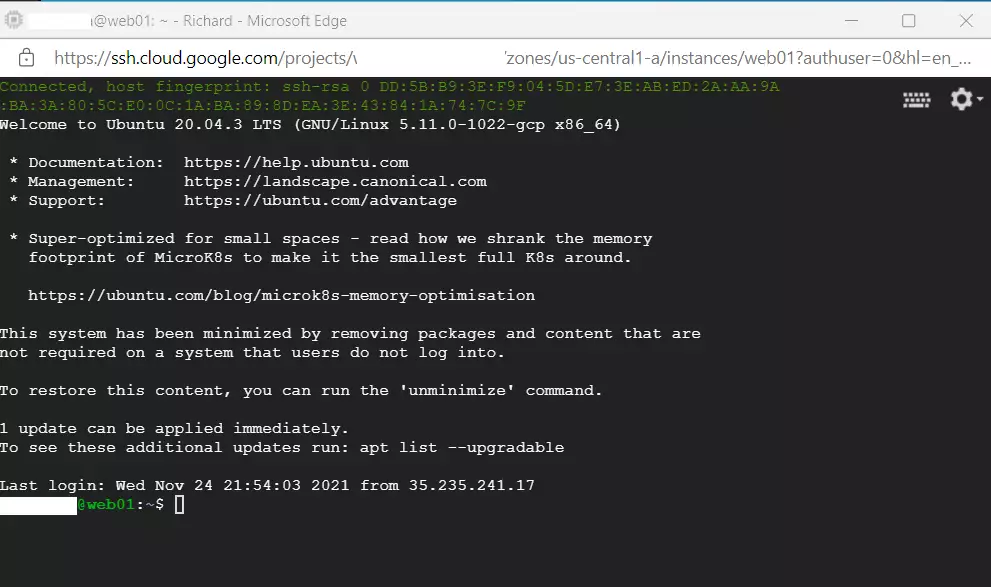
An SSH terminal window with the Ubuntu Linux instance created in the series's second post will open.
Commands can now run directly in the Ubuntu Linux environment created on the Google Cloud server.
Install Magento on Google Cloud Servers
To install Magento Google Cloud instances successfully, you need to set up a compatible Ubuntu Linux server with the right web software and database tools. Once you finish installing those required packages and downloading the Magento files via SSH, you can finish the setup by opening your server IP address in a web browser and following the on-screen Magento installation wizard.
Once all required packages finish installing, Magento configures directly from a browser by navigating to the server hostname or IP address.
This guide details installing Magento on Ubuntu Linux using Apache or Nginx. Selecting an instruction link below provides deeper insight into installing and managing Magento on the Ubuntu Linux operating system.
How to install Magento on Ubuntu Linux with Apache
How to install Magento on Ubuntu Linux with Nginx
Each link outlines the prerequisites covered in previous posts. Securing the Magento website with free Let's Encrypt SSL certificates is also covered there.
Following these linked resources completes the foundation needed to launch a functional Magento online store.
Conclusion:
Ensure you have a registered domain name and your Google Cloud server running before you begin.
- Ensure you have registered a domain name and set up your Google Cloud server before proceeding.
- Install essential software packages, including Apache or Nginx, PHP, and a MySQL or MariaDB database.
- Connect to your Google Cloud server using SSH for a seamless experience.
- Access the Magento installation through your web browser to complete the setup.
- Secure your Magento site with free Let's Encrypt SSL certificates.
- Utilize the resources provided in this series to deepen your understanding of each component involved in creating your eCommerce store.
Magento setup on a Google Cloud Server requires completing specific steps to launch a dynamic eCommerce store. Successful execution of these steps ensures the Magento platform operates correctly for online sales.
Was this guide helpful?

About the Author
Richard
Tech Writer, IT Professional
Richard, a writer for Geek Rewind, is a tech enthusiast who loves breaking down complex IT topics into simple, easy-to-understand ideas. With years of hands-on experience in system administration and enterprise IT operations, he’s developed a knack for offering practical tips and solutions. Richard aims to make technology more accessible and actionable. He's deeply committed to the Geek Rewind community, always ready to answer questions and engage in discussions.



No comments yet — be the first to share your thoughts!