How to Change Touchpad Sensitivity in Windows 11

- 11 steps
- Needs administrator rights
- Includes a restart or sign-out
Touchpad sensitivity in Windows 11 controls how quickly the cursor reacts to your finger. Changing it stops accidental clicks and jumpy cursor movement. You can adjust it in the main Settings app to fit your typing style and hand size, and you can undo any change in the same place.
These steps only apply to laptops and devices with a built-in touchpad, or a desktop with a precision touchpad attached. If the Touchpad page never appears in Settings, Windows doesn’t detect a touchpad.
Adjust touchpad sensitivity in Windows 11 by going to Settings Bluetooth & devices Touchpad. Under Gestures & interaction, click Taps and select your preferred sensitivity level from Most, High, Medium, or Low.
Why Adjust Your Touchpad Sensitivity?
Adjusting your touchpad sensitivity in Windows 11 stops your cursor from jumping around when your palms brush the pad by accident. You can make the pointer move faster or slower so it matches how you like to work. A minute spent on this helps you click and scroll without getting stuck or missing buttons.
What happens when you adjust sensitivity:
- A more sensitive touchpad responds to lighter touches.
- A less sensitive touchpad requires firmer pressure, which helps prevent accidental clicks.
- The pointer moves with more precision, reducing “ghost clicks.”
- Palm rejection settings help stop your cursor from jumping while you type.
The sensitivity setting mainly affects how easily the pad registers taps and touches. A separate cursor speed slider on the same Touchpad page controls how far the pointer travels when you move your finger. If the pointer feels too fast or too slow but you aren’t getting accidental clicks, try that slider instead.
How to Change Touchpad Sensitivity in 🪟 Windows 11
Step 1Open System Settings
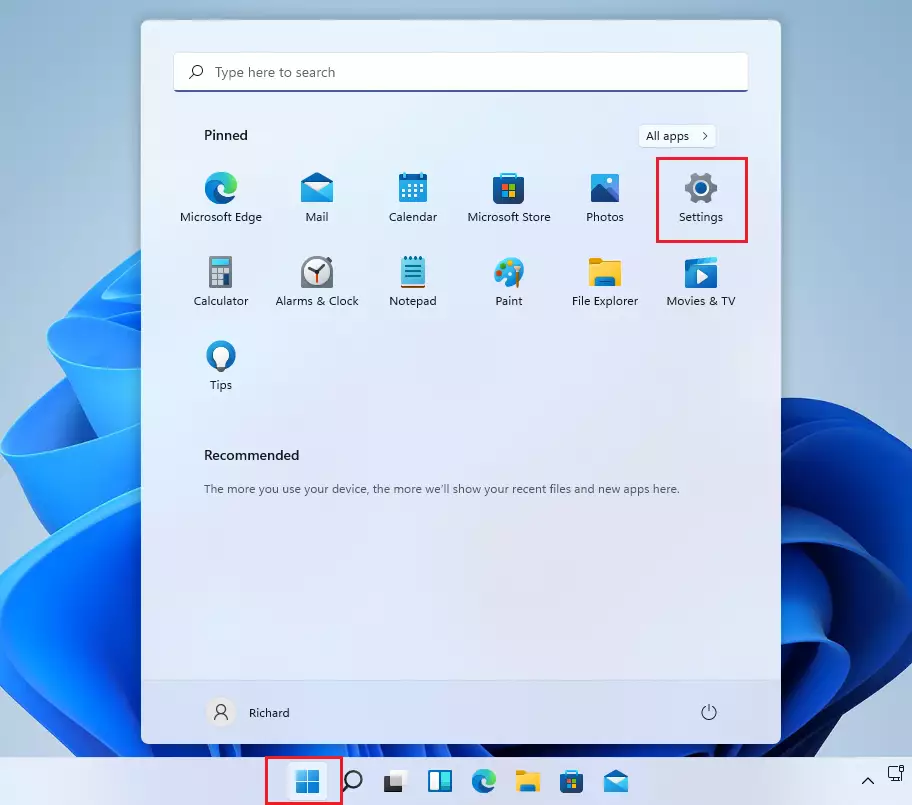
Windows 11 keeps its main settings in a single app. You can open it from the keyboard or from the Start menu.
- Press
Windows key + Ion your keyboard. The Settings window should open straight away. - If the keyboard shortcut doesn’t work, click
Startand then clickSettings. The Settings window should open.
Step 2Go to Touchpad Settings
The touchpad controls sit in the device settings, not under display or system options.
- In Settings, look for
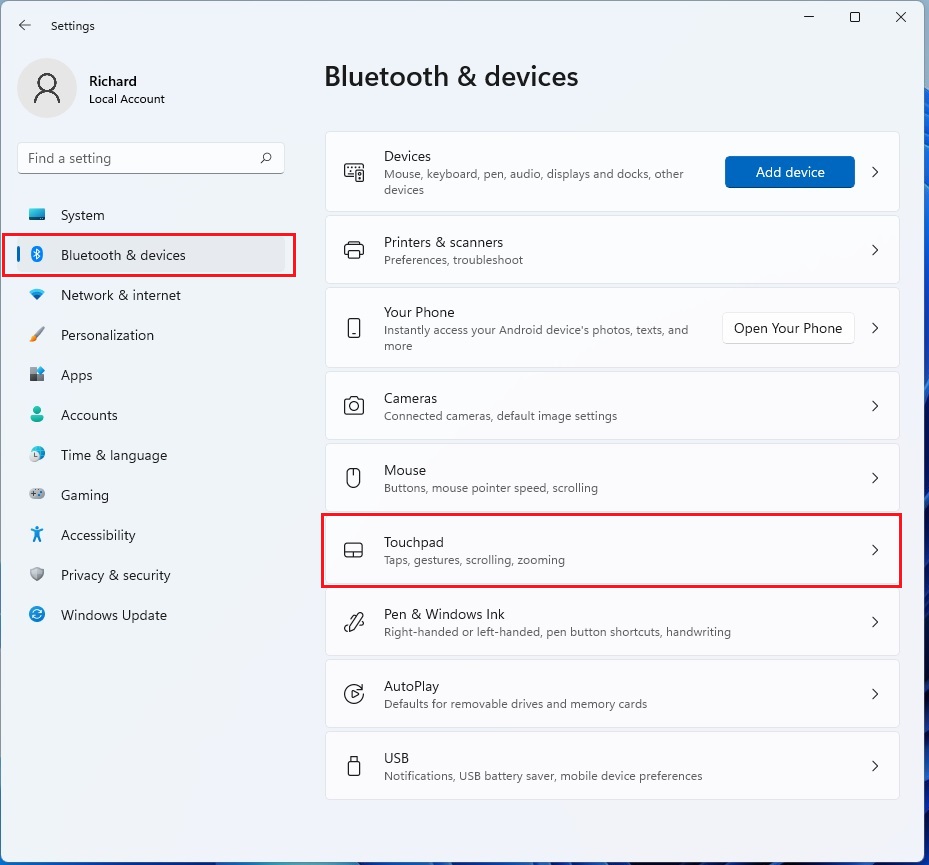
Bluetooth & devicesin the left-hand list and click it. In Windows 11 this is the Bluetooth & devices category. - On the right, select
Touchpad. The Touchpad page should open, with a toggle at the top and several groups of options below it.
If there is no Touchpad entry, make sure the touchpad isn’t disabled and that your drivers are installed. The driver section below covers this.
Step 3Adjust Tap Sensitivity
- Find the
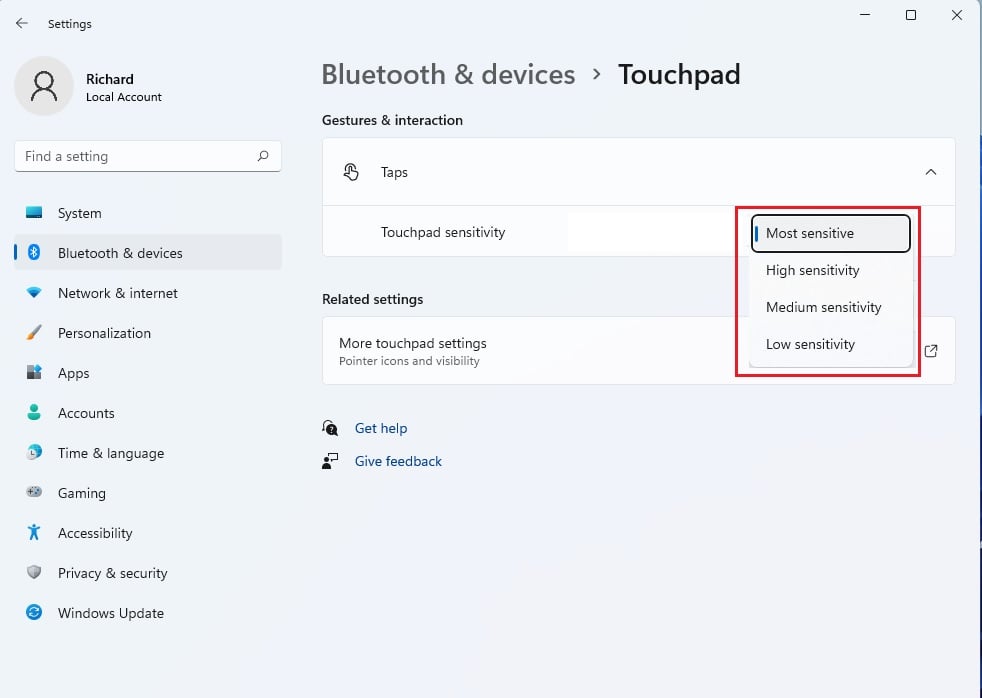
Gestures & interactiongroup on the Touchpad page. Expand it if it is collapsed. - Click
Taps. A list of sensitivity levels should drop down. - Choose one of Most, High, Medium, or Low sensitivity. Start with Medium to see how it feels.
- Test the change right away. Tap, click, and type a few lines of text with your palms resting in their normal position.
If the pointer still jumps while you type, move one step toward Low. If you have to press hard to register a tap, move one step toward High. The change applies immediately and doesn’t need a restart. To undo it, return to the same list and pick your previous level.
Troubleshooting and Advanced Settings
If the sensitivity option doesn’t appear, your device might rely on older drivers instead of the recommended Precision Touchpad driver (a specialized driver that offers enhanced touchpad functionality). Without it, Windows shows fewer options, and some may be missing entirely. You can check the driver in Device Manager.
- Open Device Manager.
- Expand
Mice and other pointing devicesand right-click your touchpad. - Select
Update driverand follow the prompts. If Windows finds nothing newer, check your laptop maker’s support page for a touchpad driver for your exact model.
You can also check for optional driver updates in Settings Windows Update Advanced options Optional updates. Restart the PC after installing a new touchpad driver, then check the Touchpad page again.
Registry Tweak for Advanced Control (Admin Required)
MouseSensitivity to manually adjust settings when the built-in options don’t suffice.Treat this as a last resort. Before you change anything, back up the registry by choosing File Export in the Registry Editor and saving a copy. If something goes wrong, double-click that file to restore your old values. Changes to values under this key usually take effect only after you sign out and back in, or restart the PC. Settings you make on the Touchpad page are safer, so use them first.
Summary
Adjusting your touchpad sensitivity in Windows 11 helps prevent accidental clicks and improves accuracy. By going to Settings Bluetooth & devices Touchpad, you can customize your experience. If you face issues, check for driver updates in Device Manager, or adjust your sensitivity level to keep your cursor steady while typing.
Frequently asked questions
How to change touchpad sensitivity in Windows?
Open Settings, then select Bluetooth & devices and click Touchpad. Under Touchpad sensitivity, pick a level from the list. A lower setting needs firmer pressure, which cuts accidental clicks. A higher setting responds to lighter touches. Your change applies right away, and you can switch back at any time in the same spot.
What does "change in meaning" mean?
A change in meaning happens when a word, phrase, or idea takes on a different sense over time. For example, "silly" once meant "blessed" or "innocent," and "nice" once meant "foolish." Linguists call this semantic change. The shift can be gradual, or it can happen quickly when people start using a word in a new way.
Still have a question?
Answered by AI from this guide. Good questions may be added to this page — please don't include personal details.
Did this guide fix your problem?

About the Author
Richard
Tech Writer, IT Professional
Richard is a writer at Geek Rewind who turns complex IT tasks into clear, step-by-step guides. He draws on years of hands-on experience in system administration and enterprise IT operations, focusing on Windows, Linux and WordPress: the problems people actually run into, and the fixes that work. His server and WordPress guides come from systems he runs himself. Richard builds and maintains the platform behind Geek Rewind, from its Ubuntu servers and Nginx configuration to its custom WordPress plugins. Many new tutorials start with readers' questions, and he's always glad to answer them in the comments.
No comments yet — be the first to share your thoughts!