

Adding a site to your favorites in Microsoft Edge saves a web page so you can open it again with one click instead of typing the address. Favorites work like bookmarks. They store your most-used pages inside the browser.
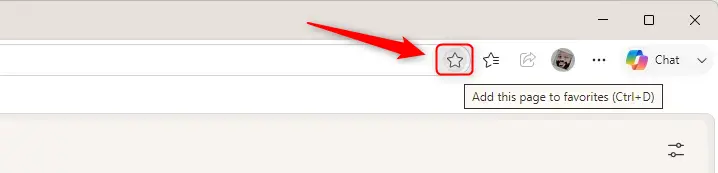
You can add any page by clicking the star icon at the right end of the address bar. Edge saves the favorite immediately and lets you pick a folder to keep your list organized.
Click the star icon at the right end of the address bar on the webpage you want to save. Edit the name if needed, choose a folder, and click Done. The site is now saved to your favorites and accessible from the Favorites menu.
Saving a Website You Visit Often
To add a single page, open it first, then click the star icon on the right side of the address bar. This creates a shortcut you can open again with one click whenever you launch Edge. The steps below walk through it.
The star saves whichever page is showing.
- Open Microsoft Edge and go to the webpage you want to save.
- Look at the right end of the address bar, the long box at the top where the website address appears. Click the star icon. Its tooltip reads Add this page to favorites. A small window opens under it, and the star changes to a filled star.
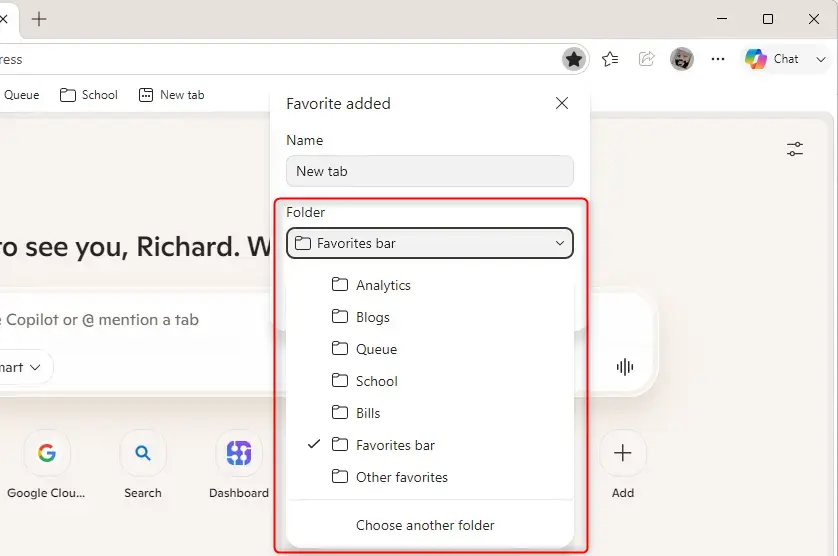
- Check the Name box. Edge fills in the page title, which can be long. Replace it with something short you will recognize, for example “My Favorite Food Place.”
- Open the Folder list and choose where to save the page. Edge usually suggests the default Favorites folder (on some setups it is called “Favorites bar”). You can pick a folder you already have or create a new one to keep things organized. Folders are covered in more detail in the next section.
- Click Done. The window closes and the favorite is saved.
It opens the same window. To change or remove a favorite later, open that page and click the filled star again. You can edit the name or folder there, or click Remove to delete it.
Saving All Your Open Tabs at Once – For When You’re Doing Many Things
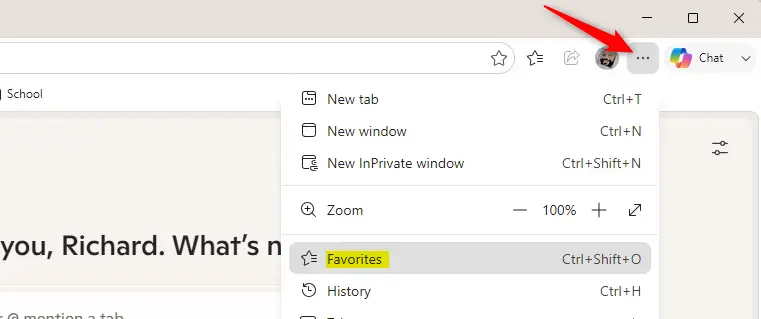
You can save every open tab at once from the “Settings and more” menu, the three dots in the top-right corner. This is handy for a research session or a set of pages you always open together, because you don’t have to save each page one by one.
Edge puts all of the saved pages into a single new folder, so they stay together and are easy to find later.
- Make sure all the webpages you want to save are open in your Edge window. Close any tabs you don't want in the group first, because Edge saves every tab in that window.
- Click the three horizontal dots in the top-right corner of the Edge window. This opens the "Settings and more" menu.
- Move your mouse over Favorites. The Favorites menu opens beside it.
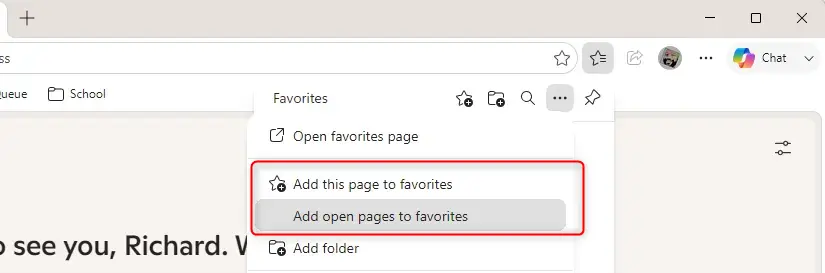
- Click Add open pages to favorites. The path is Settings and more > Favorites Add open pages to favorites. In some Edge versions the wording is slightly different, such as "Add all tabs to favorites," but it is the same option. The keyboard shortcut Ctrl+Shift+D does the same thing.
- A window appears like the one for a single page. Type a name for the group, for example "Trip Planning Research" or "Work Project Notes."
- Choose a folder to save the group in, or create a new one.
- Click Done. The tabs are now saved together as favorites.
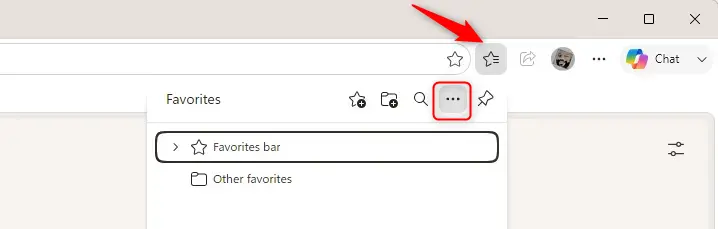
To open them again, go to the Favorites menu and open the folder you saved them in. You can right-click the folder and choose to open all the pages in it at once.
Reference:
Summary
To build a good collection of saved pages in Microsoft Edge, use the star icon in the address bar for single pages and the Favorites menu for saving all your open tabs at once. Give each favorite a clear name and put it in a folder, and your list will stay easy to use as it grows.
Was this guide helpful?

About the Author
Richard
Tech Writer, IT Professional
Richard is a writer at Geek Rewind who turns complex IT tasks into clear, step-by-step guides. He draws on years of hands-on experience in system administration and enterprise IT operations, focusing on Windows, Linux and WordPress: the problems people actually run into, and the fixes that work. His server and WordPress guides come from systems he runs himself. Richard builds and maintains the platform behind Geek Rewind, from its Ubuntu servers and Nginx configuration to its custom WordPress plugins. Many new tutorials start with readers' questions, and he's always glad to answer them in the comments.




No comments yet — be the first to share your thoughts!