How to View Local Group Policies that are Configured in Windows 11

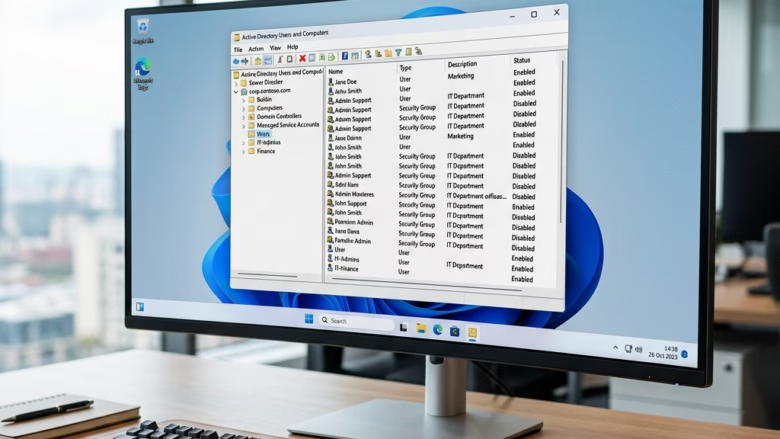
This guide explains how to see which settings have been changed on your computer using the Local Group Policy Editor. Windows uses these policies to control how your system behaves. Understanding these settings helps you troubleshoot performance issues or security restrictions.
Why check these policies?
Sometimes settings are changed by an administrator or a specific program. Checking these helps you understand what is restricted or enabled on your PC. It is essential for auditing security and ensuring your system is not running unwanted configurations.
What happens when done?
You will see a clear list of all active settings that differ from the default Windows setup. This allows you to revert unwanted changes or verify that your security policies are active.
Option One: Using the Local Group Policy Editor
Note: You must be signed in as an administrator to see all configured group policies.
1. Press the Windows key, type gpedit.msc, and press Enter.
To View Computer Configuration Policies
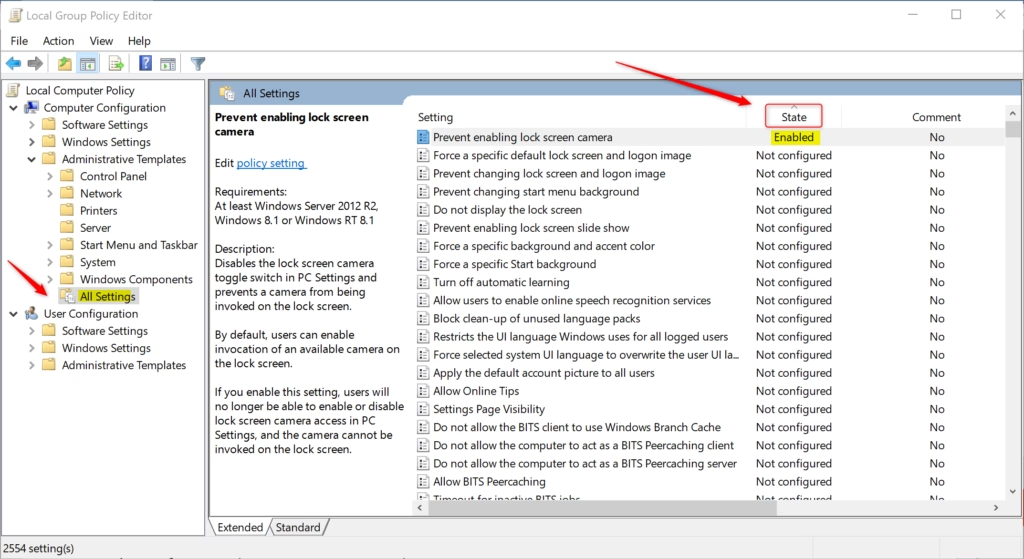
A) In the left menu, go to Computer Configuration > Administrative Templates > All Settings.
B) In the right window, click the State column header. This sorts the list so that “Enabled” or “Disabled” items appear at the top.
To View User Configuration Policies
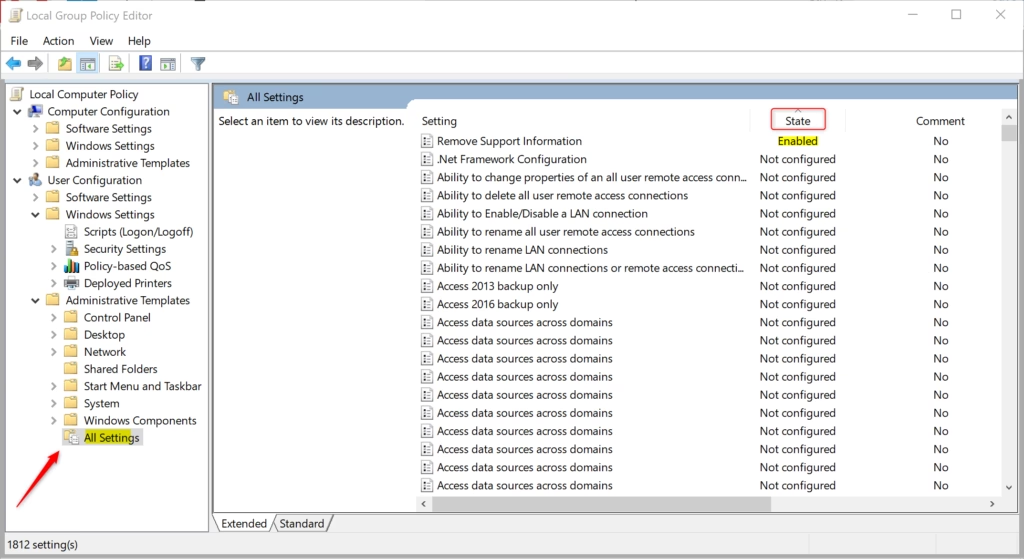
A) In the left menu, go to User Configuration > Administrative Templates > All Settings.
B) Click the State column header to sort your settings by status.
Option Two: Using Resultant Set of Policy (RSOP)
The RSOP tool provides a snapshot of the policies currently applied to your user account and computer.
1. Press the Windows key, type rsop.msc, and press Enter.
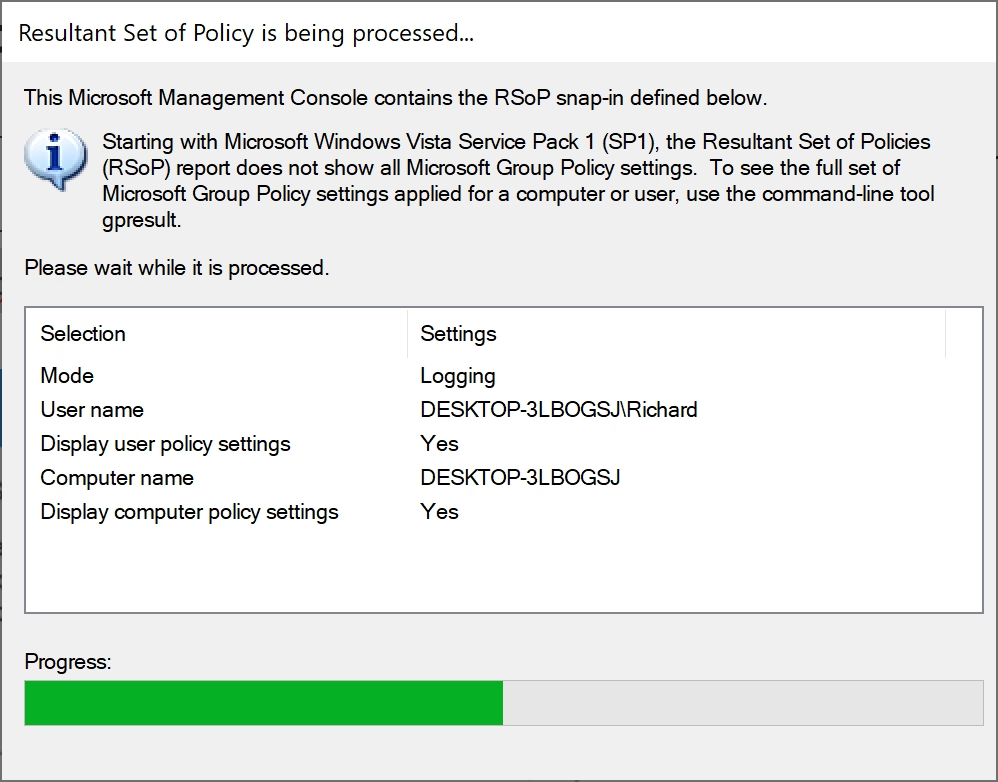
2. Wait a moment while your computer processes the report. You will see a list of only the settings that are currently active or disabled on your system.
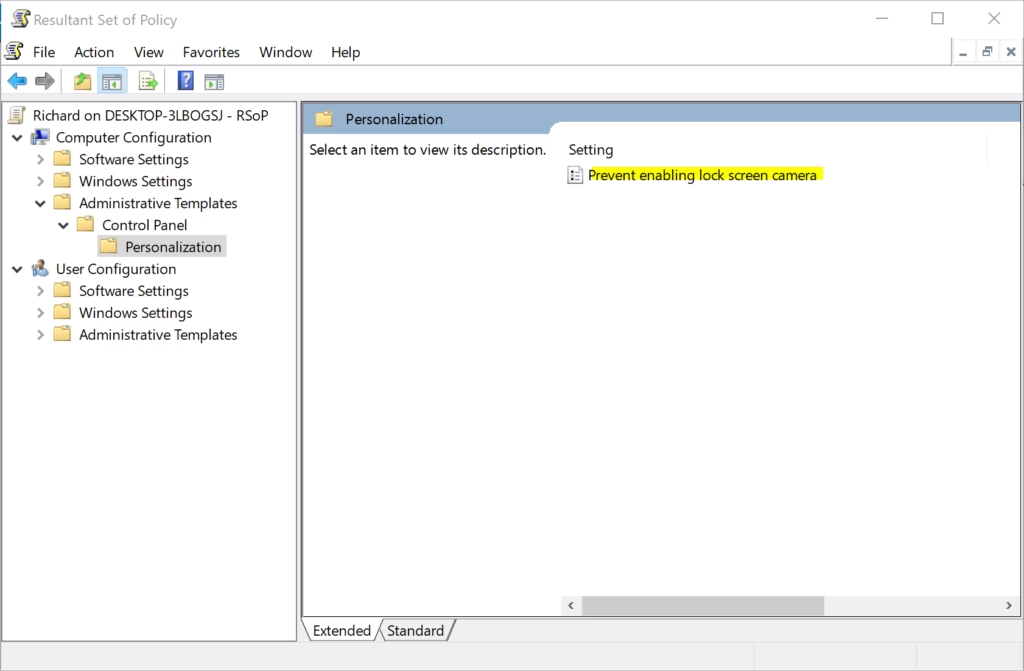
Option Three: Command Line Reporting (gpresult)
For a complete audit, use the command line to generate an HTML report. This is the industry standard for IT professionals.
1. Open the Start menu, type cmd, right-click it, and select Run as administrator.
2. Type the following command and press Enter:
gpresult /h C:\policy_report.html
3. Open the file C:\policy_report.html in your web browser to view a detailed breakdown of all applied policies.
Registry Storage Locations
Group policies are stored in the Windows Registry. You can view them manually using the Registry Editor (regedit).
Warning: Editing the registry incorrectly can cause system instability. Always back up your registry before making changes.
1. Press Win + R, type regedit, and press Enter.
2. Navigate to: HKEY_LOCAL_MACHINE\SOFTWARE\Policies
3. This path contains system-wide policies. User-specific policies are found at: HKEY_CURRENT_USER\Software\Policies
How to Reset Local Group Policies
If you need to revert settings to default, you can use the Command Prompt with administrator privileges:
1. Open an elevated Command Prompt.
2. Run the following commands one by one:
rd /s /q "%windir%\System32\GroupPolicy"rd /s /q "%windir%\System32\GroupPolicyUsers"gpupdate /force
Summary
You can identify active policy changes by opening the Group Policy Editor, using the RSOP tool, or generating a report with gpresult. By sorting the “State” column or reviewing the HTML report, you can easily filter out “Not configured” settings to focus on active restrictions. Always remember that Windows 11 Home lacks the native Group Policy Editor, requiring registry-based auditing instead. For more information, visit the official Microsoft Policy CSP documentation.
Why can’t I find gpedit.msc on Windows 11 Home?
The Local Group Policy Editor is a feature exclusive to Windows 11 Pro, Enterprise, and Education editions. Microsoft does not include this tool in the Home edition. If you are using Windows 11 Home, you must rely on the Registry Editor or third-party tools to modify or view system policies.
Was this guide helpful?

About the Author
Richard
Tech Writer, IT Professional
Richard, a writer for Geek Rewind, is a tech enthusiast who loves breaking down complex IT topics into simple, easy-to-understand ideas. With years of hands-on experience in system administration and enterprise IT operations, he’s developed a knack for offering practical tips and solutions. Richard aims to make technology more accessible and actionable. He's deeply committed to the Geek Rewind community, always ready to answer questions and engage in discussions.




No comments yet — be the first to share your thoughts!