
What is File History?
File History is like an automatic backup tool. It saves copies of your files from folders like Documents, Music, Pictures, Videos, and Desktop. It also backs up files from OneDrive that are stored on your PC. Over time, File History keeps many versions of your files. This means if you accidentally delete or change a file, you can go back and restore an older version or recover lost files.

Learn more about backing up and restoring files on Microsoft Support
How Does File History Work?
- It saves copies of files inside your user folder:
C:\Users\YourName. - It uses a special system called the change journal to track which files have changed. This makes backups quick and doesn’t slow down your PC.
- You need to choose where your backups will be saved. This can be an external USB drive or a network location (like a shared drive on your home network).
- If your backup drive isn’t connected (like if you unplug a USB drive), File History will save backups temporarily on your PC. It will copy them over once the drive is back.
Before You Start
Make sure your computer has these services running for File History to work:
- File History Service
- Windows Search Service
Option 1: Turn On or Off File History for Your Account (Using Control Panel)
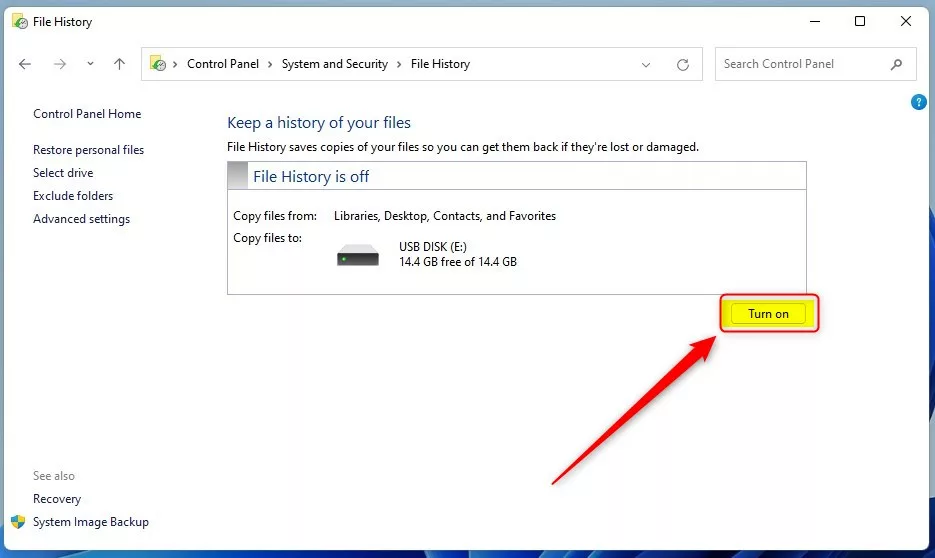
- Open the Control Panel. You can find it by typing “Control Panel” in the Start menu search.
- Switch the view to Small icons or Large icons if it’s not already.
- Click on File History.
- Click Turn on to start backing up your files or Turn off to stop.
- Close the Control Panel when done.
Option 2: Enable or Disable File History for All Users (Using Local Group Policy Editor)
⚠️ Requires admin privileges. This option is for advanced users. The Local Group Policy Editor is only available on Windows 11 Pro, Enterprise, and Education editions.
- Press Win + R, type
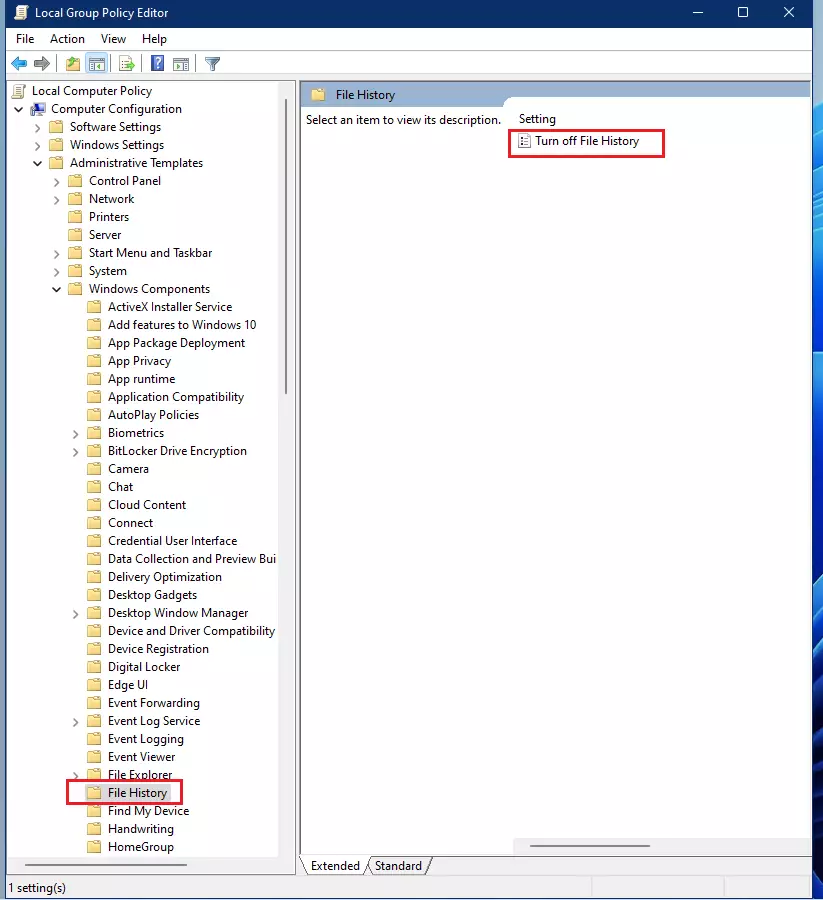
gpedit.msc, and press Enter to open the Local Group Policy Editor. - In the left panel, go to: Computer Configuration > Administrative Templates > Windows Components > File History
- In the right panel, double-click Turn off File History.
- Choose:
- Not configured or Disabled to allow File History (default setting).
- Enabled to turn off File History for all users.
- Click OK and close the editor.
Option 3: Turn On or Off File History for All Users (Using Registry Editor)
⚠️ Requires admin privileges. Warning: Editing the registry can cause problems if done incorrectly. It’s a good idea to back up your registry first.
You need to be signed in as an administrator to do this.
To Turn On File History:
reg delete "HKEY_LOCAL_MACHINE\SOFTWARE\Policies\Microsoft\Windows\FileHistory" /v Disabled /fTo Turn Off File History:
reg add "HKEY_LOCAL_MACHINE\SOFTWARE\Policies\Microsoft\Windows\FileHistory" /v Disabled /t REG_DWORD /d 1 /fSummary
- File History keeps your important files backed up automatically.
- It uses a smart system to back up only changed files, so it runs smoothly.
- You choose where your backups are saved — an external drive or network location works best.
- If your backup drive isn’t available, File History saves backups temporarily on your PC.
- Services like File History Service and Windows Search need to be running.
- You can control File History for just your user or for everyone on the PC.
- It’s easy to restore lost or earlier versions of your files when needed.
- By setting up File History, you’ll have peace of mind knowing your files are regularly saved and safe from accidental loss.
Leave a Reply