How to Remove Library Locations in Windows Media Player

Removing library locations in Windows Media Player stops the app from scanning specific folders on your computer for music and videos. These library locations are the default directories, such as Music and Videos, that Windows Media Player version 12 and later checks automatically to build your media collection.
You can delete extra folders when you add them by mistake or want to keep certain personal files private from the library. Removing a folder only takes it off the list the app scans. It does not delete the folder or the files inside it, so your media stays where it is on the disk.
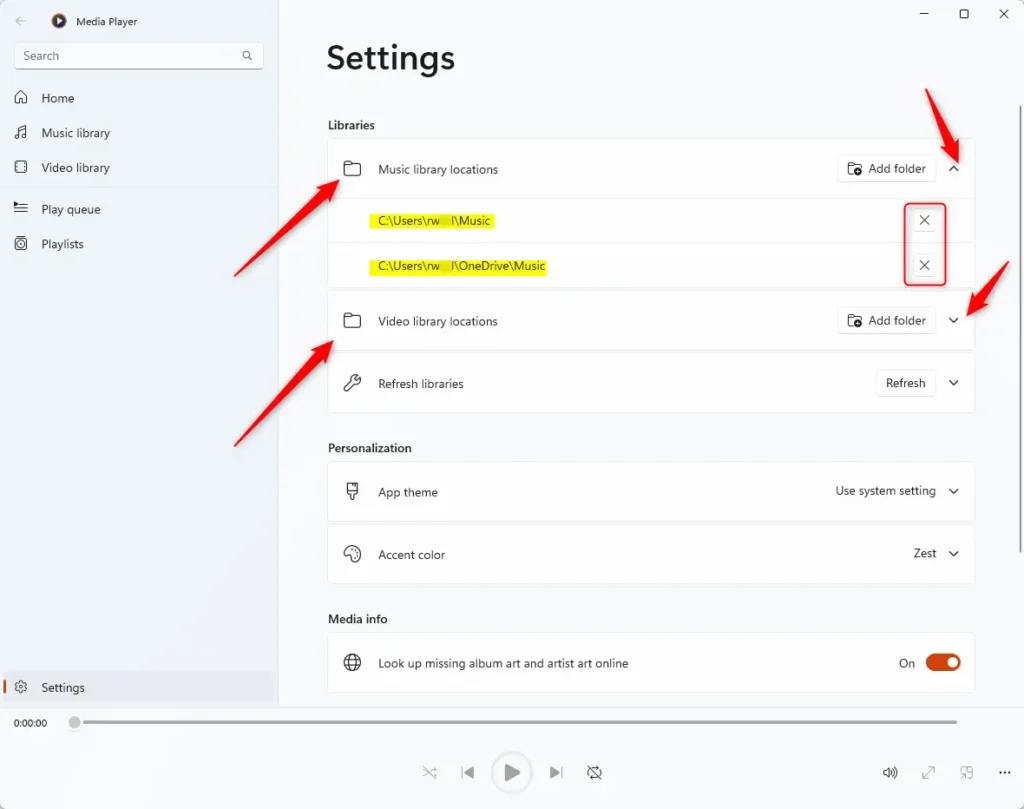
Open Windows Media Player, click Settings, then select the Music or Video library tile. Click the drop-down arrow and press the X button next to any folder you wish to remove from your library.
Remove a library location in Media Player
To remove library locations in Windows Media Player, open the app, go to Settings , and select your music or video library tile. From there, click the drop-down arrow to view your folders and click the X button next to the specific folder you want to take off the list. This stops Windows Media Player from scanning unwanted directories so your media collection stays clean and organised.
The whole job takes four steps and no restart. If you change your mind later, you can add the folder back from the same library settings.
- Open open the Windows Media Player app. The app window should appear with the navigation sidebar on the left.
- Click the Settings button located on the left sidebar. The Settings page opens, and it lists your library options.

- Select the Music or Video library tile. Pick the one that holds the folder you want to remove. Each tile manages its own set of folders.
- Click the drop-down arrow to see the list of folders. You should now see every folder the app currently scans for that library.
- Click the X button next to the folder you want to remove. The folder disappears from the list, and the app stops scanning it. Files you already have in that folder are not deleted.
Close the Settings page upon completing the process. You do not need to restart Windows or the app. If a folder you removed still seems to show up, reopen the library tile and check that it is gone from the list. To undo the change, go back to the same library tile and add the folder again.
Summary
Ultimately, keeping your media organized helps maintain a tidy collection. Managing folders through the Settings menu inside the application takes seconds whenever preferences change. Review the folder lists now and then, especially after you add new drives or move files around.
Have a question about this guide?
Answered by AI from this guide. Good questions may be added to this page — please don't include personal details.
Did this guide fix your problem?

About the Author
Richard
Tech Writer, IT Professional
Richard is a writer at Geek Rewind who turns complex IT tasks into clear, step-by-step guides. He draws on years of hands-on experience in system administration and enterprise IT operations, focusing on Windows, Linux and WordPress: the problems people actually run into, and the fixes that work. His server and WordPress guides come from systems he runs himself. Richard builds and maintains the platform behind Geek Rewind, from its Ubuntu servers and Nginx configuration to its custom WordPress plugins. Many new tutorials start with readers' questions, and he's always glad to answer them in the comments.
No comments yet — be the first to share your thoughts!