How to Add Music Folders in Windows Media Player

Adding music folders in Windows Media Player lets you include songs stored on external hard drives or other custom locations outside your main Music folder. In Windows 11 this is the Media Player app, which replaced Groove Music. It organizes and plays your audio files in one place.
By default, the app only scans your default user Music folder. Adding extra folders brings your whole collection into the library, so you don’t have to dig through different locations on your computer. This guide covers three methods: opening a folder directly, adding it to the Music library, and queuing it for playback. It also covers adding a folder from Settings.
To add a music folder permanently, open Windows Media Player, click Music library in the left sidebar, then click Add folder, select your folder and click Add this folder to Music. The app scans the folder and lists its tracks once indexing finishes. For a one-off session, use Open file(s) and then Open folder instead.
Add a folder to your music library in the Windows Media Player app
The quickest route is the Open file(s) button on the Home window, followed by Open folder in the dropdown list. The keyboard shortcut Ctrl+Shift+O opens the folder selection window straight away. This loads a whole folder in one go instead of picking tracks one by one. It is meant for playing a folder right now. To keep a folder in your library permanently, use the Music library steps further down. The whole process takes a few moments.
- On the Home window, click the Open file(s) button.
- Pick Open folder from the dropdown list. A File Explorer window should open.
It does the same thing and works well if you add folders often.
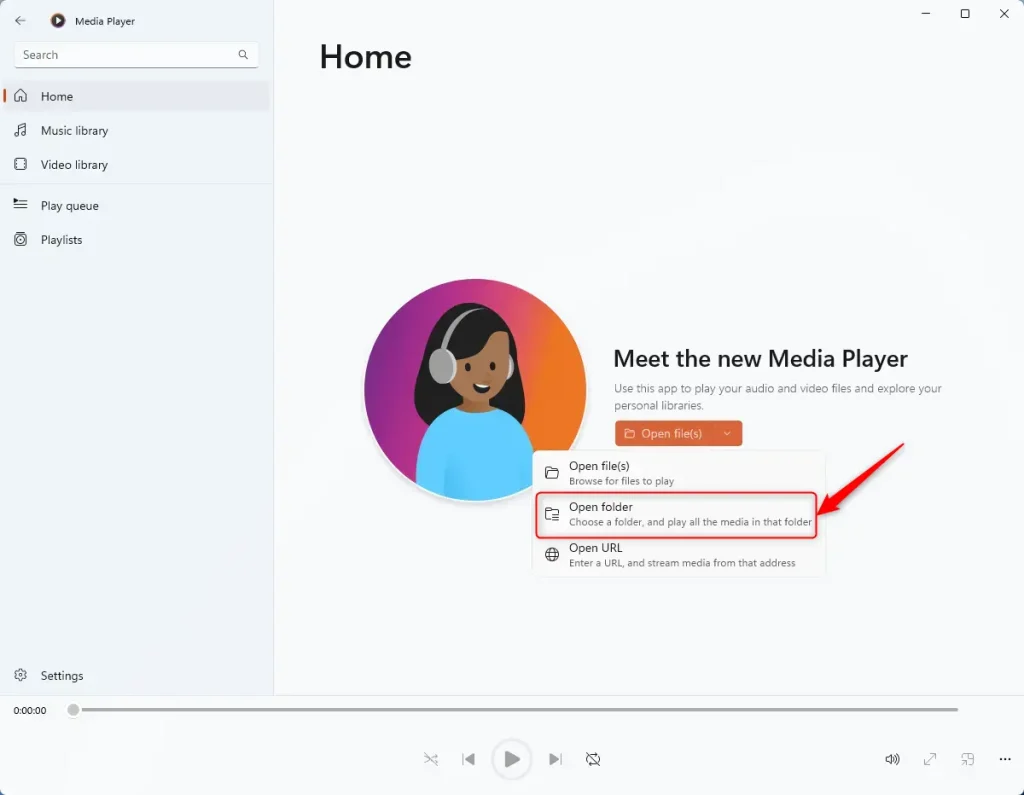
- In the File Explorer window, click the folder that contains the music files you want to play. If your music is on an external drive, make sure the drive is connected first, or it won’t appear in the list.
- Confirm the selection. The tracks in that folder should now load into the app.
Add folder to the Music library
To add the folder to your library so it stays there, use the Music library page instead.
- With Media Player open, click the Music library button on the left sidebar. The page shows the music the app has already found.
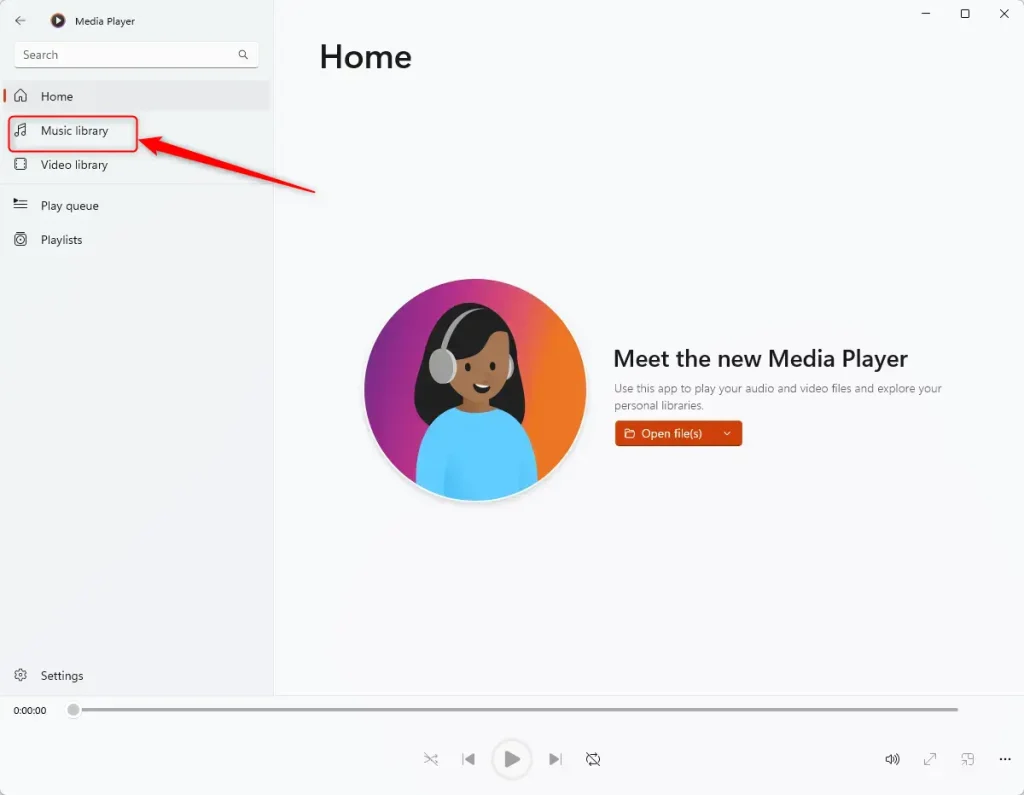
- Click the Add folder button.

- Navigate to the folder that contains your music files and select it.
- Click Add this folder to Music to finalize the addition. The app should start scanning the folder, and the tracks will appear in the library once it finishes.
Large collections can take a while to index, especially on slower external drives. Keep the app open until the songs show up. Removing a folder from the library later does not delete the files on your drive.

Add folder to music library from Play queue
If you only want to play a folder now, without adding it to the library, add it to the play queue. The queue is the list of tracks the app plays next.
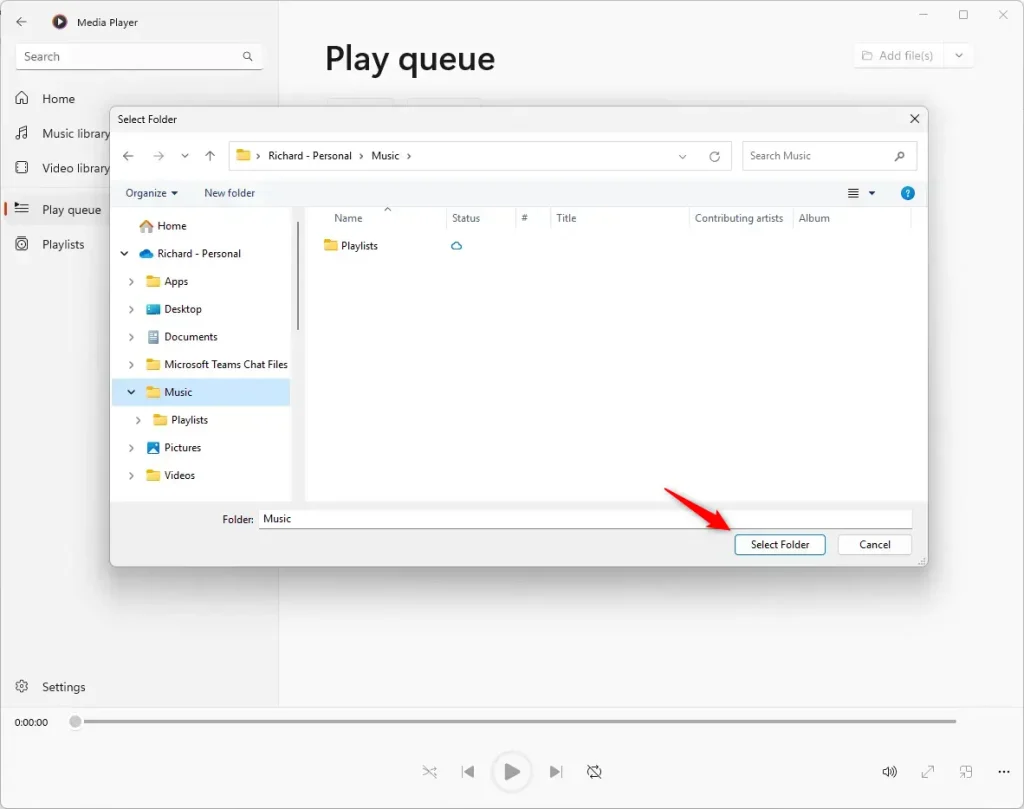
- Select the Play queue button on the left sidebar of the app.
- Click Add file(s).
- Choose Add folder to play queue from the available dropdown options. A File Explorer window should open.
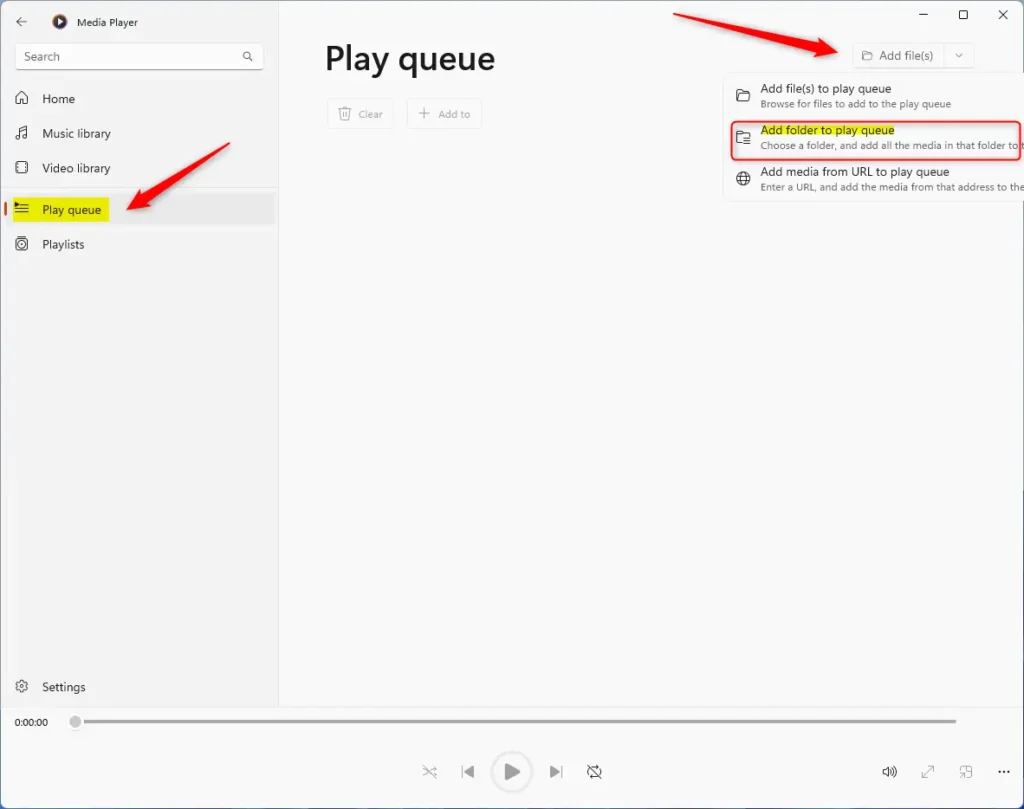
- Select the folder you want from the File Explorer window. Its tracks should appear in the queue and are ready to play.
If you want the music available every time you open the app, add the folder to the Music library instead.
Add a folder to the music library from the settings
You can also manage library folders from the app’s settings. This is a good place to check which folders the app already scans.
- Click the Settings button on the left sidebar of the app.
- Select the Music library locations tile.
- Click the Add folder button.

- Browse to the target directory and select the folder.
- Click the Add this folder to Music button.
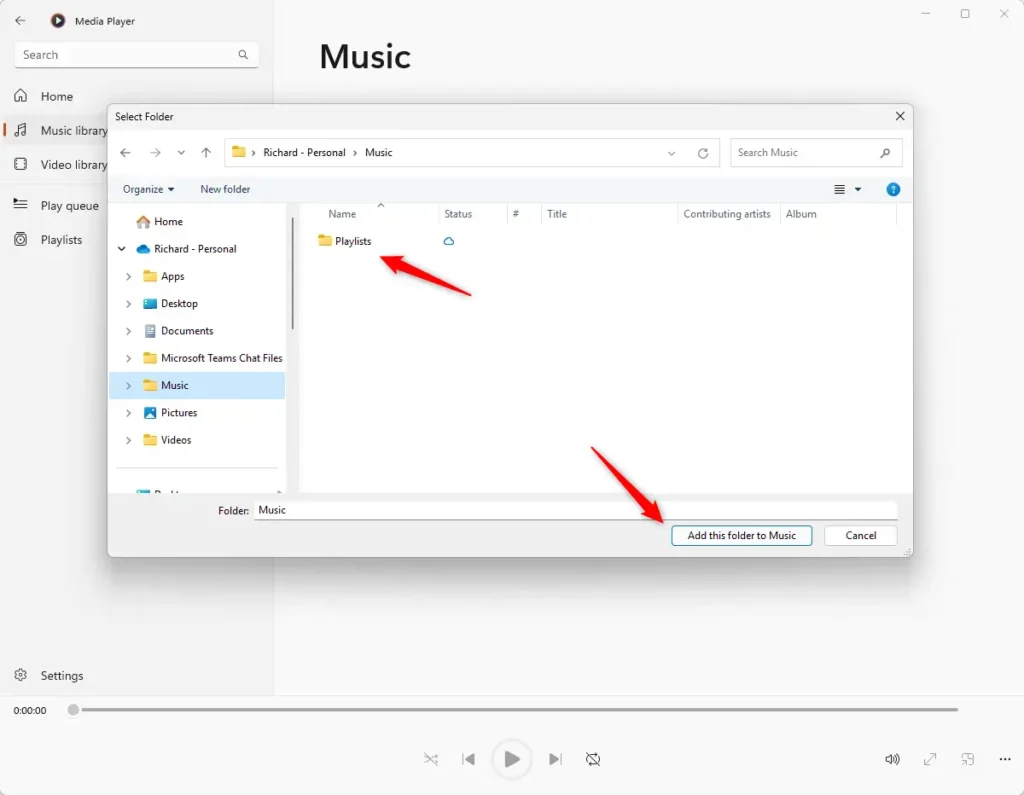
The app scans the directory and indexes your tracks into the library automatically. Playback can begin immediately after indexing finishes. If a folder on an external drive looks empty later, reconnect the drive and give the app a moment to rescan.
That completes the setup process.
Adding music folders to your library in Windows Media Player lets you access your favorite tracks without manual searching.
- Adding music folders to your library in Windows Media Player allows you to easily access and play back your favorite music files without manual searching.
- Once a folder is added to the library, its music files are automatically indexed and included in the app's music library. This simplifies organizing and managing your collection.
- You can access your entire music collection in one place by adding multiple music folders to the library.
- The methods in this post (opening a folder, using the Music library, queuing a folder, and using Settings) give you flexibility in organizing and playing your music in the Windows Media Player app on Windows 11.
Have a question about this guide?
Answered by AI from this guide. Good questions may be added to this page — please don't include personal details.
Did this guide fix your problem?

About the Author
Richard
Tech Writer, IT Professional
Richard is a writer at Geek Rewind who turns complex IT tasks into clear, step-by-step guides. He draws on years of hands-on experience in system administration and enterprise IT operations, focusing on Windows, Linux and WordPress: the problems people actually run into, and the fixes that work. His server and WordPress guides come from systems he runs himself. Richard builds and maintains the platform behind Geek Rewind, from its Ubuntu servers and Nginx configuration to its custom WordPress plugins. Many new tutorials start with readers' questions, and he's always glad to answer them in the comments.
[…] can add your own folders containing music and video files so the app can find them. If your files are missing, you can refresh and re-index […]
hmm… I kind of stumbled on this post. I don’t really use the media player, even, but the presentation appeals to me. You’ve got big screenshots with arrows, and those edits, looks super helpful.
Maybe I should try media player sometime haha.