How to Enable or Disable Text Cursor Indicator in Windows 11

You can easily enable or disable the text cursor indicator in Windows 11 to make your typing position much more visible on screen.
The text cursor indicator is a visual highlight, often a brightly colored outline, that surrounds your blinking text cursor, the vertical line showing where you’ll type next.
This feature significantly improves your ability to track your cursor’s location, especially on high-resolution monitors or within dense text documents. It’s a fantastic accessibility tool for anyone who struggles to spot the standard cursor.
For example, in Windows 11, you can choose from several bright colors and adjust the indicator’s thickness for optimal clarity.
Go to Settings > Accessibility > Text cursor and toggle the Text cursor indicator switch to On or Off. You can also customize its size and color in this menu.
How to enable or disable the text cursor indicator
You can turn the Windows 11 text cursor indicator on or off right from the Settings app.
1. Open the Settings app by pressing Windows Key + I.
2. Select Accessibility from the left sidebar.
3. Click on the Text cursor tile.
4. Toggle the Text cursor indicator switch to On to enable it, or Off to disable it.
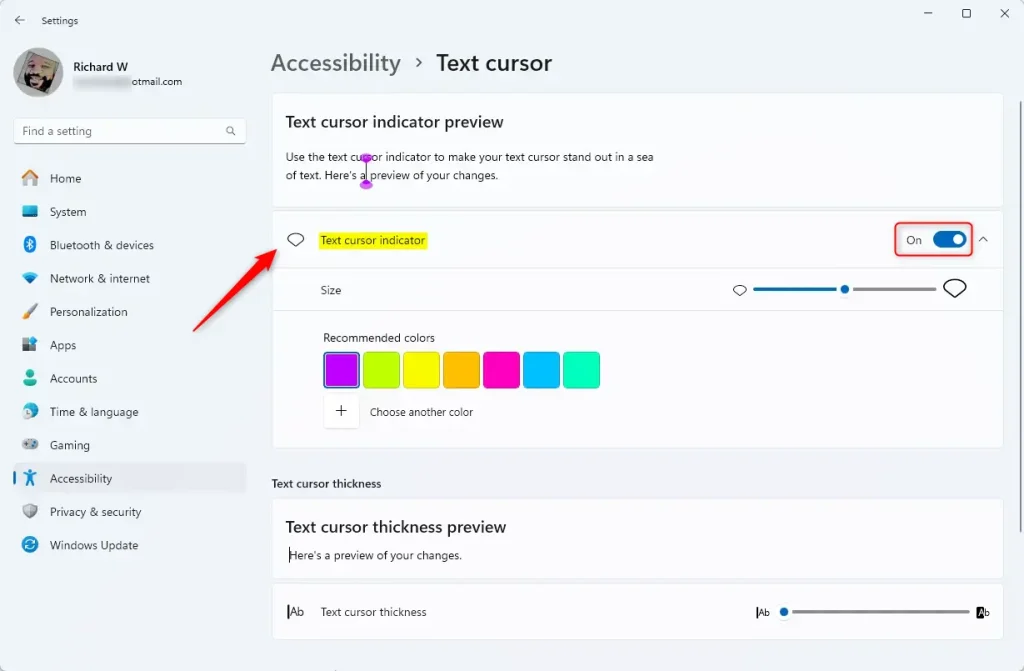
Once enabled, you can immediately see the effect in any text editor.
Customizing size and color
Once you’ve turned on the text cursor indicator in Windows 11, you can easily change its size and color to make it stand out more.
Advanced: Using Registry Editor
Advanced users can change Windows 11 text cursor indicator settings using the Registry Editor, but proceed with caution as errors can cause issues.
- Press Windows Key + R, then type regedit and press Enter.
- Navigate to the following path:
HKEY_CURRENT_USER\Control Panel\Accessibility\CursorIndicator
3. Find the Configuration value. Set its data to cursorindicator to enable it, or clear the data field to disable it.
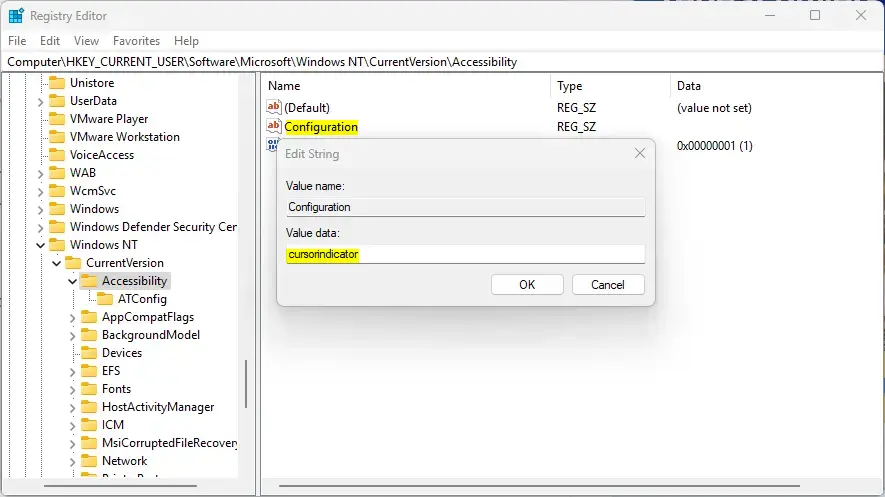
4. Restart your computer for the changes to take effect.
Troubleshooting common issues
If the indicator does not appear, ensure your Windows 11 is fully updated via Windows Update. Sometimes, third-party software or custom mouse themes can conflict with other accessibility features. Try reverting to the default Windows mouse theme if you experience issues. For more details, visit the official Microsoft Accessibility documentation.
Summary
The Windows 11 text cursor indicator is a useful tool that helps you see your typing spot better and makes your computer more personal.
Why won’t the text cursor indicator turn off?
If the indicator remains visible after toggling the switch, try restarting the Windows Explorer process via Task Manager. Alternatively, check if a third-party accessibility tool or a custom mouse cursor theme is overriding your system settings. A quick system restart usually resolves these stuck UI elements.
Does the text cursor indicator affect system performance?
No, the text cursor indicator is a lightweight accessibility feature built into the Windows shell. It does not consume significant CPU or memory resources. You will not notice any impact on your system performance, even on older hardware or devices with limited RAM.
Was this guide helpful?

About the Author
Richard
Tech Writer, IT Professional
Richard, a writer for Geek Rewind, is a tech enthusiast who loves breaking down complex IT topics into simple, easy-to-understand ideas. With years of hands-on experience in system administration and enterprise IT operations, he’s developed a knack for offering practical tips and solutions. Richard aims to make technology more accessible and actionable. He's deeply committed to the Geek Rewind community, always ready to answer questions and engage in discussions.


[…] article explains how to change the color of the Text Cursor Indicator in Windows […]
One thing to note right now is that when this cursor is enabled Windows 11 happily shows the cursor in all your DirectX games.
Not as a text input cursor where you are expected to enter text but as a defect showing on-screen in a fixed position that you cannot get rid of unless you turn off this cursor in Settings again.
[…] Turn On or Off Text Cursor Indicator […]
[…] the slider under Text cursor thickness to make the line wider or thinner. You can also turn on the cursor indicator or change the blink faster or slower to help it stand […]