How to Show Email on Windows 11 Sign-In Screen

Windows 11 gives you control over what information appears on your lock screen. By default, you might only see your display name. This guide explains how to show email on sign-in, helping you manage your privacy and account visibility.
Why show your email on the sign-in screen?
If you share a computer with family or coworkers, seeing the email address helps you pick the right account quickly. It prevents you from logging into the wrong profile. It is also useful if you have multiple accounts and need to verify which one is currently active.
What happens when you are done?
Once you enable this feature, your email address will appear directly under your username on the lock screen. This provides a clear visual indicator of which account is ready to be unlocked.
How to show your email on the sign-in screen (Settings App)
This is the easiest method for most users. Requires administrative privileges.
1. Press Windows key + I to open Settings.
2. Click Accounts in the left sidebar.
3. Select Sign-in options.
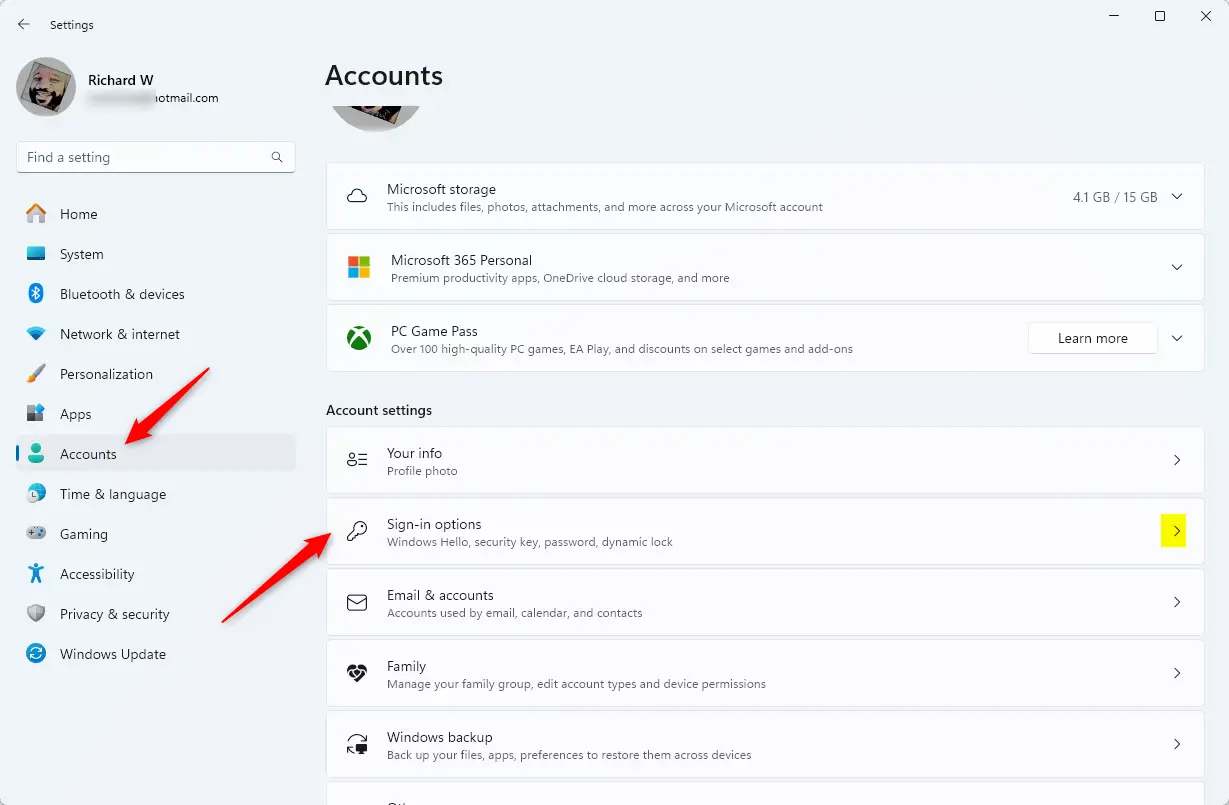
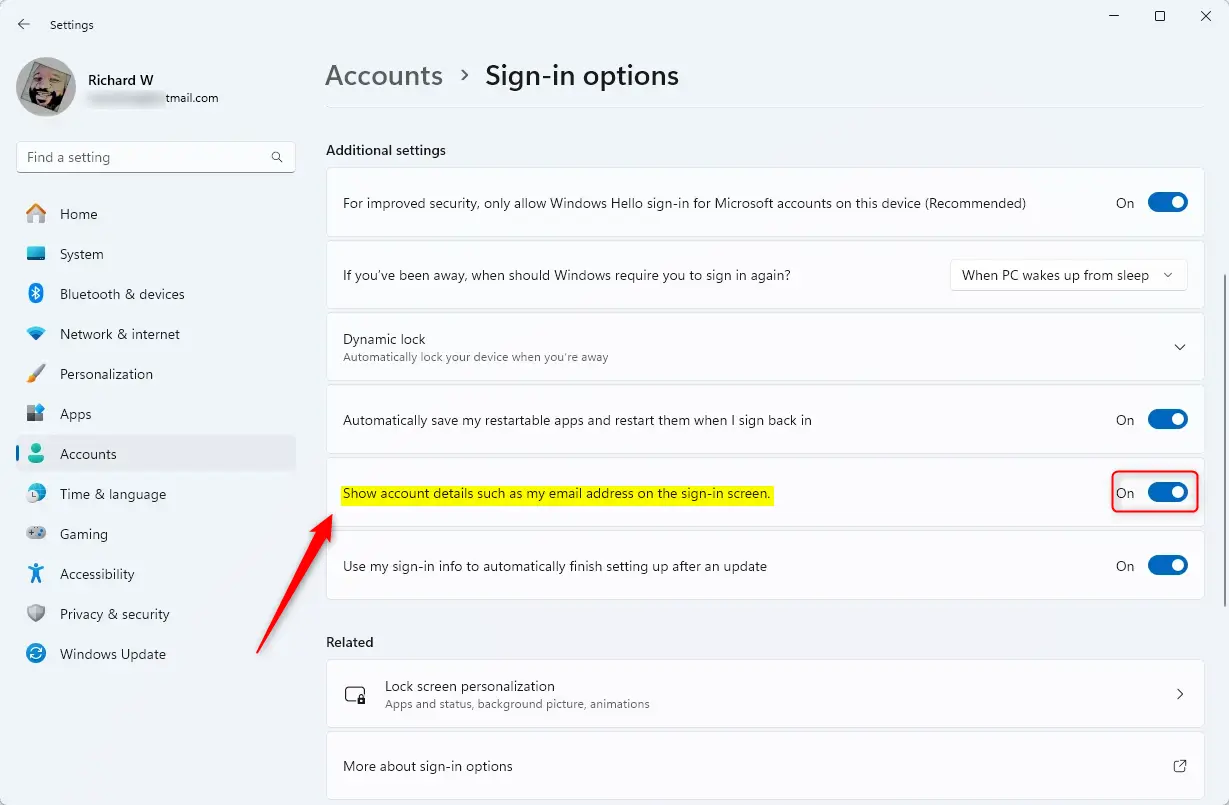
4. Scroll to Additional settings.
5. Toggle Show account details such as my email address on the sign-in screen to On.
Advanced Method: Using Group Policy Editor
If you use Windows 11 Pro or Enterprise, you can use the Group Policy Editor. This is useful for managing settings across a network.
1. Press Windows key + R, type gpedit.msc, and hit Enter. Requires administrative privileges.
2. Navigate to: Computer Configuration > Windows Settings > Security Settings > Local Policies > Security Options.
3. Find Interactive logon: Display user information when the session is locked.
4. Double-click it and choose Display user display name and email address.
5. Click Apply and OK.
Advanced Method: Using Registry Editor
For Windows Home users, or if you prefer the registry, you can modify the system directly. Warning: Always back up your registry before making changes.
1. Press Windows key + R, type regedit, and hit Enter. Requires administrative privileges.
2. Navigate to: HKEY_LOCAL_MACHINE\SOFTWARE\Microsoft\Windows\CurrentVersion\Policies\System.
3. Look for DontDisplayLastUserName. If it does not exist, right-click, select New > DWORD (32-bit) Value, and name it DontDisplayLastUserName.
4. Set the value to 0 to show account details.
Summary
You can easily show your email on the sign-in screen using the Settings app, Group Policy, or the Registry Editor. While convenient for identifying accounts, consider your privacy needs before enabling it. For more details, visit the official Microsoft documentation regarding Windows security policies.” }
Is it a security risk to show my email on the sign-in screen?
Showing your email address can be a minor security risk because it reveals part of your identity to anyone with physical access to your device. If you work in a high-security environment, it is generally safer to hide this information to prevent unauthorized users from gathering details about your account.
Why is the ‘Display user information’ option greyed out in Group Policy?
If the option is greyed out, you may not have the necessary administrative permissions to modify security policies. Alternatively, your computer might be managed by an organization or school that has enforced specific security policies via a central server, which overrides local settings on your individual machine.
Was this guide helpful?

About the Author
Richard
Tech Writer, IT Professional
Richard, a writer for Geek Rewind, is a tech enthusiast who loves breaking down complex IT topics into simple, easy-to-understand ideas. With years of hands-on experience in system administration and enterprise IT operations, he’s developed a knack for offering practical tips and solutions. Richard aims to make technology more accessible and actionable. He's deeply committed to the Geek Rewind community, always ready to answer questions and engage in discussions.



No comments yet — be the first to share your thoughts!