Installing Gatsby.js on Ubuntu: A Step-by-Step Guide


Installing Gatsby.js on Ubuntu lets you build fast static websites using React. Gatsby.js is a web framework that pulls content from multiple sources to create high-performance web pages.
You need Ubuntu 20.04 or newer and Node.js version 18 or higher to complete the setup. The full process takes about 15 minutes using standard terminal commands.
Install Node.js via NVM, then install the Gatsby CLI globally using npm. Create a new Gatsby site with `gatsby new` and start the development server with `gatsby develop` in your project directory.
Install NVM (Node Version Manager) and Node.js
Installing NVM (Node Version Manager) on Ubuntu gives you the right environment for your Gatsby.js installation Ubuntu setup by letting you download and manage Node.js properly. You start by updating your package lists and installing curl in your terminal, which allows you to fetch the NVM script safely and set up the core engine your site builder needs.
First, update your system and install curl:
sudo apt update
sudo apt install curl
Note: Always verify the script hash provided on the official %📂%LNK0%% NVM repository before running it to ensure security.
curl -o- https://raw.githubusercontent.com/nvm-sh/nvm/v0.40.1/install.sh | bash
Refresh your shell so NVM works:
source ~/.bashrc
Now, install the current Long Term Support (LTS) version of Node.js, which is v22:
nvm install 22
nvm use 22
Gatsby CLI
The Gatsby CLI is a tool that helps you create and manage your sites. Install it with this command:
npm install -g gatsby-cli
Check the version to confirm it is installed:
gatsby --version
Create Gatsby app
Creating a new Gatsby app on Ubuntu requires the Gatsby command line tool to build your project structure and configuration files automatically. You run the setup command in your terminal, answer a few quick questions about your site name and preferences, and the tool downloads everything you need to start building your web pages.
gatsby new
The CLI will ask you a few questions to set up your project:
- What would you like to call your site? Choose a name like "myapp".
- What would you like to name the folder? Press enter to use the default.
- Will you be using JavaScript or TypeScript? Choose based on your preference.
- Will you be using a CMS? Select "No" for now.
- Would you like to install a styling system? Choose your preferred CSS framework (like Tailwind or CSS Modules).
The tool will automatically download the necessary files and set up your folder structure.
Access your app
Accessing your new Gatsby app on Ubuntu involves moving into your project folder and starting the built-in development server. You use the command line to launch the local server, and then you open your web browser to view your live site at the local address while you make changes.
cd myapp/
gatsby develop
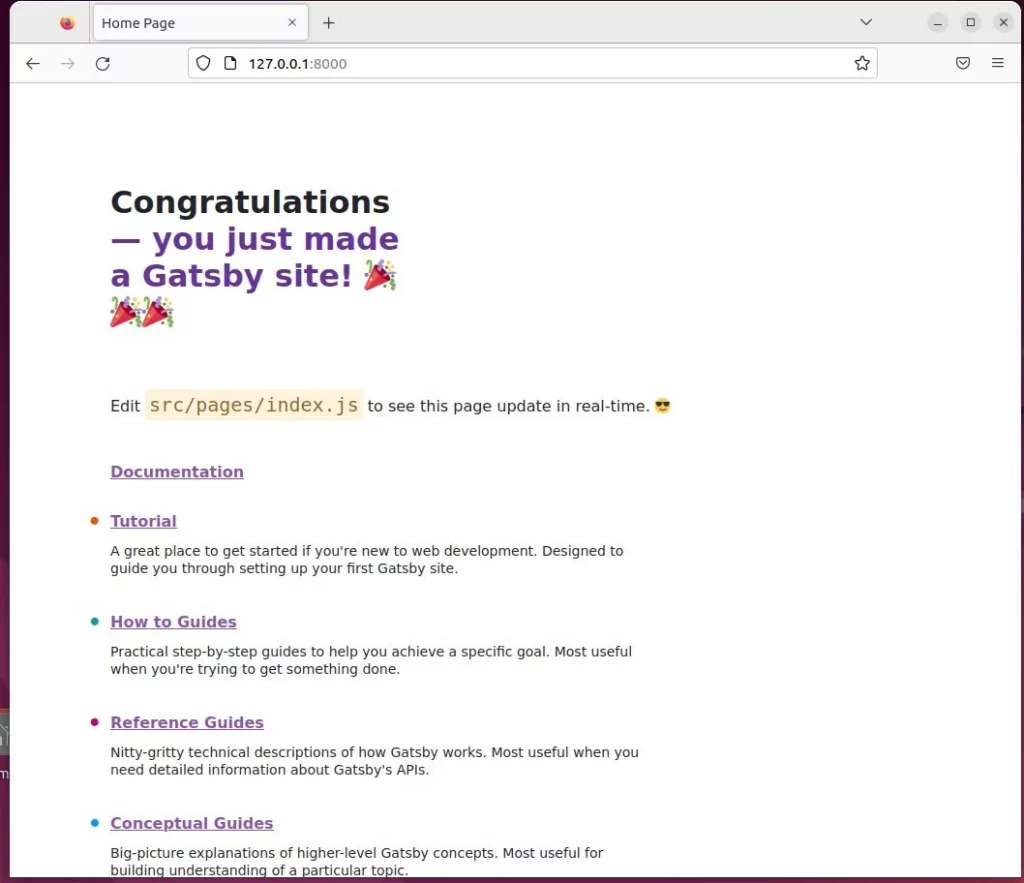
Open your web browser and go to:
http://localhost:8000
You can try a different port by adding the -p flag, like this: gatsby develop -p 8001.
Conclusion
You now have Gatsby.js running on your Ubuntu machine. You have set up the environment, installed the CLI, created a new project, and launched the development server. You are ready to start building your website.
Was this guide helpful?

About the Author
Richard
Tech Writer, IT Professional
Richard is a writer at Geek Rewind who turns complex IT tasks into clear, step-by-step guides. He draws on years of hands-on experience in system administration and enterprise IT operations, focusing on Windows, Linux and WordPress: the problems people actually run into, and the fixes that work. His server and WordPress guides come from systems he runs himself. Richard builds and maintains the platform behind Geek Rewind, from its Ubuntu servers and Nginx configuration to its custom WordPress plugins. Many new tutorials start with readers' questions, and he's always glad to answer them in the comments.

No comments yet — be the first to share your thoughts!