Enable Remote Desktop on Ubuntu Linux

You can enable Remote Desktop on Ubuntu Linux to let others control your computer remotely, or to control another computer yourself.
Remote Desktop allows someone to see your screen and use your mouse and keyboard as if they were physically present, making it ideal for troubleshooting or collaborative work.
Ubuntu Linux, starting with version 22.04 LTS, includes a built-in remote desktop sharing feature that integrates with the GNOME desktop environment.
This built-in tool offers a secure way to grant access, ensuring you can easily turn it on for assistance or keep it disabled for privacy.
Open Settings, click Sharing, and turn on the main Sharing switch. Then, enable Remote Desktop and Remote Control within the Remote Desktop sub-menu to allow others to view and control your screen.
How to turn on or off remote assistance in GNOME
You can easily turn on remote assistance in Ubuntu’s GNOME desktop without needing to install any extra programs.
1. Open the Activities overview and search for Settings.
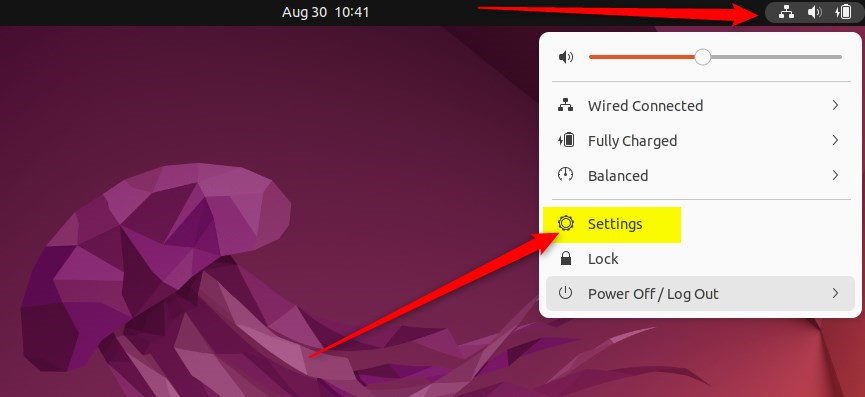
2. Alternatively, click the System menu in the top-right corner of your screen and select Settings.
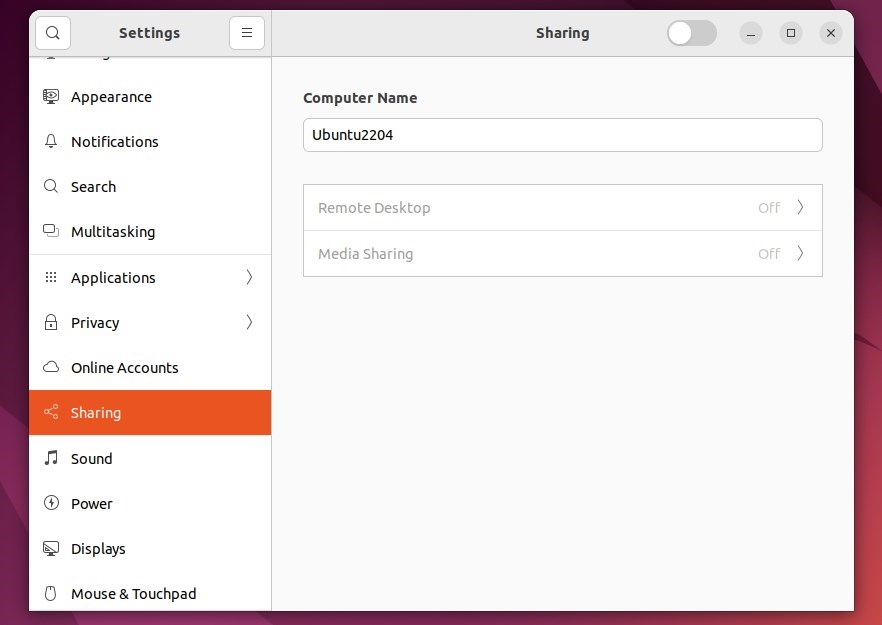
3. In the left sidebar, click on Sharing.
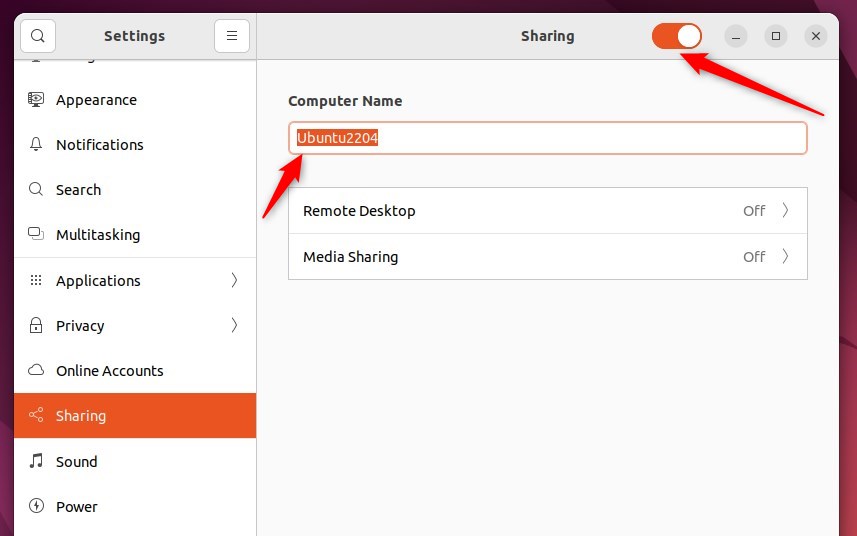
4. If the main Sharing switch at the top is off, click it to turn it on. You can also change your computer’s name right here.
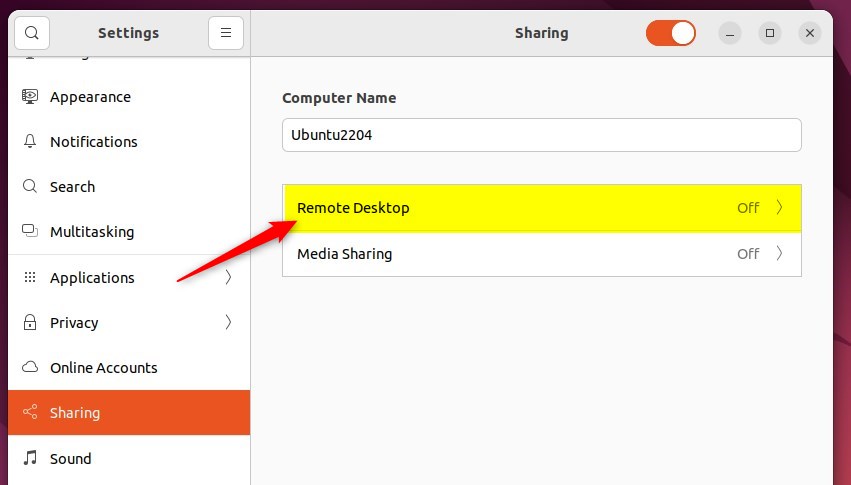
5. Click the Remote Desktop sub-menu.
6. To let others see your screen, set the Remote Desktop switch to on.
7. To let others click and move your mouse, set the Remote Control switch to on.
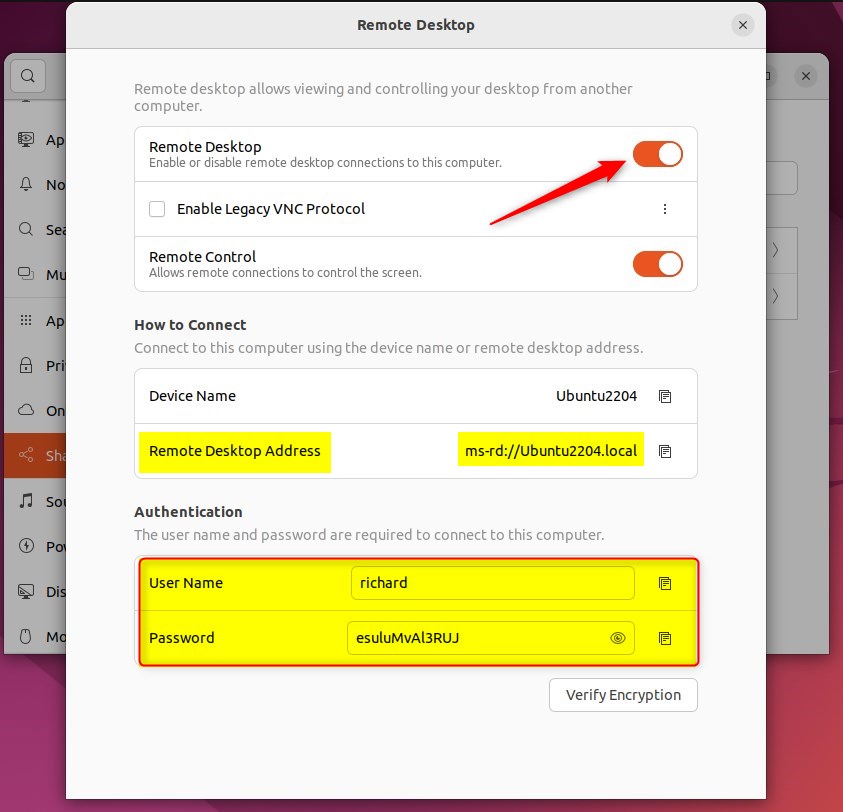
Authentication
Authentication is how you confirm the username and password to connect to your Ubuntu computer from another device.
SECURITY WARNING: Never expose your RDP port directly to the internet. Doing so makes your computer vulnerable to attacks. Always use a VPN or an SSH tunnel to create a secure connection before connecting to your Ubuntu machine.
How to connect to Ubuntu Desktop via Remote Desktop Connections
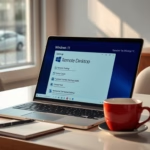
Connecting to your Ubuntu Desktop using Remote Desktop Connections from a Windows computer is simple once you open the app and type in your Ubuntu machine’s address.
Make sure your Windows client supports modern RDP authentication methods. Note that if your Ubuntu session is running on Wayland, some older remote desktop clients may experience compatibility issues compared to a traditional X11 session (an older display server protocol).
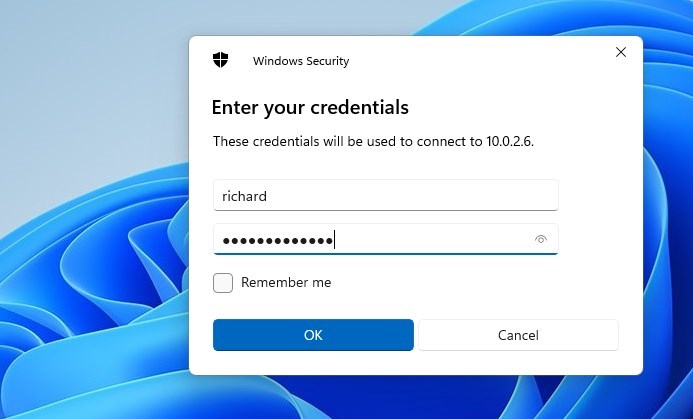
Enter the username and password you set in the Ubuntu Remote Desktop menu to log in.
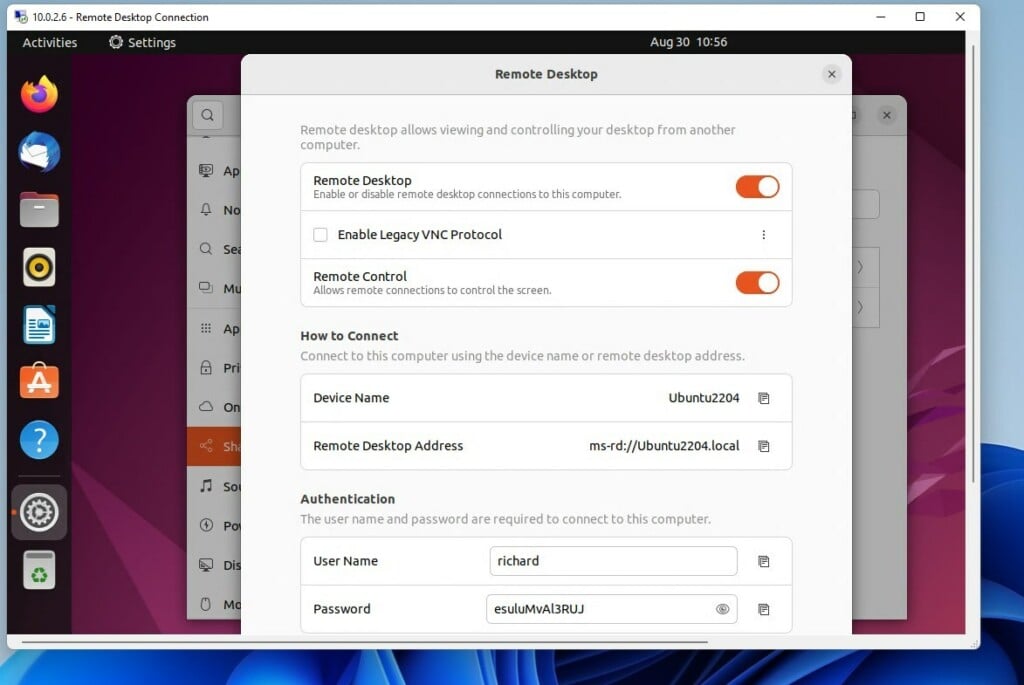
Once you enter the correct details, you’ll be connected to your Ubuntu desktop.
Conclusion
Ubuntu Linux comes with a powerful built-in tool for remote support. Using the GNOME settings, you can turn remote access on or off. For security, always remember to use a VPN and make sure your Windows client is up to date for modern authentication.
Was this guide helpful?

About the Author
Richard
Tech Writer, IT Professional
Richard, a writer for Geek Rewind, is a tech enthusiast who loves breaking down complex IT topics into simple, easy-to-understand ideas. With years of hands-on experience in system administration and enterprise IT operations, he’s developed a knack for offering practical tips and solutions. Richard aims to make technology more accessible and actionable. He's deeply committed to the Geek Rewind community, always ready to answer questions and engage in discussions.
No comments yet — be the first to share your thoughts!